
Database Administration Course Syllabus

duration
2-3 Months
EMI
0% Interest

Mode
Live Online & Classroom Training
Join SLA Institute for the Database Administration Course in Chennai and learn how to manage, optimize, and secure databases. Our Database Administrator Training and Placement program offers practical projects, real-world examples, and strong placement support to help you succeed. This course will give you the skills needed to become a successful Database Administrator. Enroll now in our Database Administrator Training Courses and start your journey toward a rewarding career in database management!
GET YOUR JOB ELIGIBILITY REPORT

Let's take the first step to becoming an expert in
Click Here to Get Started
100% Placement Assurance
Get Certified
Course Syllabus
Download SyllabusModule 1: Introduction to Database Administration
- Overview of Databases and Database Management Systems (DBMS)
- Role and Responsibilities of a Database Administrator (DBA)
- Types of Databases (Relational, NoSQL, Cloud Databases)
- Popular Database Platforms (Oracle, MySQL, SQL Server, PostgreSQL)
Module 2: Database Architecture and Installation
- Database Components and Structures
- Understanding Schema, Tables, Indexes, and Views
- Database Installation and Configuration
- User Roles and Privileges
Module 3: SQL and Database Queries
- SQL Basics: SELECT, INSERT, UPDATE, DELETE
- Advanced SQL Queries (Joins, Subqueries, Aggregate Functions)
- Stored Procedures and Triggers
- Indexing and Query Optimization
Module 4: Database Security and Access Control
- User Authentication and Role Management
- Encryption and Data Masking
- SQL Injection and Security Threats
- Auditing and Compliance (GDPR, HIPAA, PCI-DSS)
Module 5: Backup and Recovery Strategies
- Types of Backups (Full, Incremental, Differential)
- Recovery Models and Disaster Recovery Planning
- Point-in-Time Recovery and Log Shipping
- Automated Backup Strategies
Module 6: Performance Tuning and Optimization
- Query Optimization Techniques
- Database Indexing Best Practices
- Performance Monitoring Tools and Techniques
- Partitioning and Caching Strategies
Module 7: High Availability and Replication
- Database Clustering and Load Balancing
- Replication Types (Master-Slave, Multi-Master, Logical Replication)
- Failover and Disaster Recovery Strategies
- Cloud-Based High Availability Solutions
Module 8: Database Maintenance and Automation
- Routine Maintenance Tasks (Vacuuming, Reindexing, Cleaning Logs)
- Scripting for Database Automation
- Scheduling and Monitoring Jobs (Cron Jobs, SQL Server Agent)
- Database Health Checks
Module 9: Cloud Database Administration
- Introduction to Cloud Databases (AWS RDS, Azure SQL, Google Cloud SQL)
- Cloud Database Security and Performance Management
- Serverless Databases and Big Data Integration
- Migration from On-Premise to Cloud
Module 10: NoSQL and Big Data Databases
- Introduction to NoSQL (MongoDB, Cassandra, Redis)
- Differences Between SQL and NoSQL
- Managing Unstructured Data
- Big Data Integration with Hadoop and Spark
Module 11: Capstone Project and Career Preparation
- Hands-on Project: Setting Up a Secure and Scalable Database
- Resume Building and Certification Guidance (Oracle DBA, Microsoft SQL Server, AWS Database Certification)
- Interview Preparation for Database Administrator Roles
In conclusion, the Database Administration Course Syllabus at SLA Institute helps learners build skills in managing databases, securing them, and making them run smoothly. With hands-on training and real-life examples, students get experience in backing up data, recovering it when needed, fine-tuning performance, and integrating with the cloud. This course prepares learners for jobs in database administration. Supports a successful career in the data-driven IT industry today, where Database Administration is key. The course covers Database Administration in depth, making sure learners are well-equipped to handle Database Administration tasks.
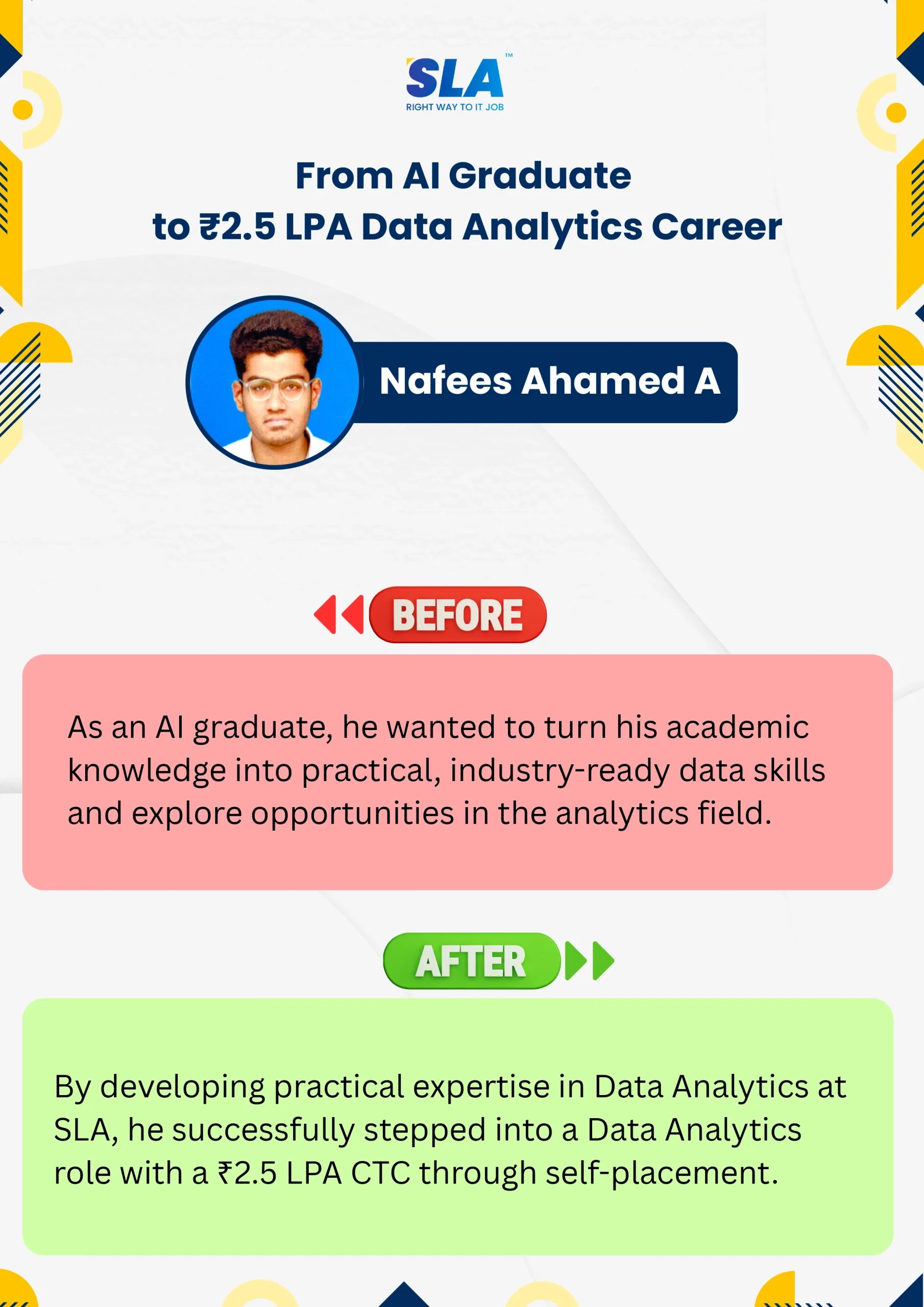
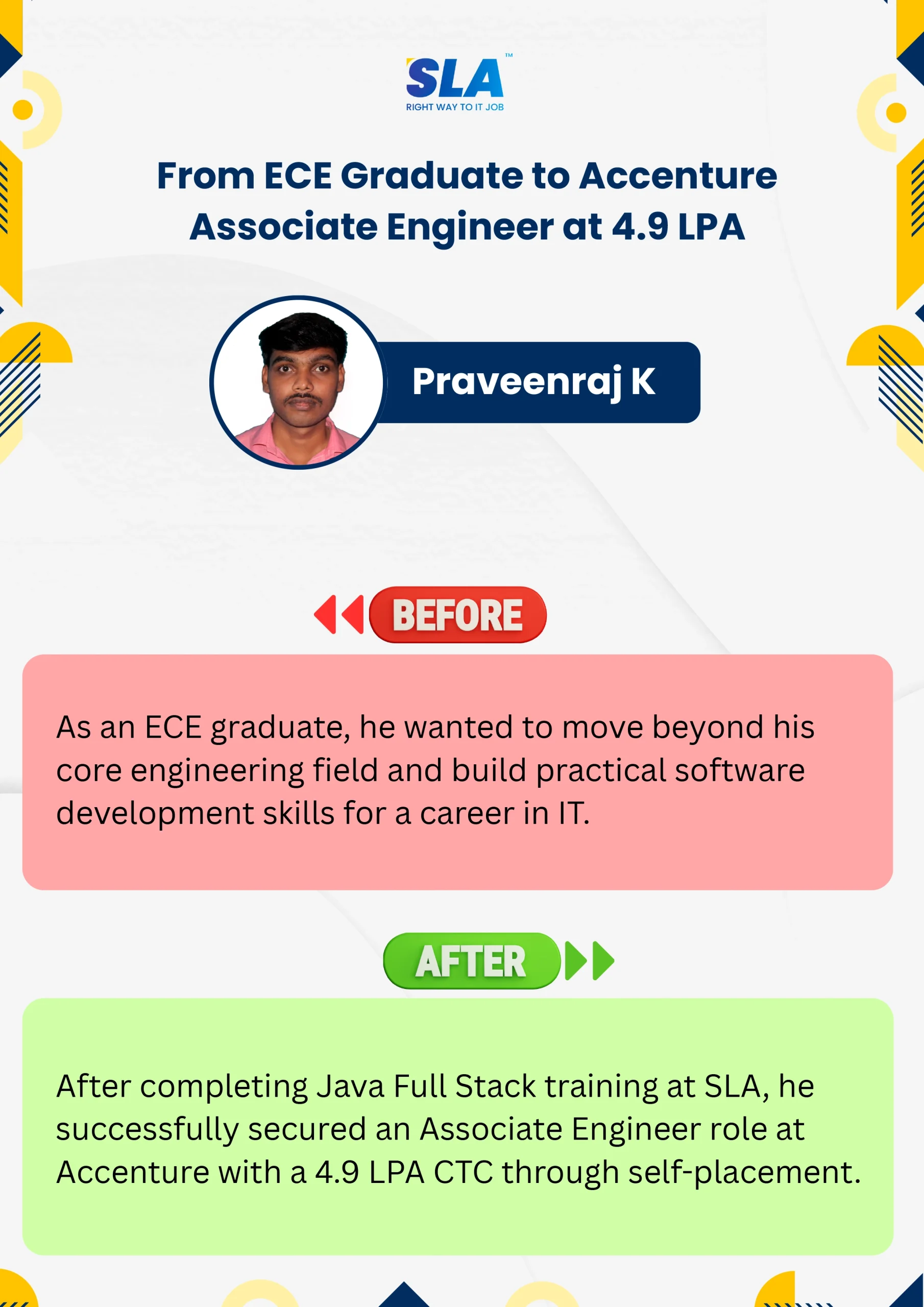
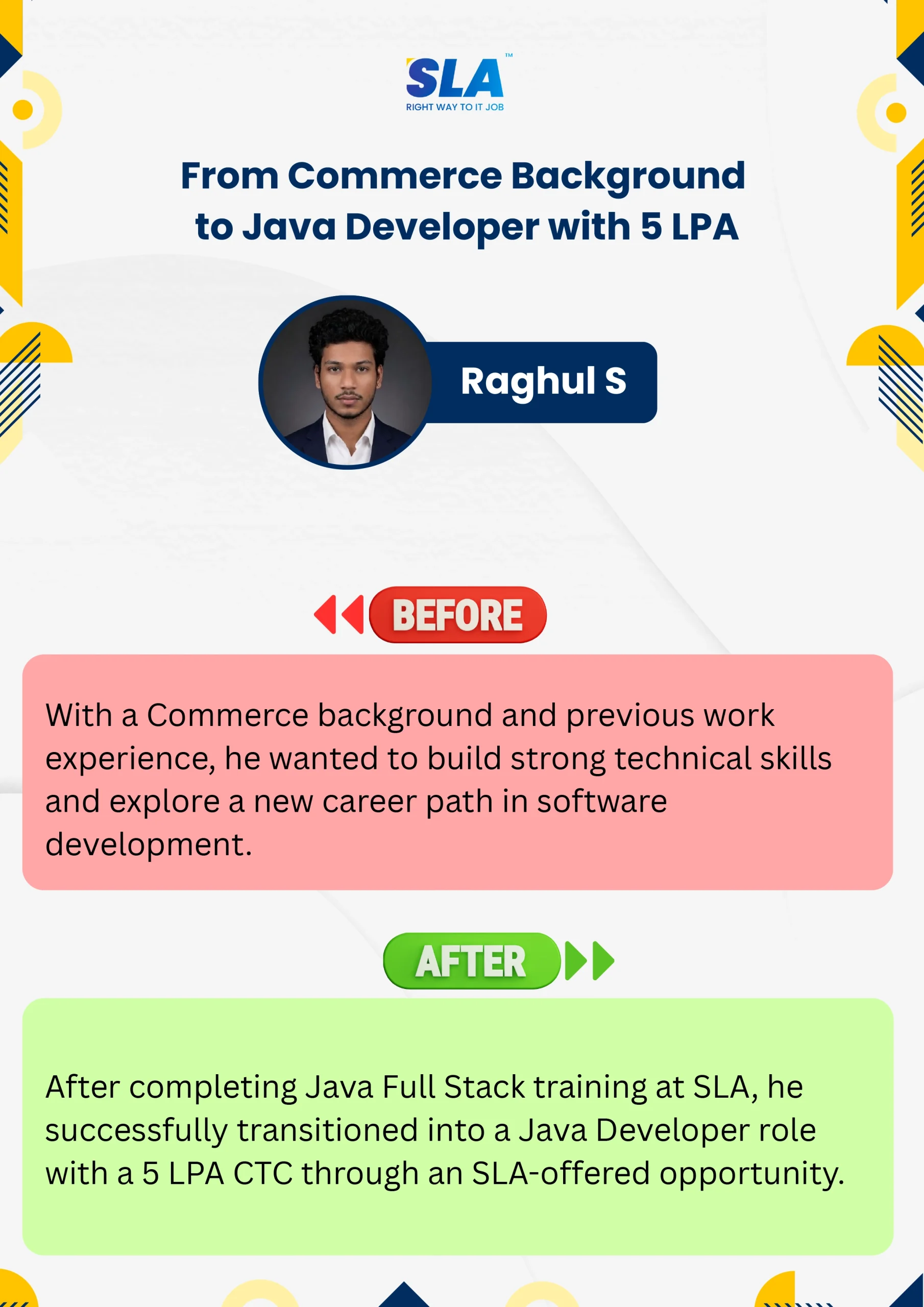
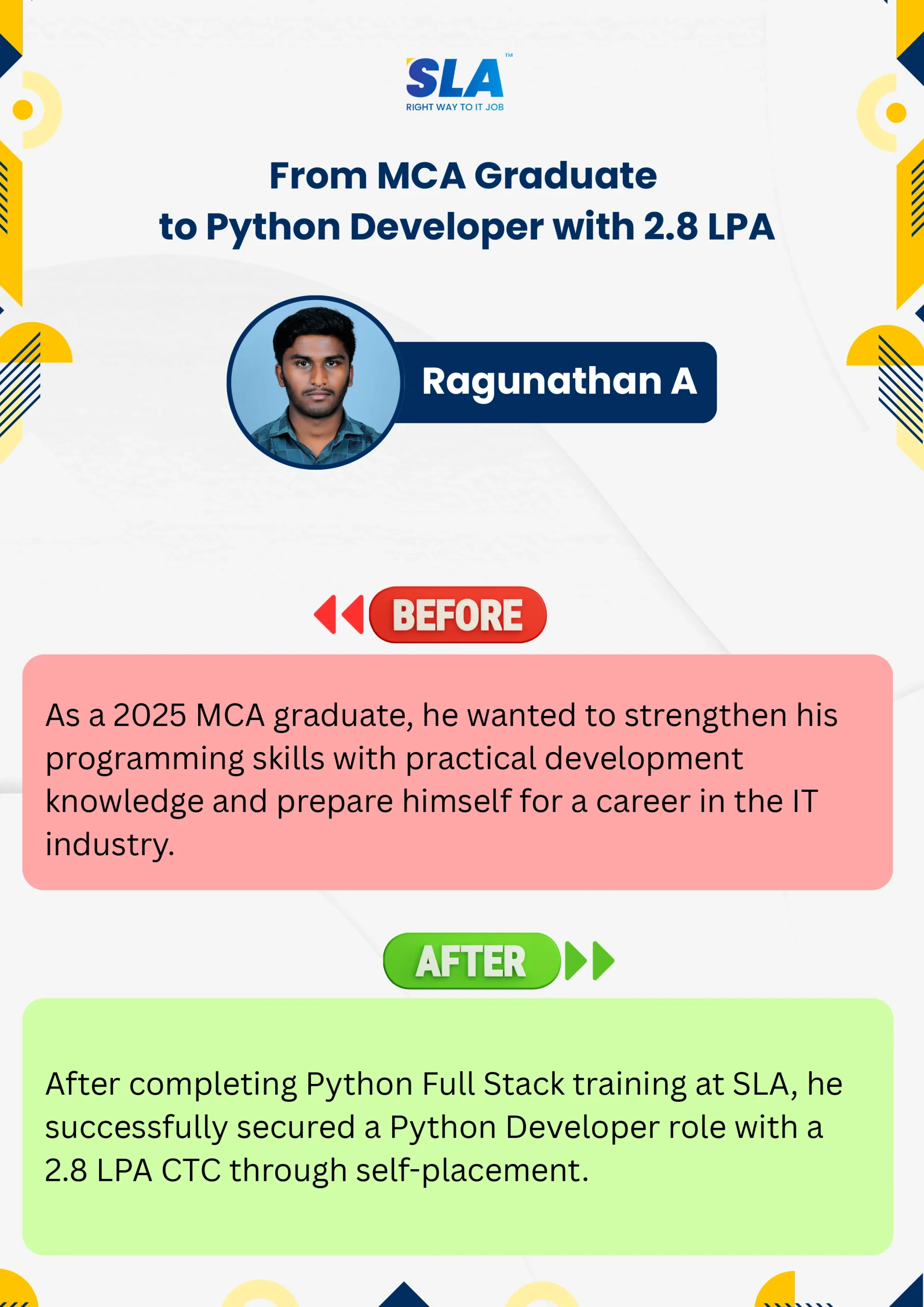
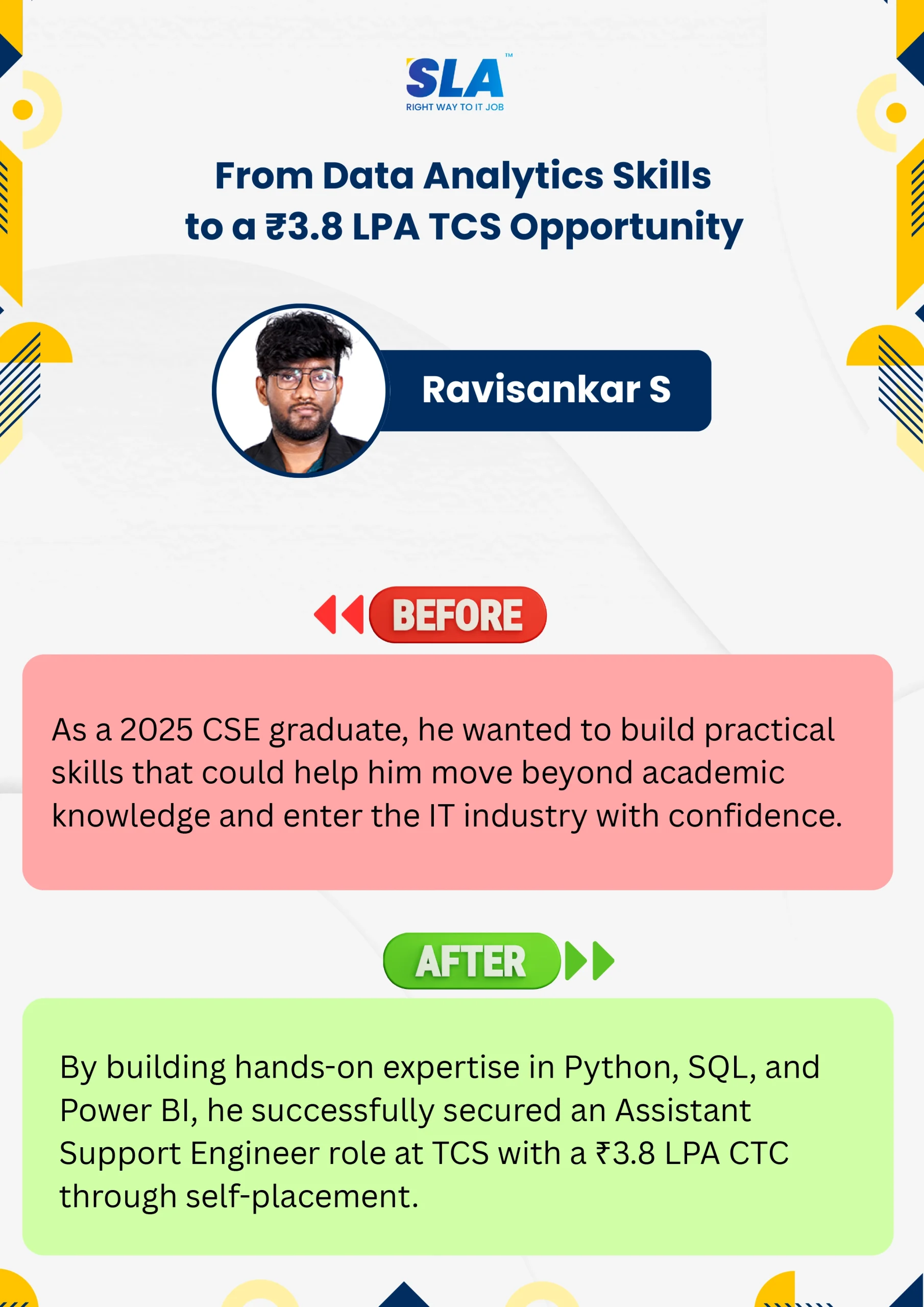
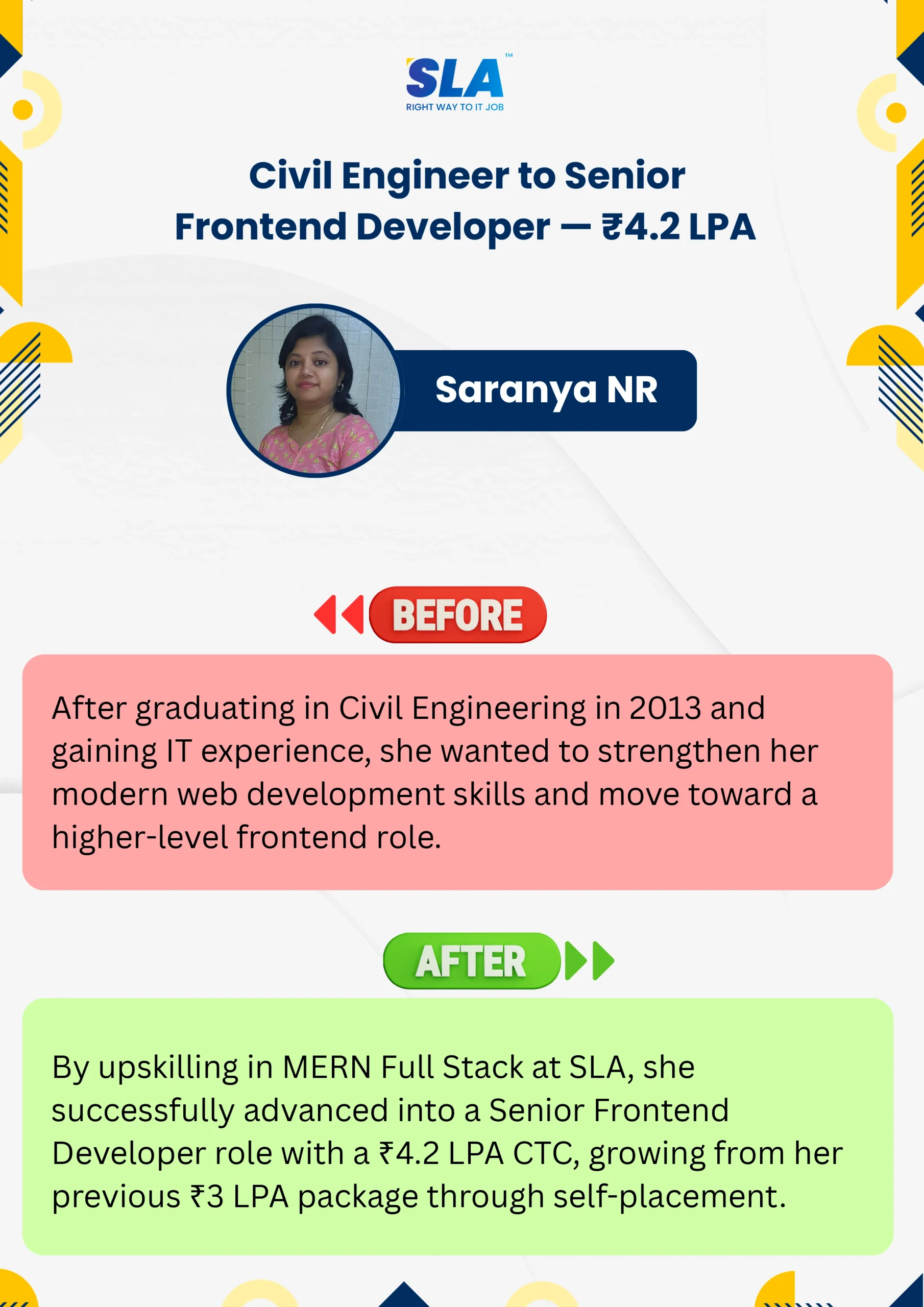
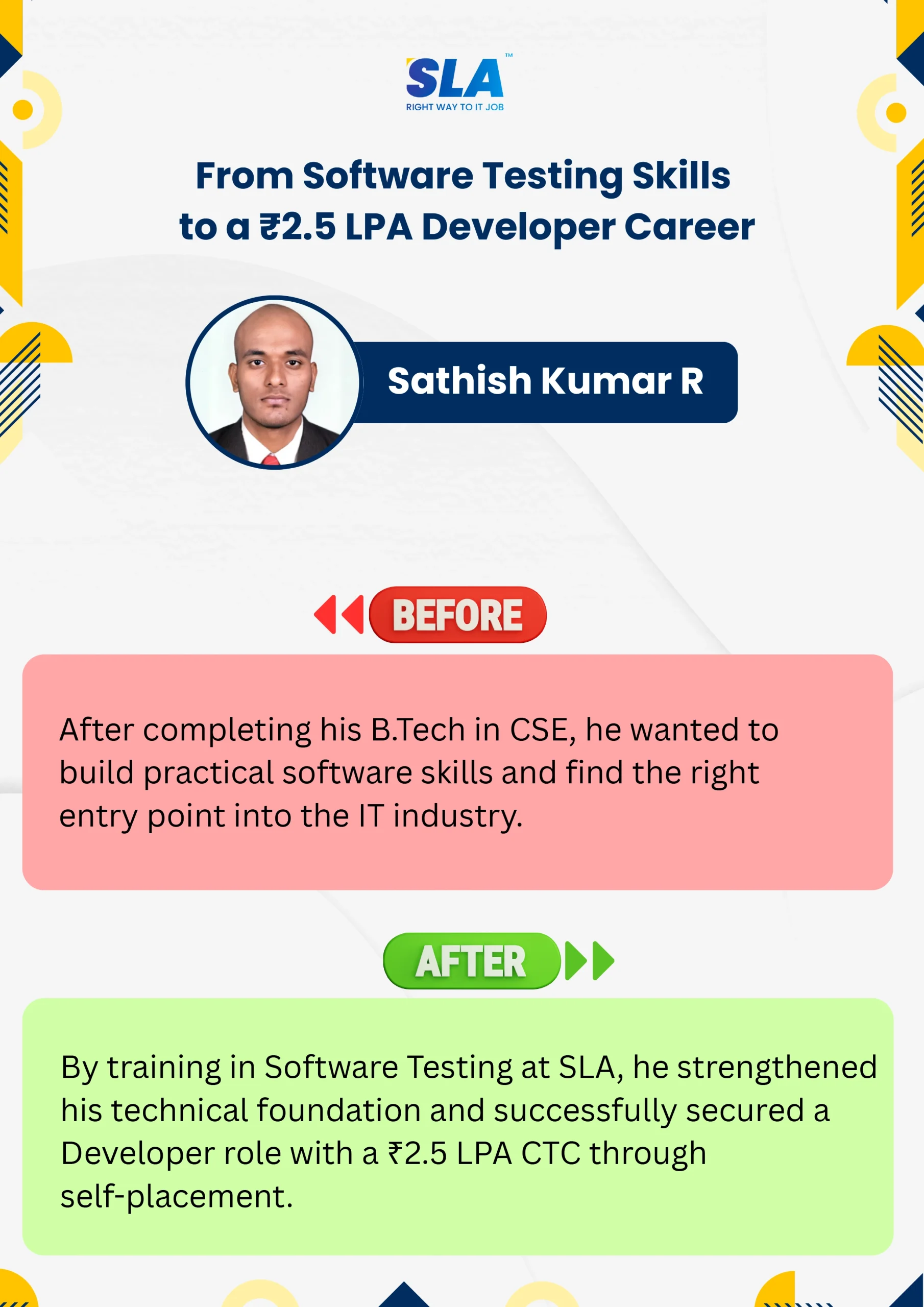
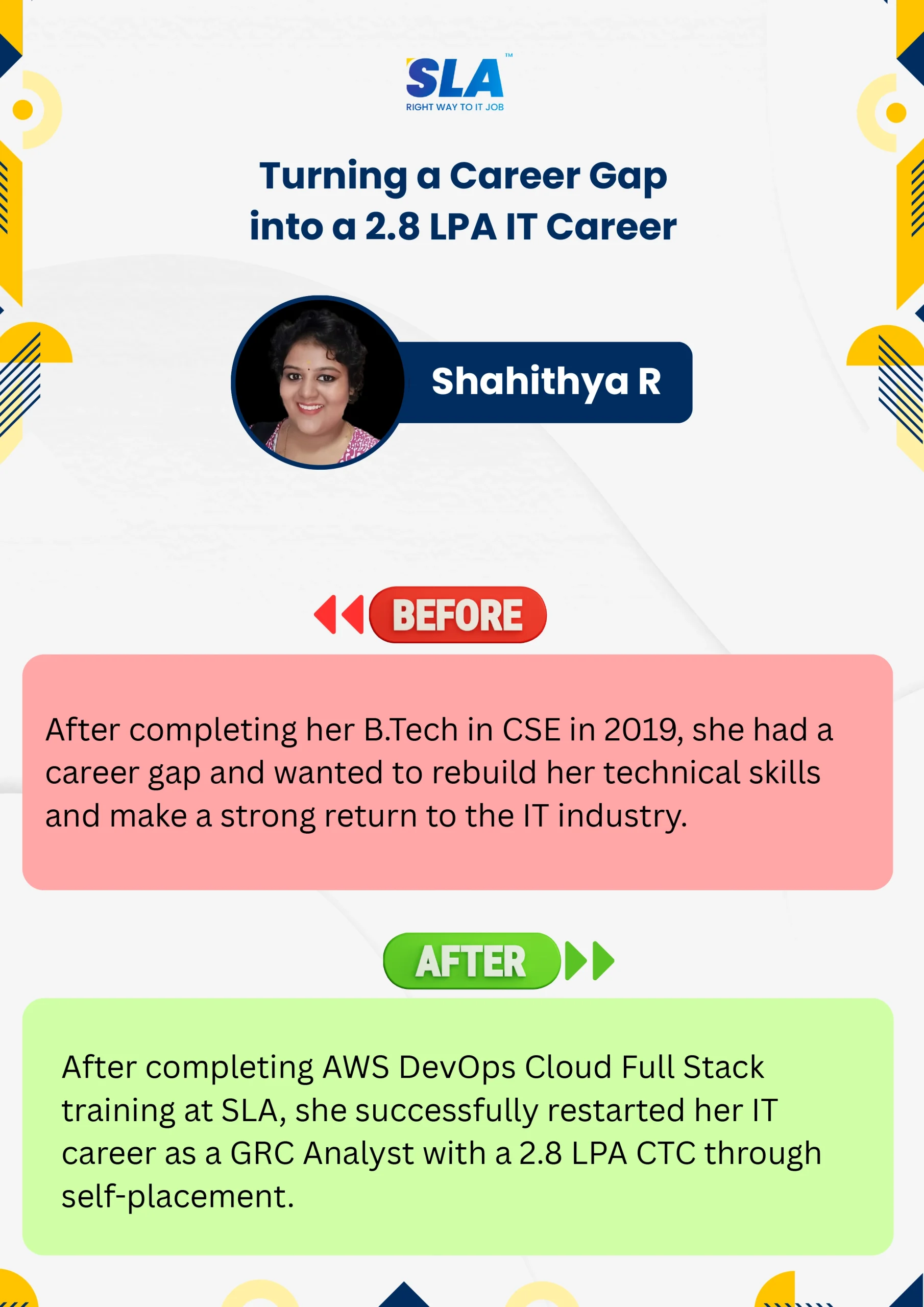
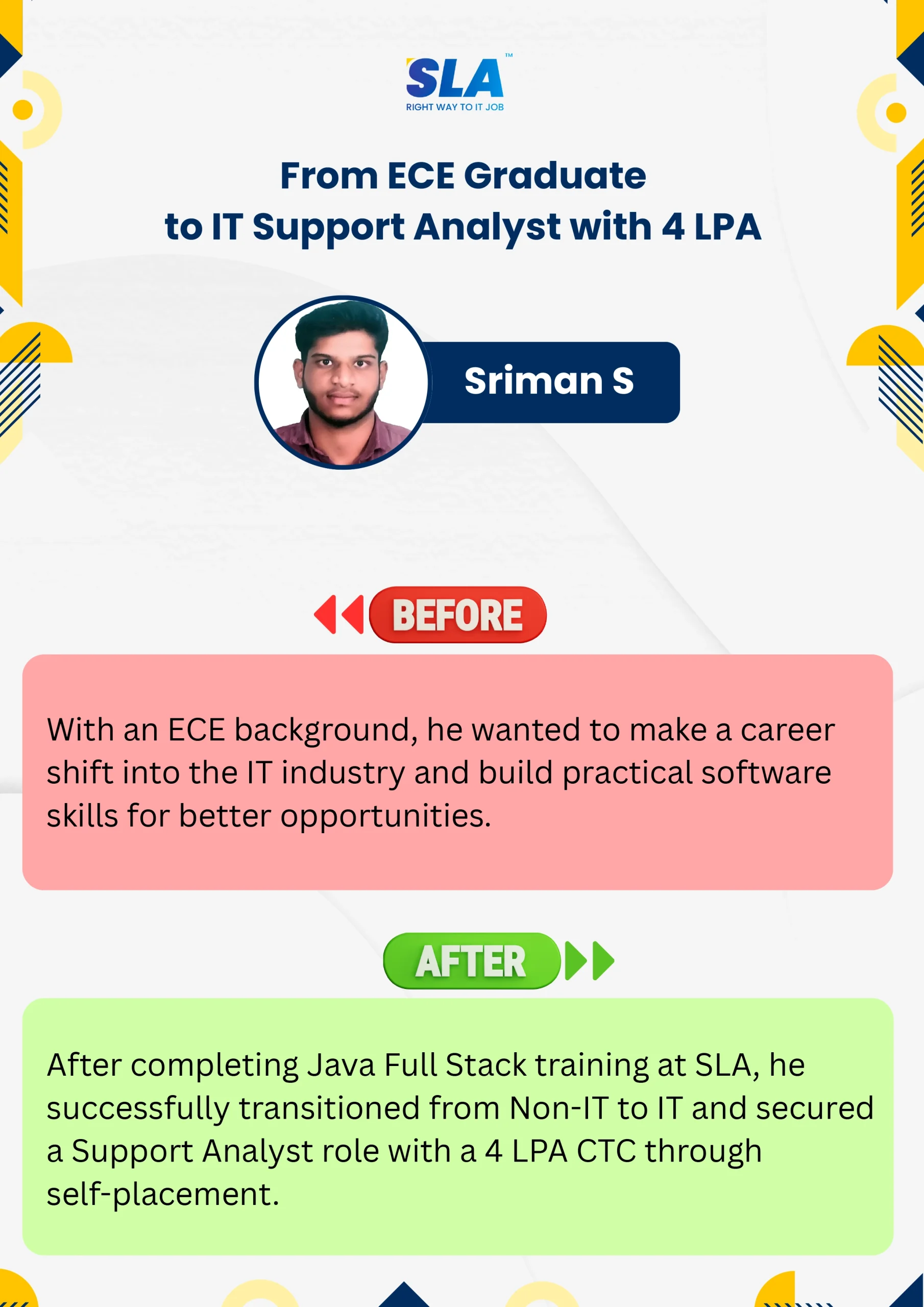
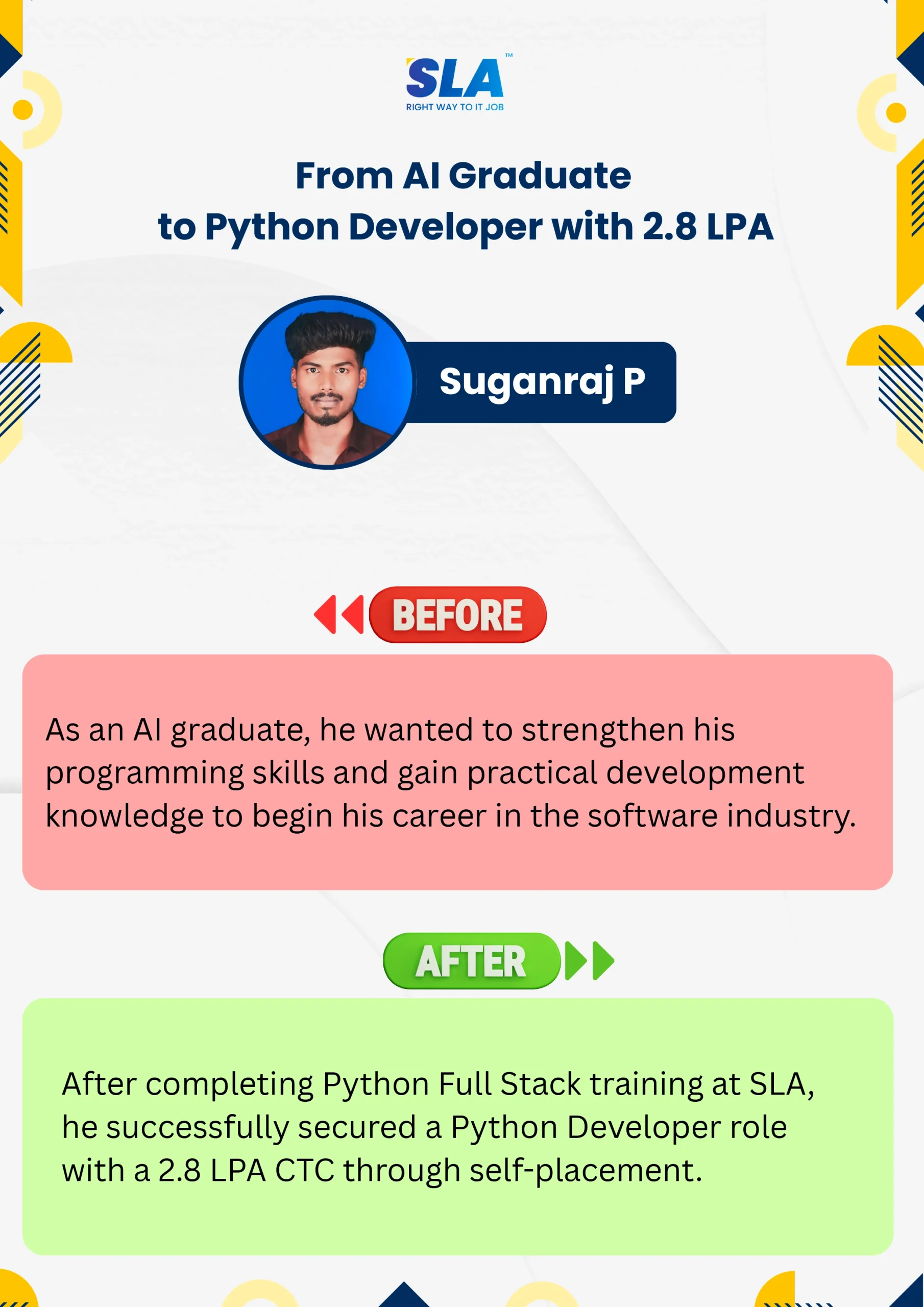
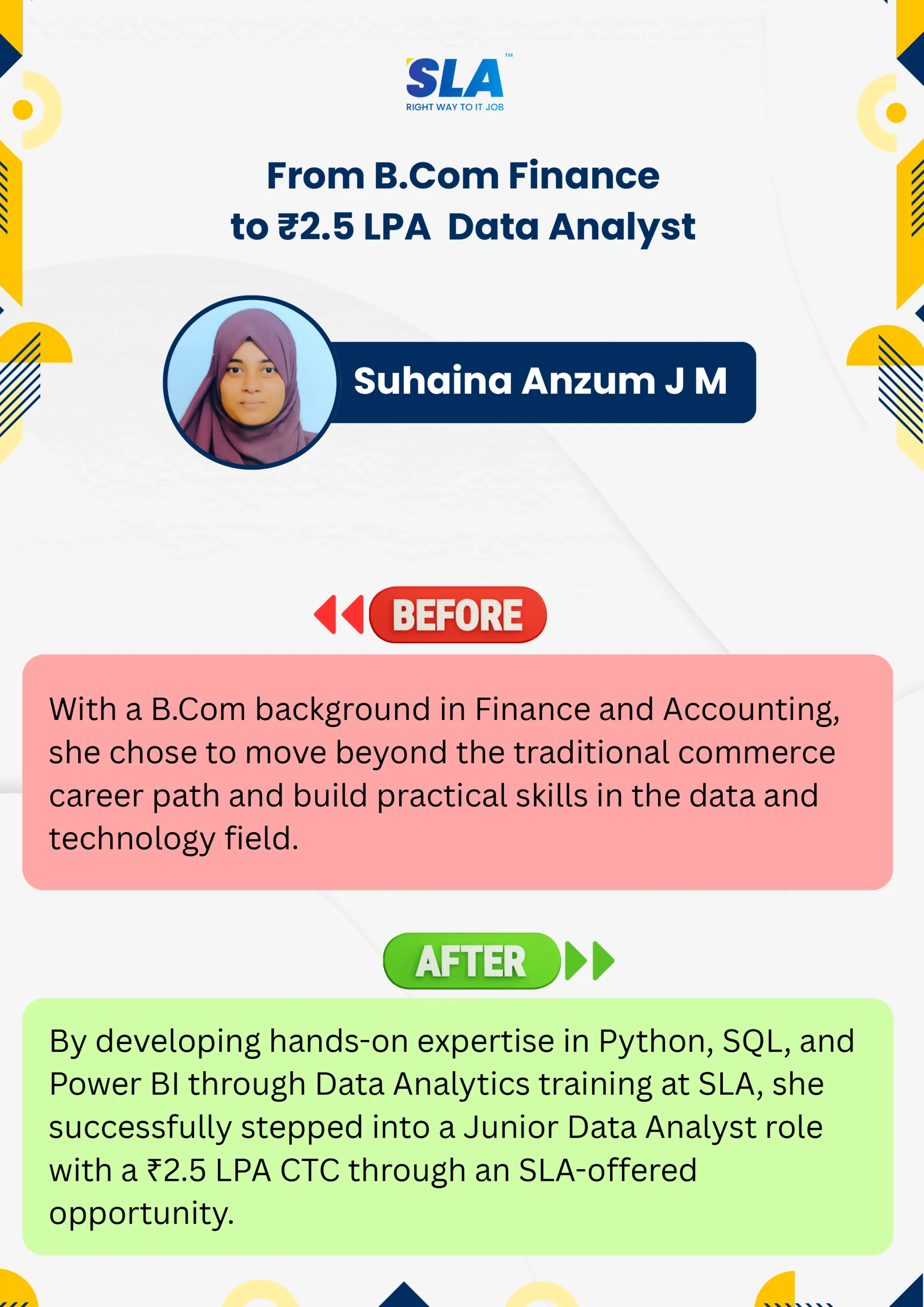
Video Testimonials
Start your learning journey at SLA and write your career story like our students who have shared their experiences here. Are you excited to explore?
See More