Business Intelligence and Data Analytics Course Syllabus

duration
2-3 Months

EMI
0% Interest

Mode
Live Online / Offline
SLA Institute’s Business Intelligence and Data Analytics Course Syllabus comes with 100% placement support so students will be guaranteed a placement in an esteemed organization. In addition to that the Business Intelligence and Data Analytics Course Syllabus is also carefully curated with the help of leading professionals and experts from the IT industry with so many hours invested in it. So, everything that our students learn in the Business Intelligence and Data Analytics course is fully up-to-date to the current trends in the IT industry, which increases their chances of getting employed.
GET YOUR JOB ELIGIBILITY REPORT

Let's take the first step to becoming an expert in
Click Here to Get Started
100% Placement Assurance
Get Certified
Course Syllabus
Download SyllabusCORE PYTHON
- Python Introduction & history
- Color coding schemes
- Salient features & flavors
- String handling management
- Native data types
- Decision making statements
- Looping statements
- Function types
- OOPs
- Exception handling
POWER BI INTRODUCTION
- Data Visualization
- Reporting Business Intelligence (BI)
- Traditional BI
- Self-Serviced BI Cloud Based BI
- On Premise BI
- Power BI Products
- Power BI Desktop (Power Query, Power Pivot Power View)
- Flow of Work in Power BI Desktop
- Power BI Report Server
- Power BI Service, Power BI Mobile
- Power BI Architecture
- A Brief History of Power BI
POWER QUERY
- Data Transformation
- Benefits of Data Transformation
- Shape or Transform Data using Power Query
- Overview of Power Query / Query Editor
- Query Editor User Interface
- The Queries Pane
- The Data View / Results Pane
- The Query Settings Pane, Formula
- Bar Saving the Work
- Data types
- Keep Errors Remove Top Rows
- Remove Bottom Rows
- Remove Alternative Rows
- Remove Duplicates, Remove Blank Rows
- Remove Errors Group Rows / Group By
M LANGUAGE
- IF..ELSE Conditions
- TransformColumn()
- RemoveColumns()
- SplitColumns()
- ReplaceValue()
- Table.Distinct() Options and GROUP BY Options
- Table.Group()
- Table.Sort() with Type Conversions
- PIVOT Operation and Table.Pivot ().
- List Functions Using Parameters with M Language
DATA MODELING
- Data Modeling Introduction Relationship
- Need of Relationship Relationship Types
- Cardinality
- AutoDetect the relationship
- Create a new relationship
- Edit existing relationships
- Make Relationship Active or Inactive
- Delete a relationship
DAX
- What is DAX
- Calculated Column, Measures
- DAX Table and Column Name Syntax
- Creating Calculated Columns
- Creating Measures
- Calculated Columns Vs Measures
- DAX Syntax & Operators
DAX FUNCTIONS TYPES
- Date and Time Functions
- Text Functions
- Logical Functions
- Math & Statistical Functions
VISUALIZATIONS
- Visualizing Data
- Why Visualizations
- Visualization types
- Create and Format Bar and Column Charts
- Create and Format Stacked Bar Chart Stacked Column Chart
- Create and Format Clustered Bar Chart
- Clustered Column Chart
- Create and Format 100% Stacked Bar Chart 100%
- Stacked Column Chart
- Create and Format Pie and Donut Charts
- Create and Format Scatter Charts
- Create and Format Table Visual
- Matrix Visualization
- Line and Area Charts
- Create and Format Line Chart, Area Chart
- Stacked Area Chart Combo Charts
ADVANCED PANDAS FUNCTIONS
- Group by()
- Pivot tables()
- Multi-indexing()
- merge()
- concatenate()
- join()
- data transformation using apply()
- map()
- query()
- Resampling time series functionality
- excel writer()
- pipe()
- creating dataframes
- reading CSV files with intrinsic index
- converting CSV files to dataframes
- converting dataframes to CSV files
- converting dataframes to excel file
In conclusion, the Business Intelligence and Data Analytics Course Syllabus at SLA Institute helps people learn to use data to make business choices. They get hands-on training in collecting data, analyzing it, making it visual, and using BI tools. This gives students real-life experience. The course gets learners for careers in data analytics, business intelligence, and similar IT jobs. The Business Intelligence and Data Analytics Course Syllabus focuses on using data for decisions. Learners gain skills in data collection and analysis. The SLA Institute course prepares people for careers in data analytics and business intelligence.
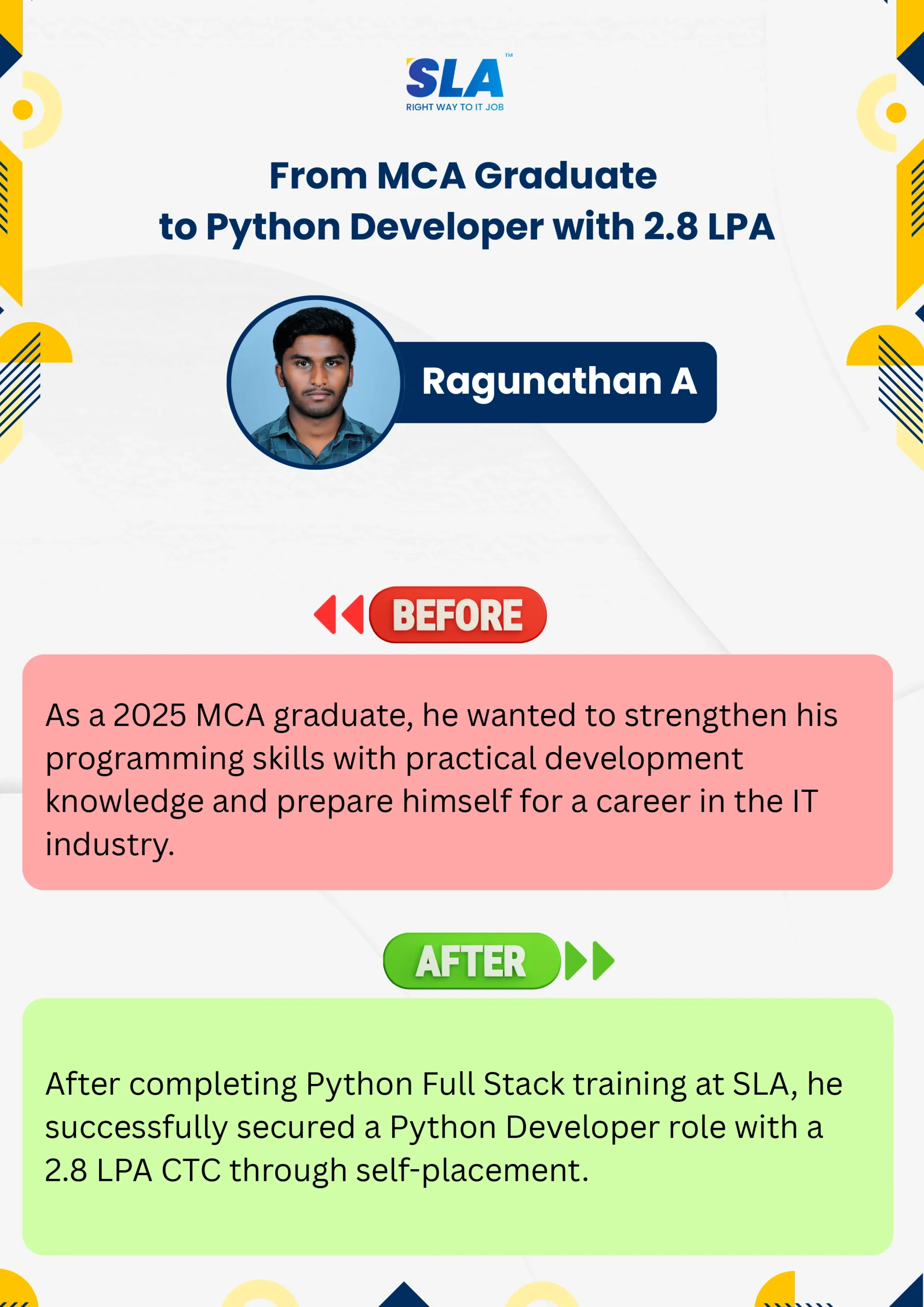
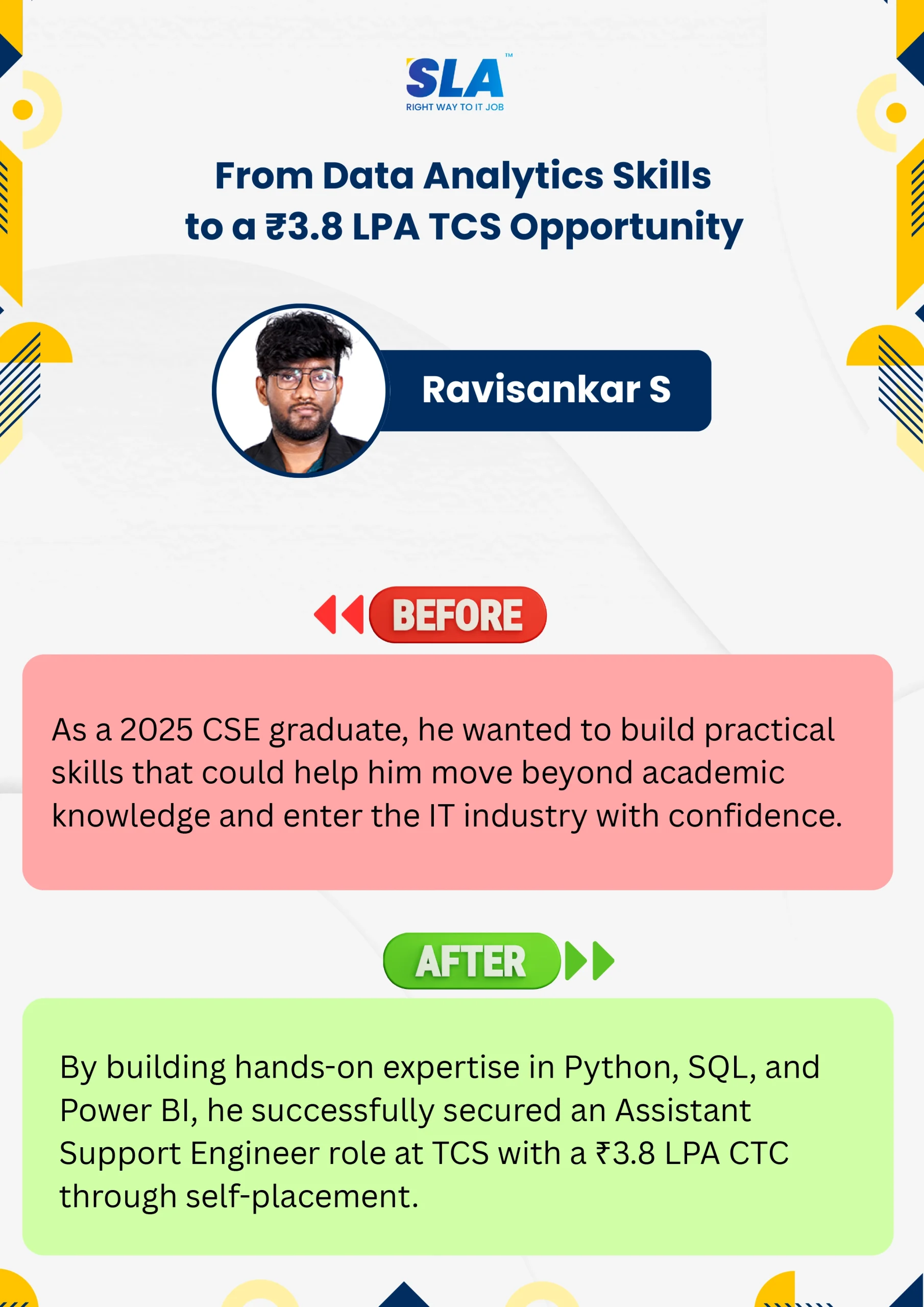
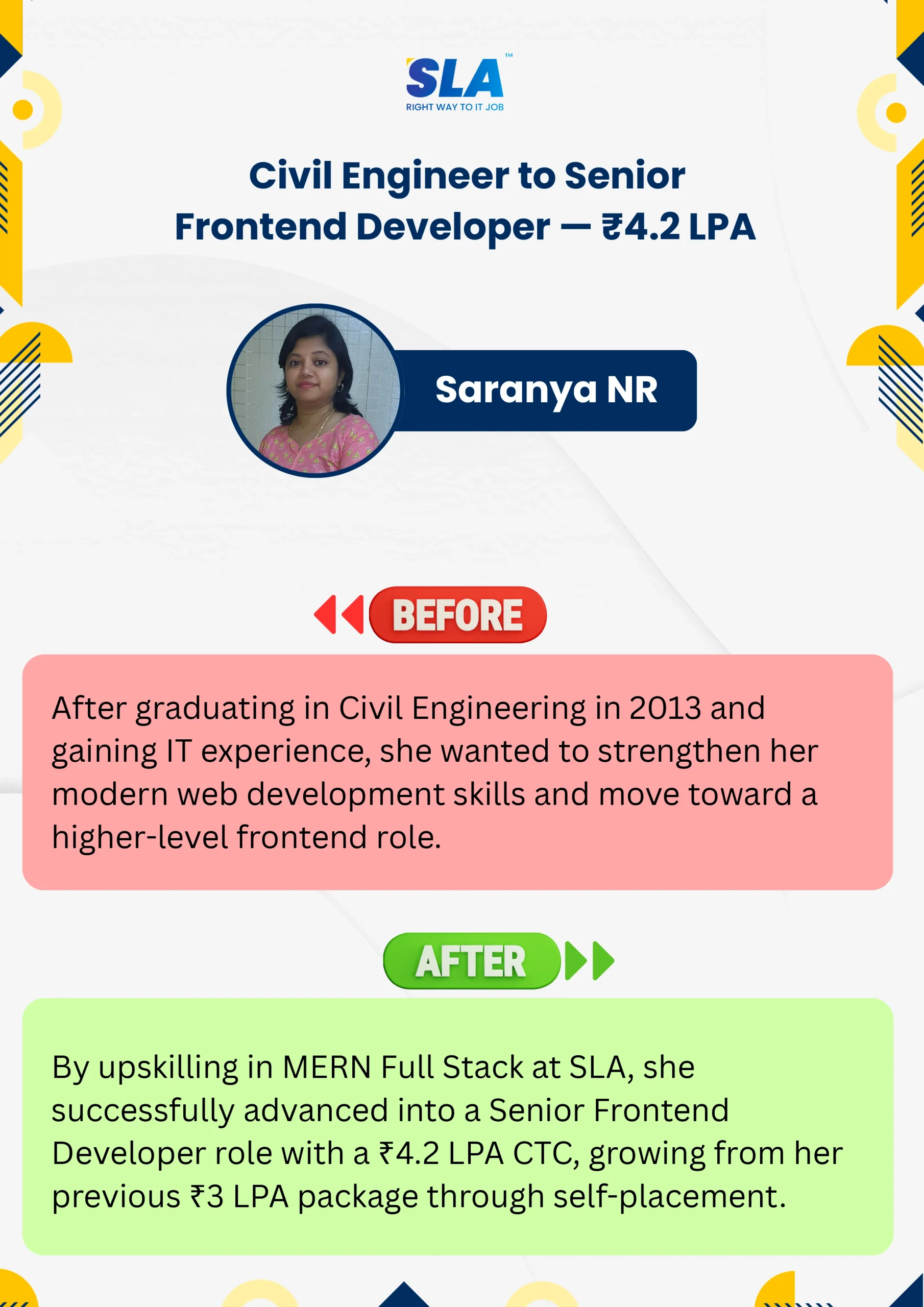
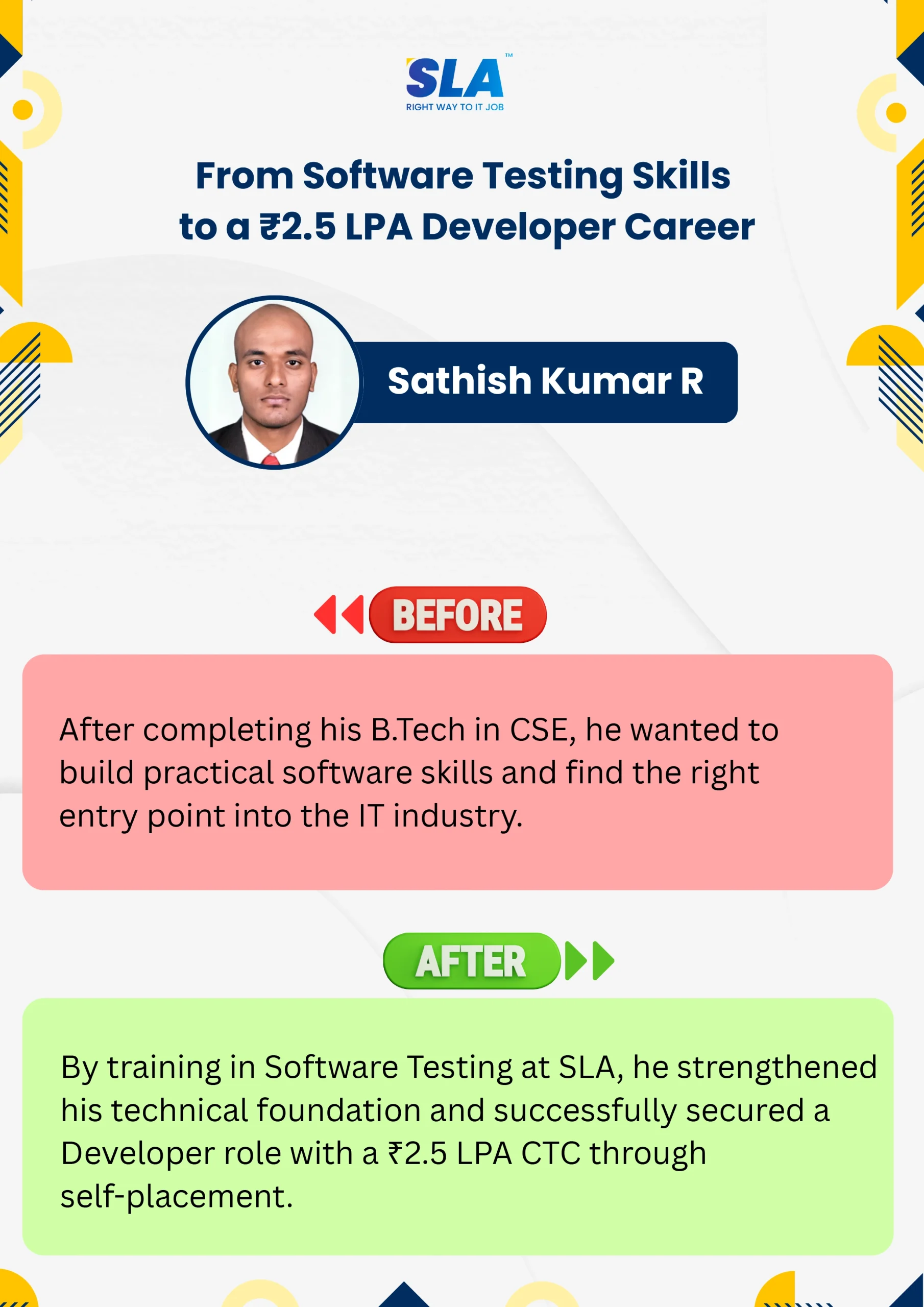
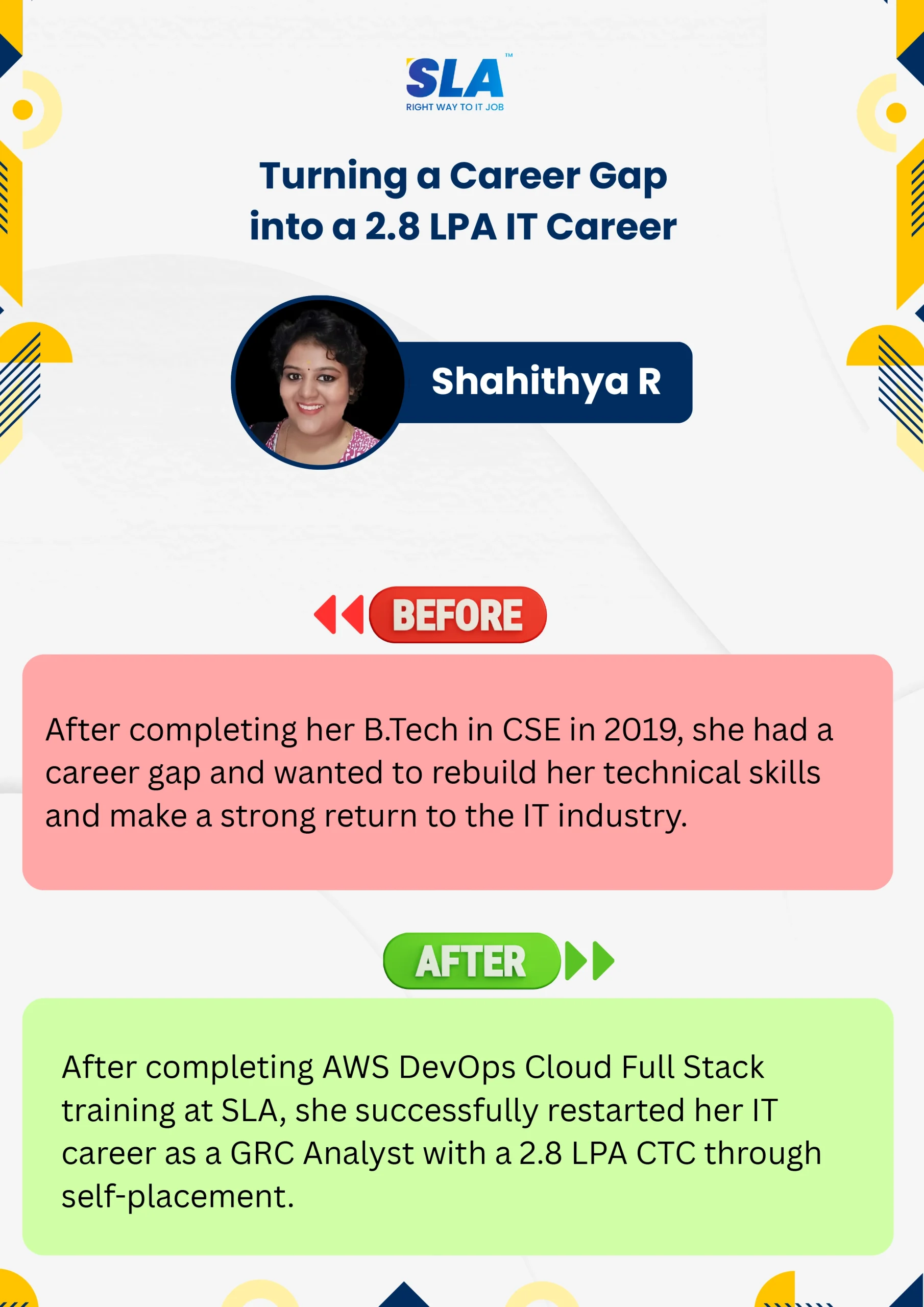
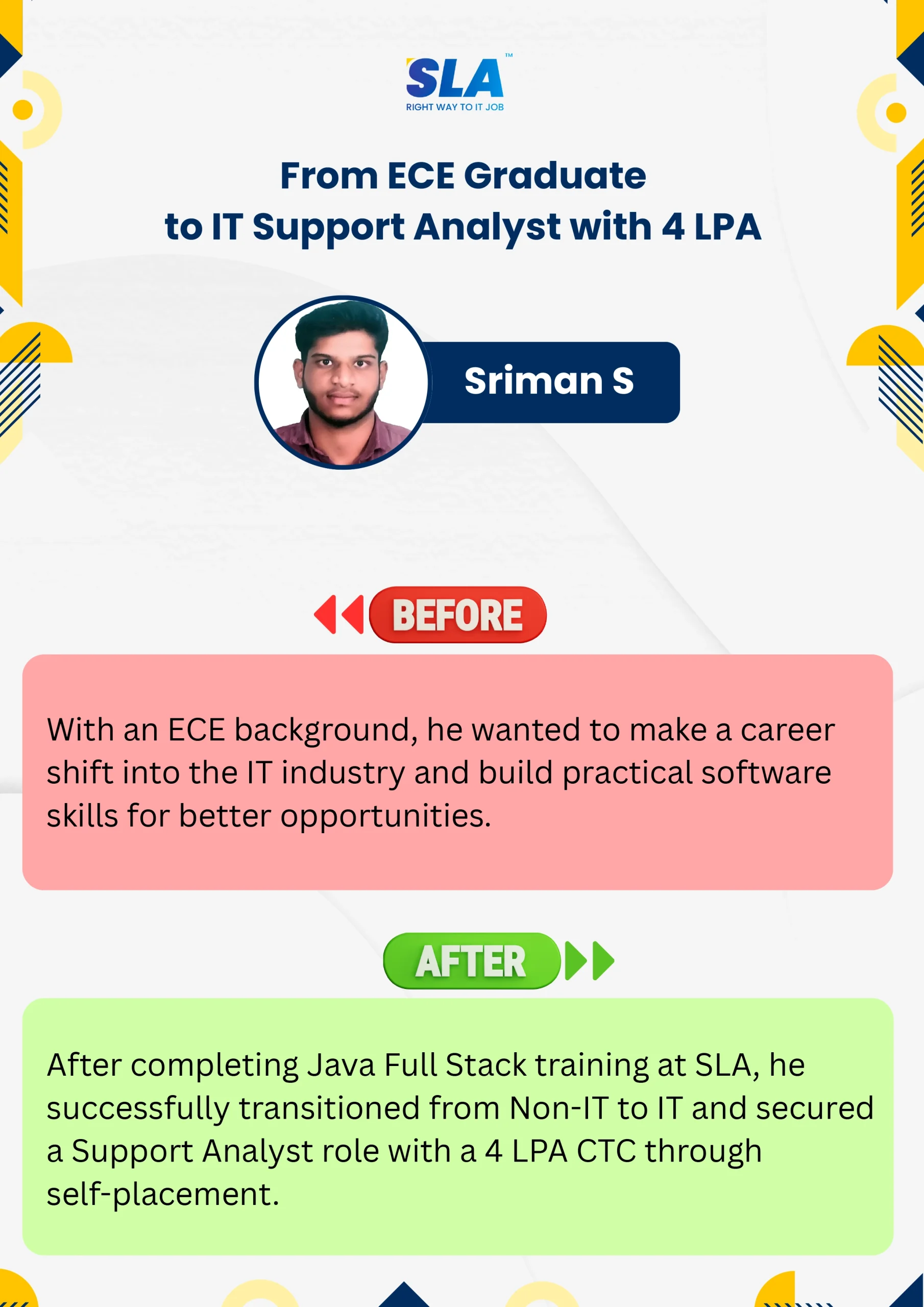
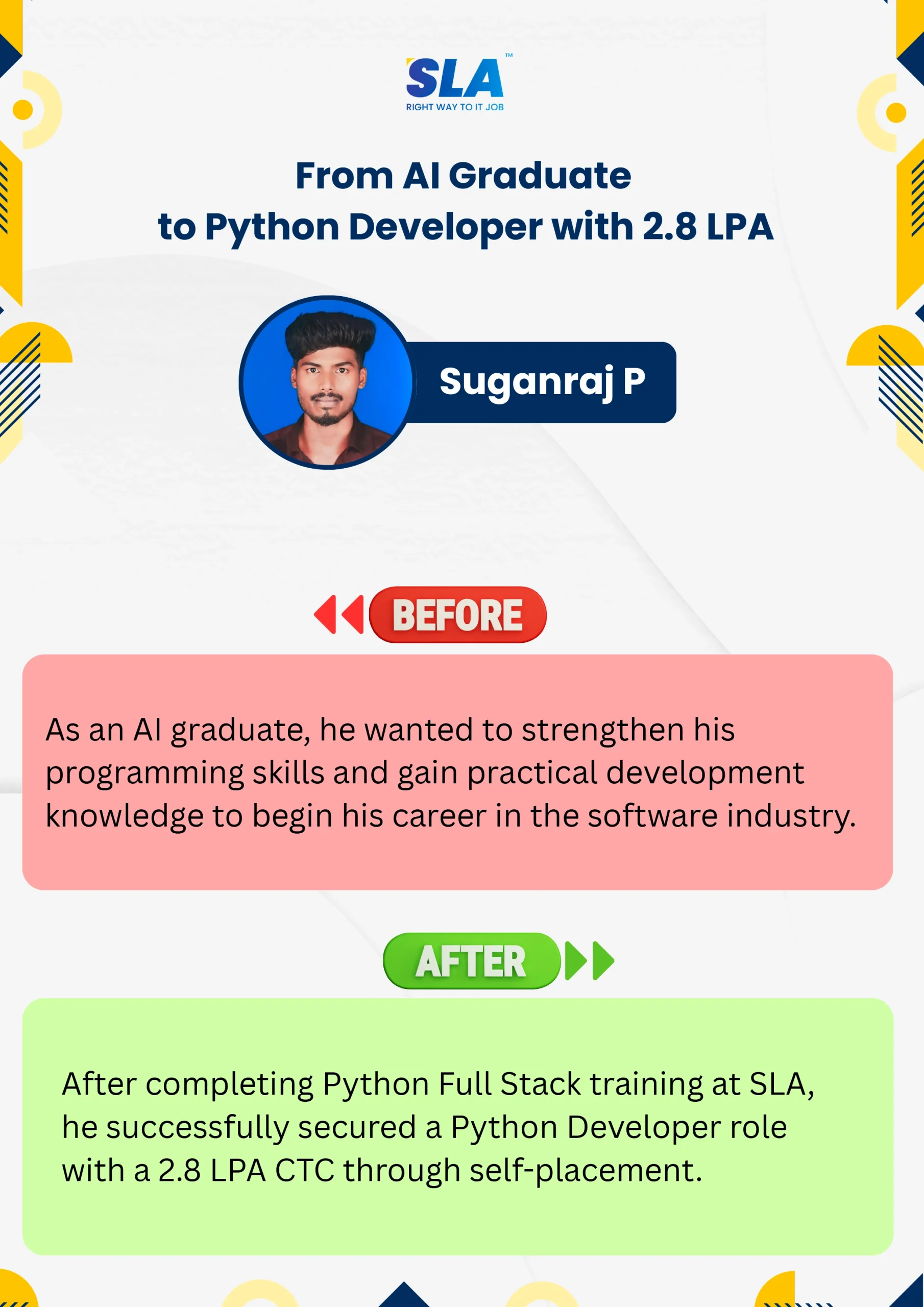
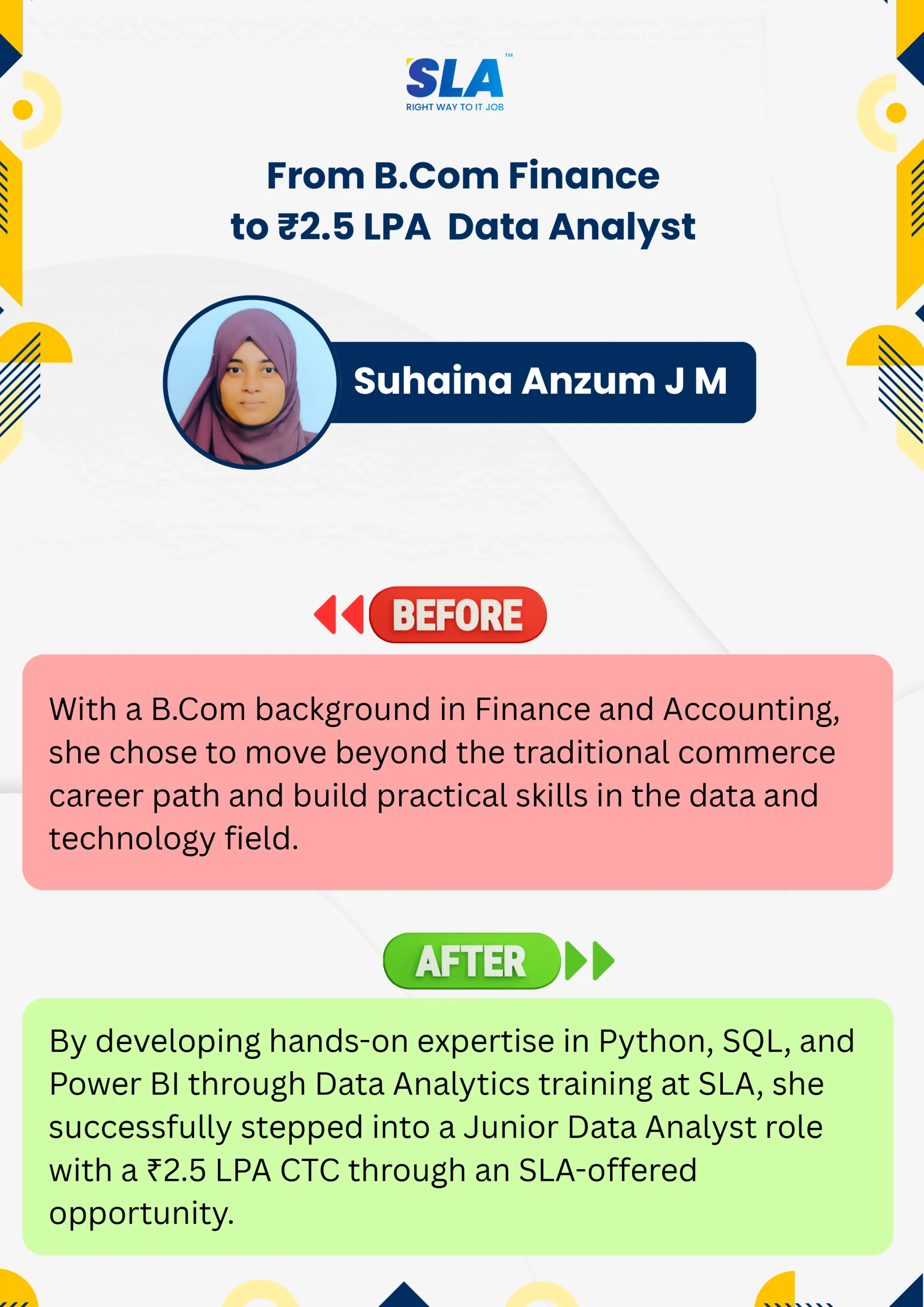
Video Testimonials
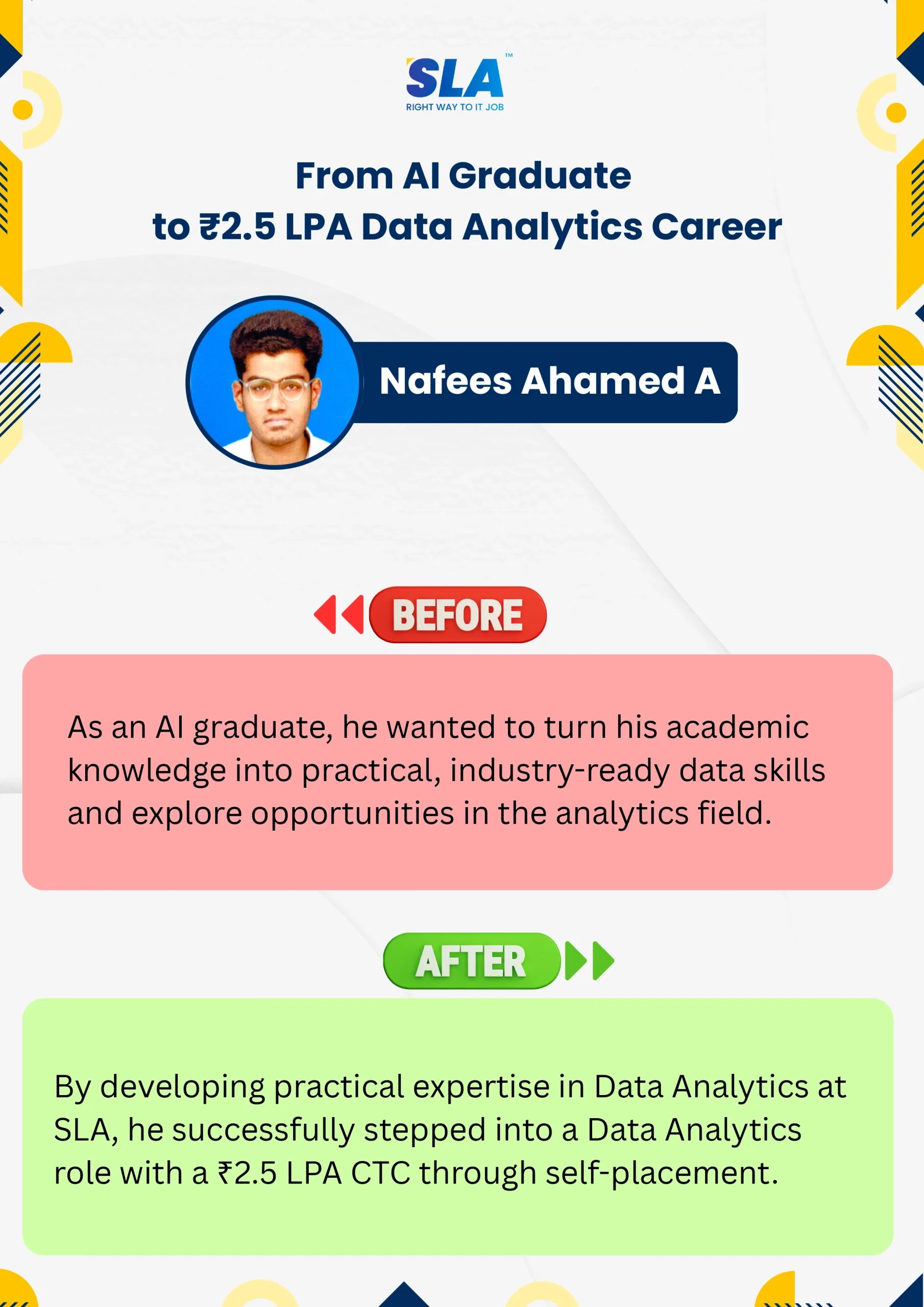
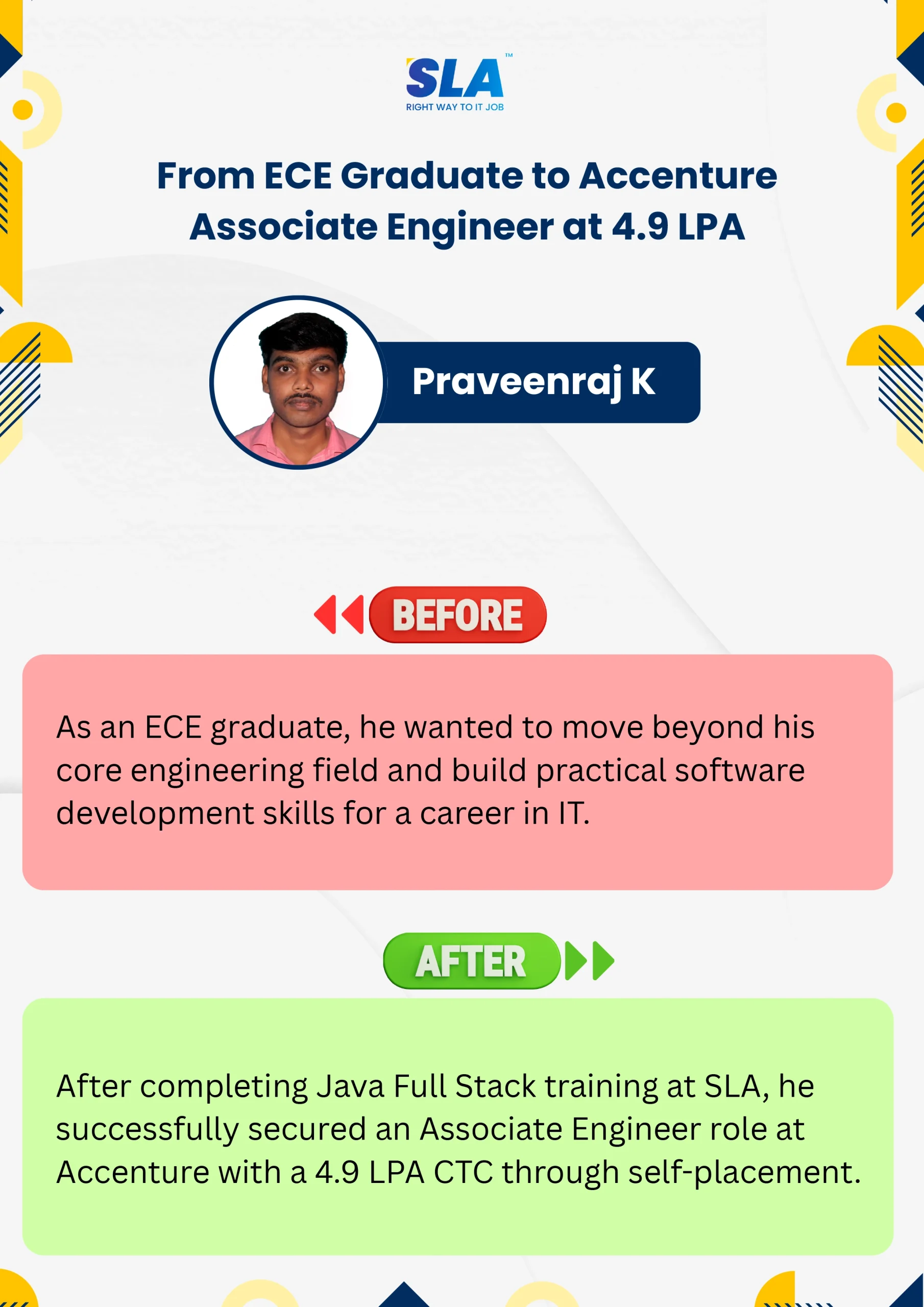
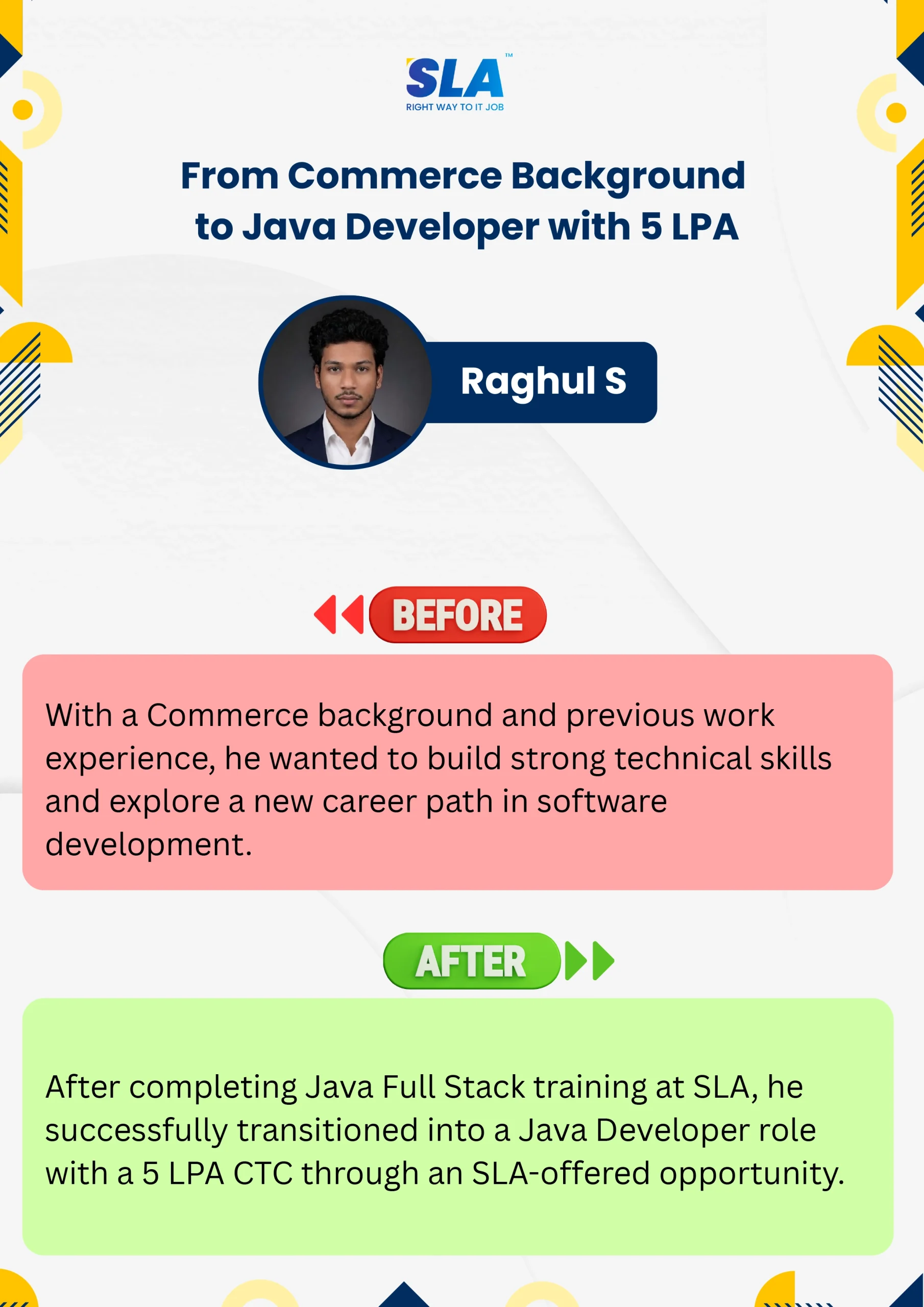
Start your learning journey at SLA and write your career story like our students who have shared their experiences here. Are you excited to explore?
See More