Python Full Stack Course Syllabus

duration
2-3 Months
EMI
0% Interest

Mode
Live Online / Offline
Join our Python Full Stack Online Course and learn how to build and manage professional websites. Start with the basics like setting up Python Full Stack, themes, and plugins, then move on to customizing designs, improving performance, and managing content. With hands-on projects and expert guidance from our instructors at SLA Institute, you’ll gain the skills to create great websites. Plus, our job placement support will help you begin your career in Python Full Stack development. Enroll today and explore exciting career opportunities in web development!
GET YOUR JOB ELIGIBILITY REPORT

Let's take the first step to becoming an expert in
Click Here to Get Started
100% Placement Assurance
Get Certified
Course Syllabus
Download SyllabusHTML
- Intro to HTML building blocks,
- Tags & attributes
- Elements
- Formatting tag
- List tag
- Image tag
- Link tag
- Form tag
- Input tag
- Meta tag
- Media tag
- Table tag
CSS
- Common CSS selectors
- Values
- Colors
- Keyword colors
- RGB
- HSL
- Absolute Length
- Relative length
- Percentages
- EM
- Online display
- Working with BOX model
- Width
- Height
- Margin & padding
- Color & Declarations
- Working with borders
- Individual border
- Content box
- Radius
- Padding box
- Border box
- Browser specific properties
- Typography
- Typeface vs Fonts
- Font attributes
- Adding media
- List
- Building forms with tables
BOOTSTRAP
- Bootstrap paginations
- Dropdown
- Navigation bar
- Carousel
- Filters and grid
JAVA SCRIPT
- JavaScript intro
- Arrays
- Variables
- Typecasting
- Operators
- Loops
- For, while, do-while
- Conditional statements
- If-else, switch case
- Break & continue
- Functions
- Classes & Objects
CORE PYTHON
- Python Intro
- Color coding scheme
- python collections – LIST, Tuple
- Python collections – SET & DICTIONARY
- Key & Values
- Dictionary Iteration
- String handling management
- Indexing
- Slicing
- Ranging
- Concatenation
- Repetition
- Formatting
- String handling management – 18 supporting functions with practicals
- Sorting & Searching in Strings
- String Editing
- Joining and Splitting Strings
- Functions intro
- Function types
- Arguments
- Ways to pass arguments
- Return statement
- Built in functions
- MATH functions
- Recursive functions
- User defined functions
- argument types
- lambda functions
- map, filter & reduce in Lambda functions
- OOPS – intro
- classes & objects
- properties
- Self keyword
- init constructor
- Data abstraction
- Encapsulation
- Polymorphism
- inheritance & types
- Exception handling
- Try & Except
- Else
- Finally
- Raising Custom Exceptions
ADVANCED PYTHON
- Modules intro
- Types of importation
- OS module – sys module
- Pyscreenshot
- Playsound module
- Time module
- Datetime module
- Calendar module
- Random module
- QR code module
- Pyautogui module
- File handling of .txt
- File access modes
- File operations
- Data analysis of csv files
- Searching & sorting in csv files
- Pandas
- Matplotlib
- Line plot, bar charts & pie charts
- Multithreading intro
- TCB components
- Types of thread modules
- Thread Priority
- Thread & Process Identifier
- Execution Methods
- Thread life cycle
- Daemon thread methods
- Tkinter Intro
- Tkinter GUI widgets
- Content layout manager
- Label
- Button
- Entry
- Checkbox
- Radio button
- Tkinter GUI menu
- Message box
- Toplevel
- Canvas
- Photoimage
- Frame
- Fext area
- Progress bar
- CGI intro
- Components
- Configuration of cgi in WAMP/XAMPP
- Script writing
- Module invocation in CGI
- Content-Type & MIME
MYSQL DATABASE
- MySQL intro
- DB API drivers
- DDL
- DML queries
- Date functions in MySQL
- Joins – Sub queries
- PYMYSQL connections
- data fetching
DJANGO FRAMEWORK
- Django Framework intro
- setup and configuration of REST API projects
- Configuring Request URls
- Writing Views
- Designing Templates
- CRUD App creation
- Database Connection
- Declaring Url endpoints
- Implementing Views
- Designing Templates
- project file migrations
- superuser creation
- Admin Panel
- MTV invocations
- Web template inclusion
- GINJA templates WITH JavaScript
- HTML CSS inclusion
- Output mapping in django project
In conclusion, the Python Full Stack Course Syllabus at SLA Institute helps people learn skills in front-end and back-end development. They get hands-on training in Python, Django, Flask, and web technologies to build applications. The course prepares learners for a career as full-stack Python developers in today’s competitive IT industry, with Python. The Python Full Stack Course gives learners the skills needed to succeed. It helps them become full-stack Python developers.
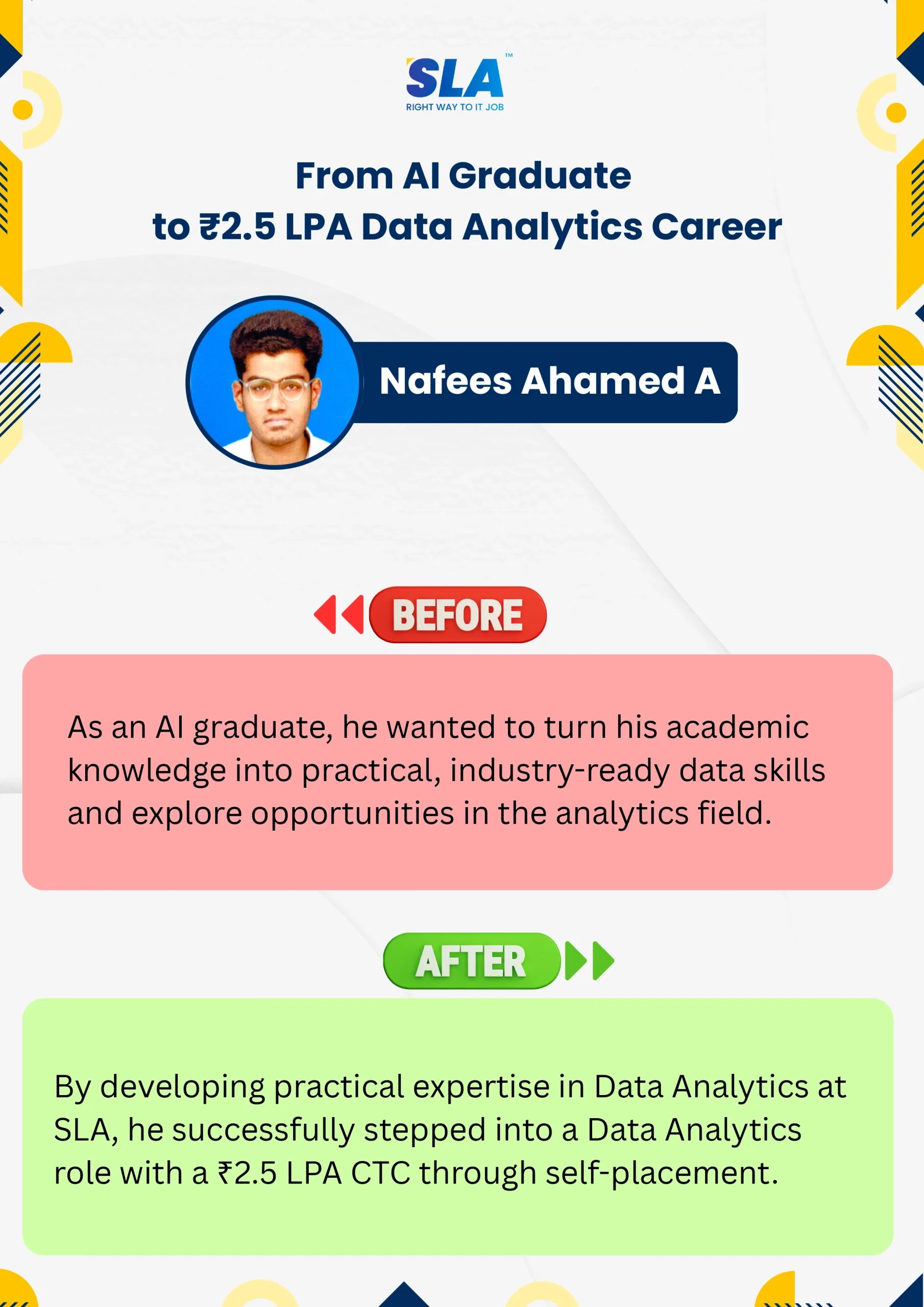
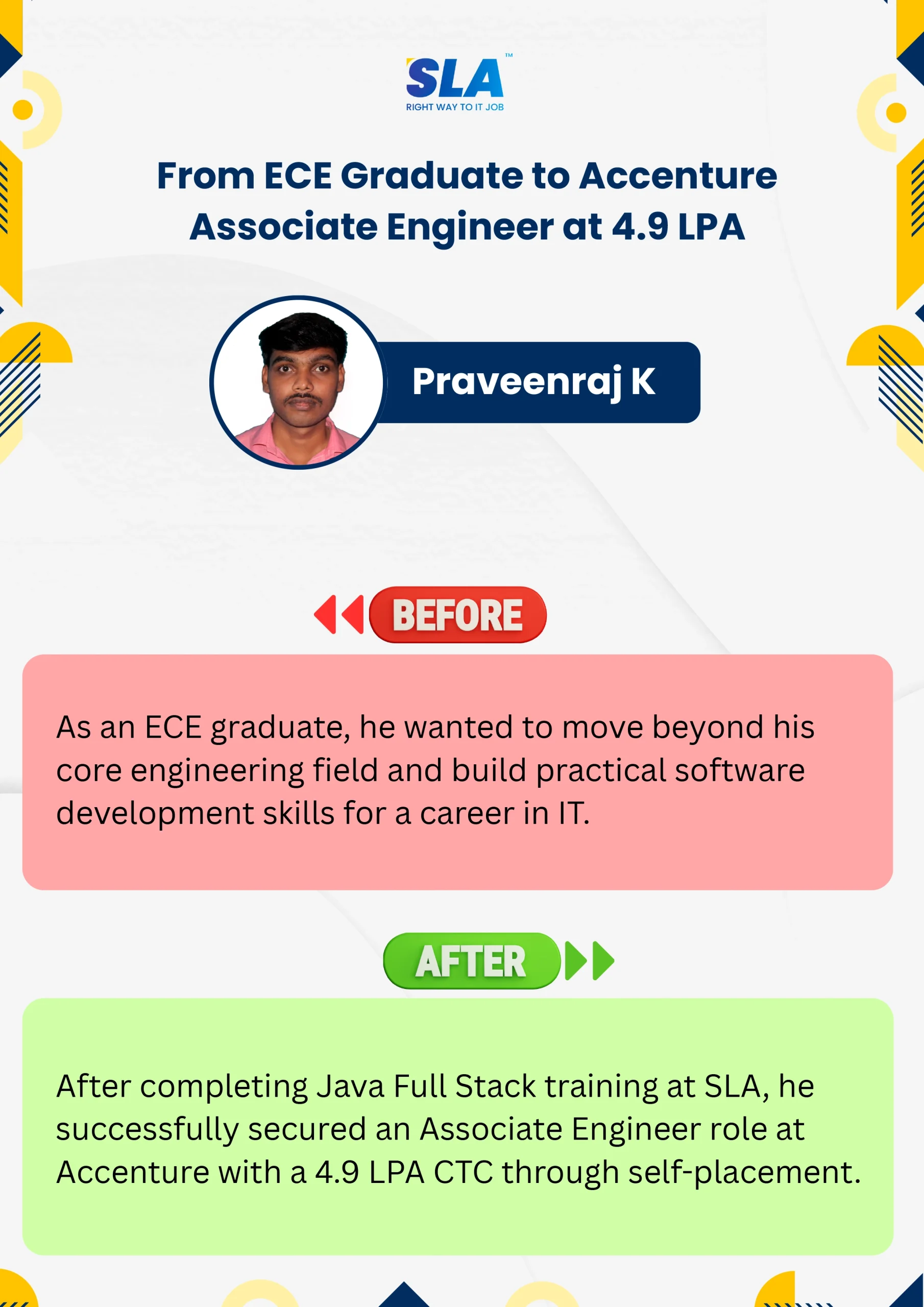
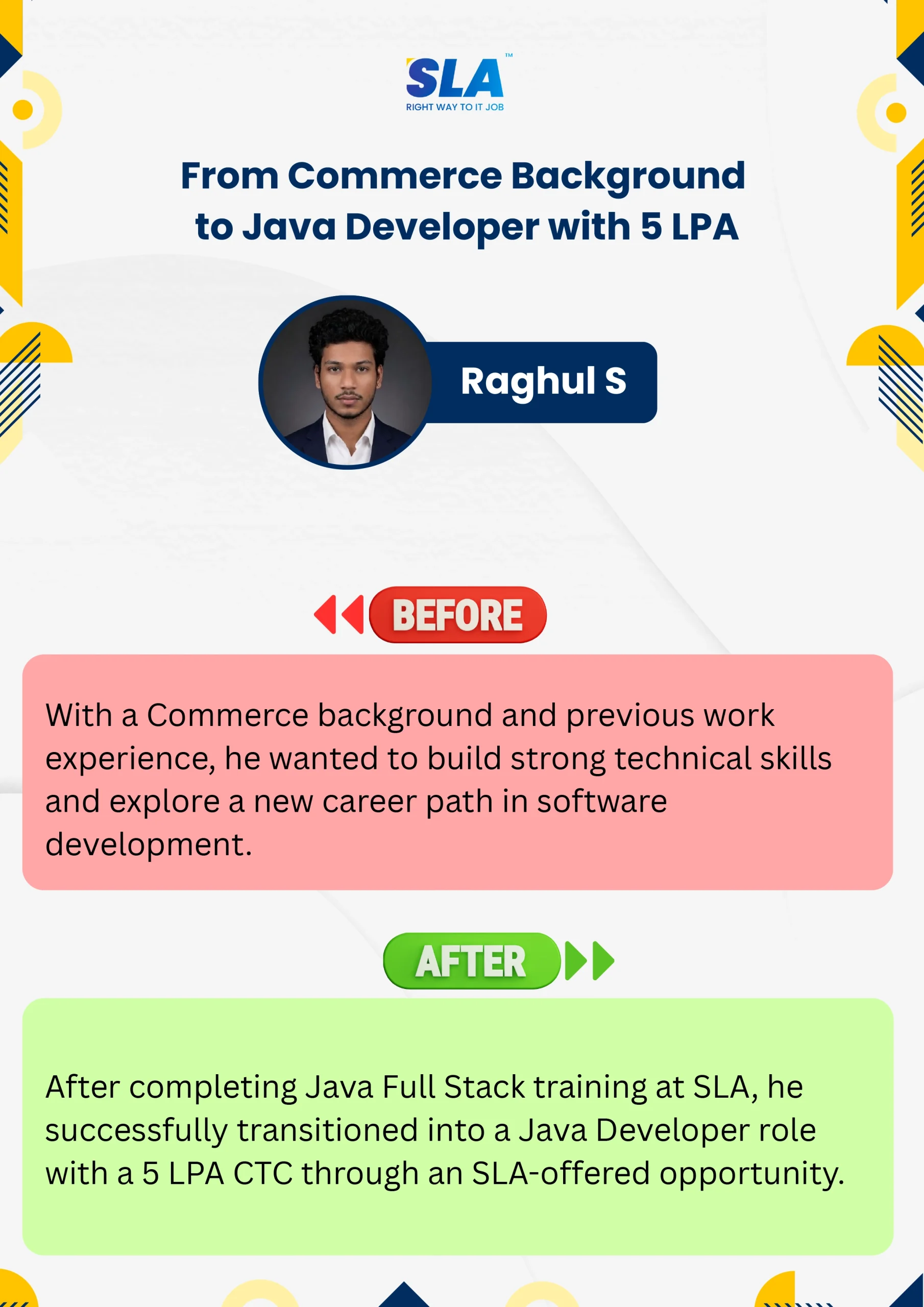
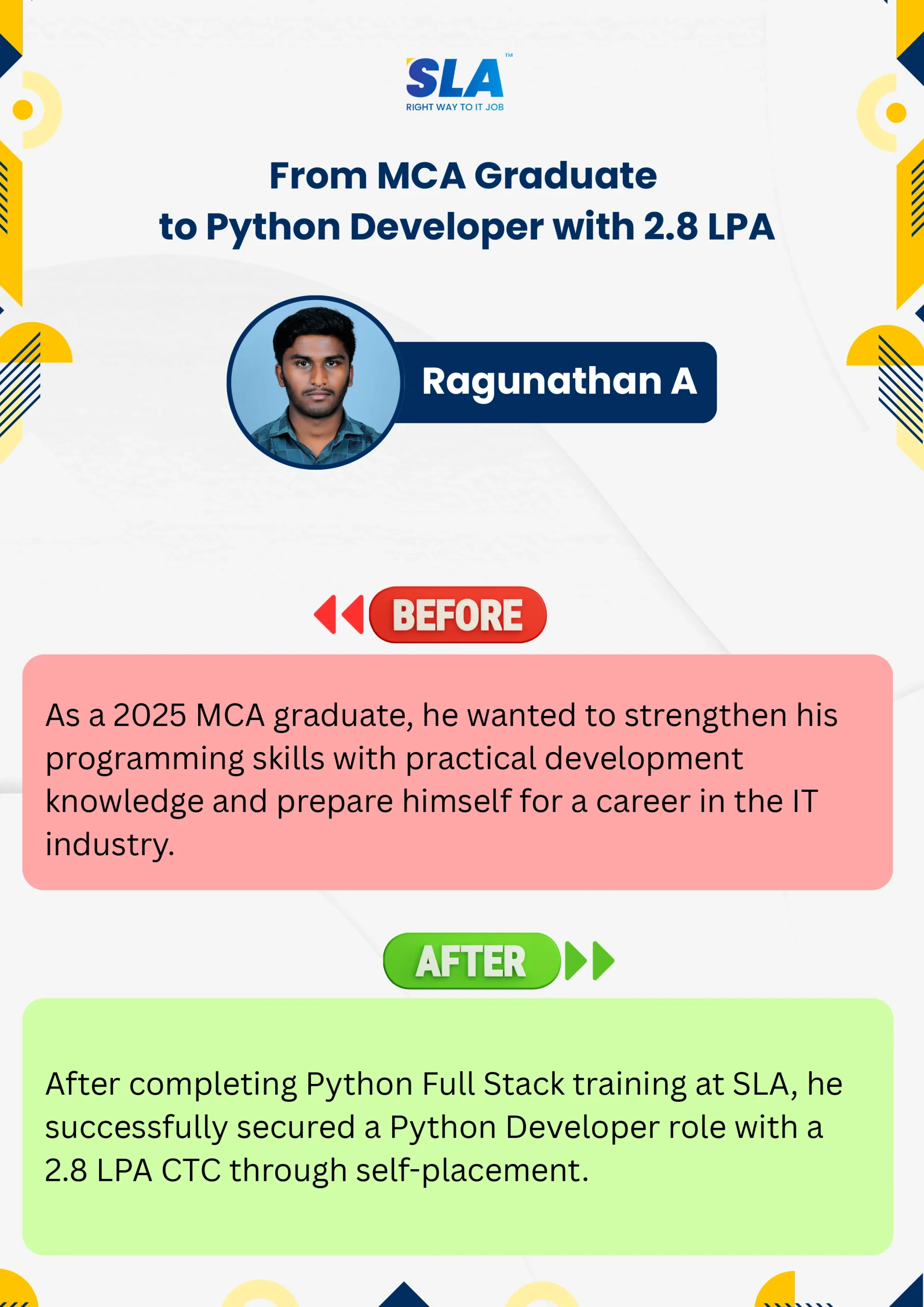
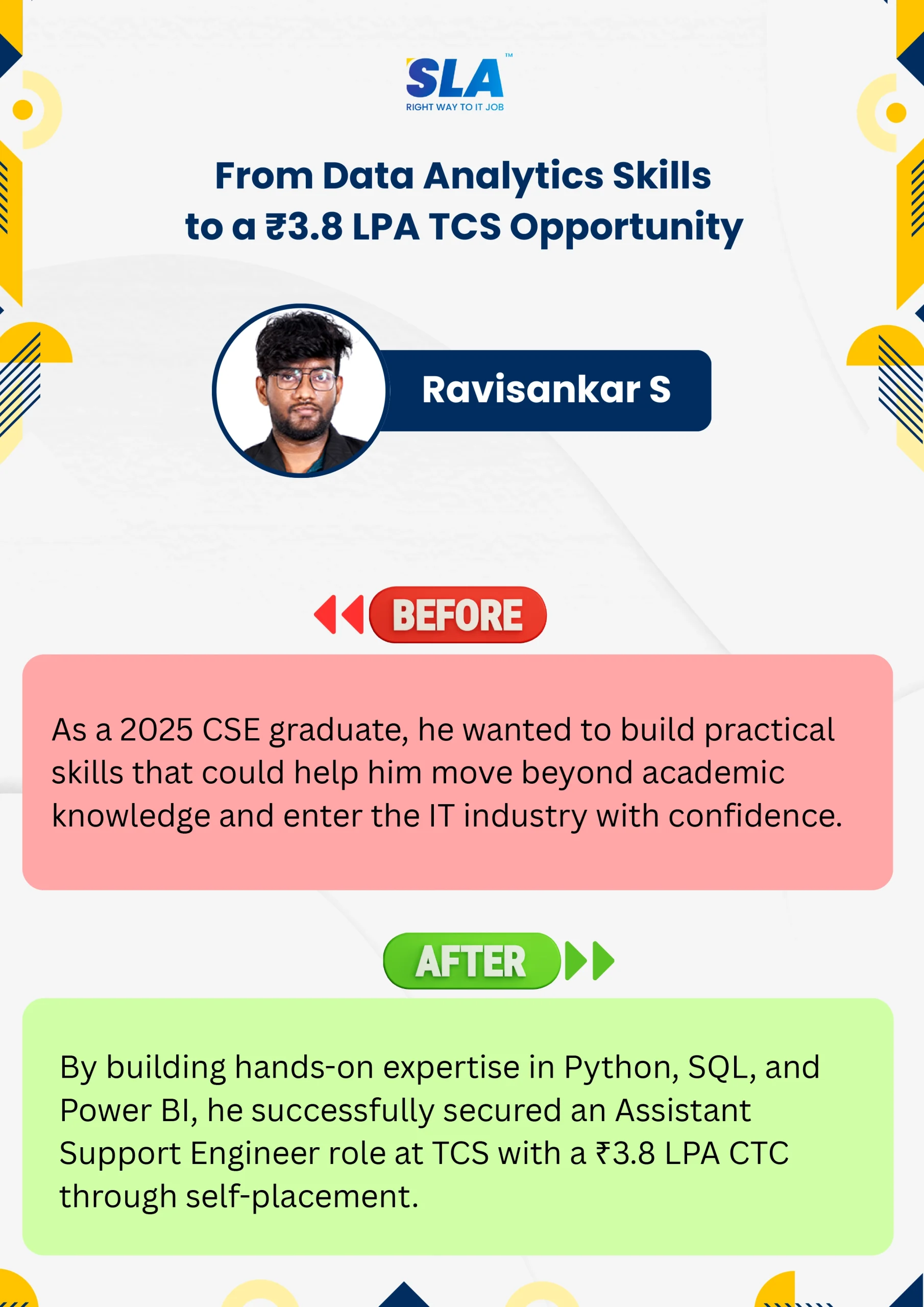
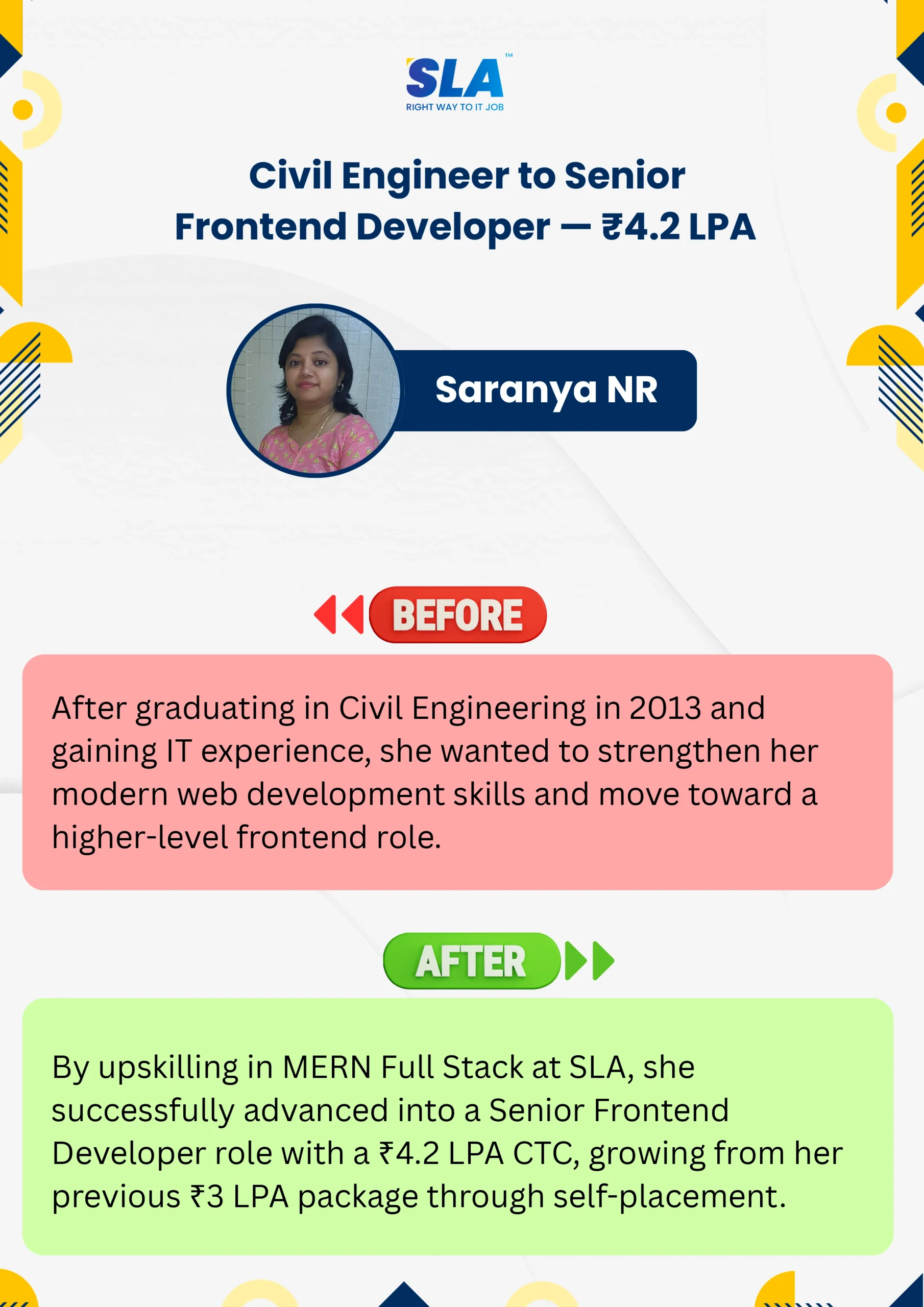
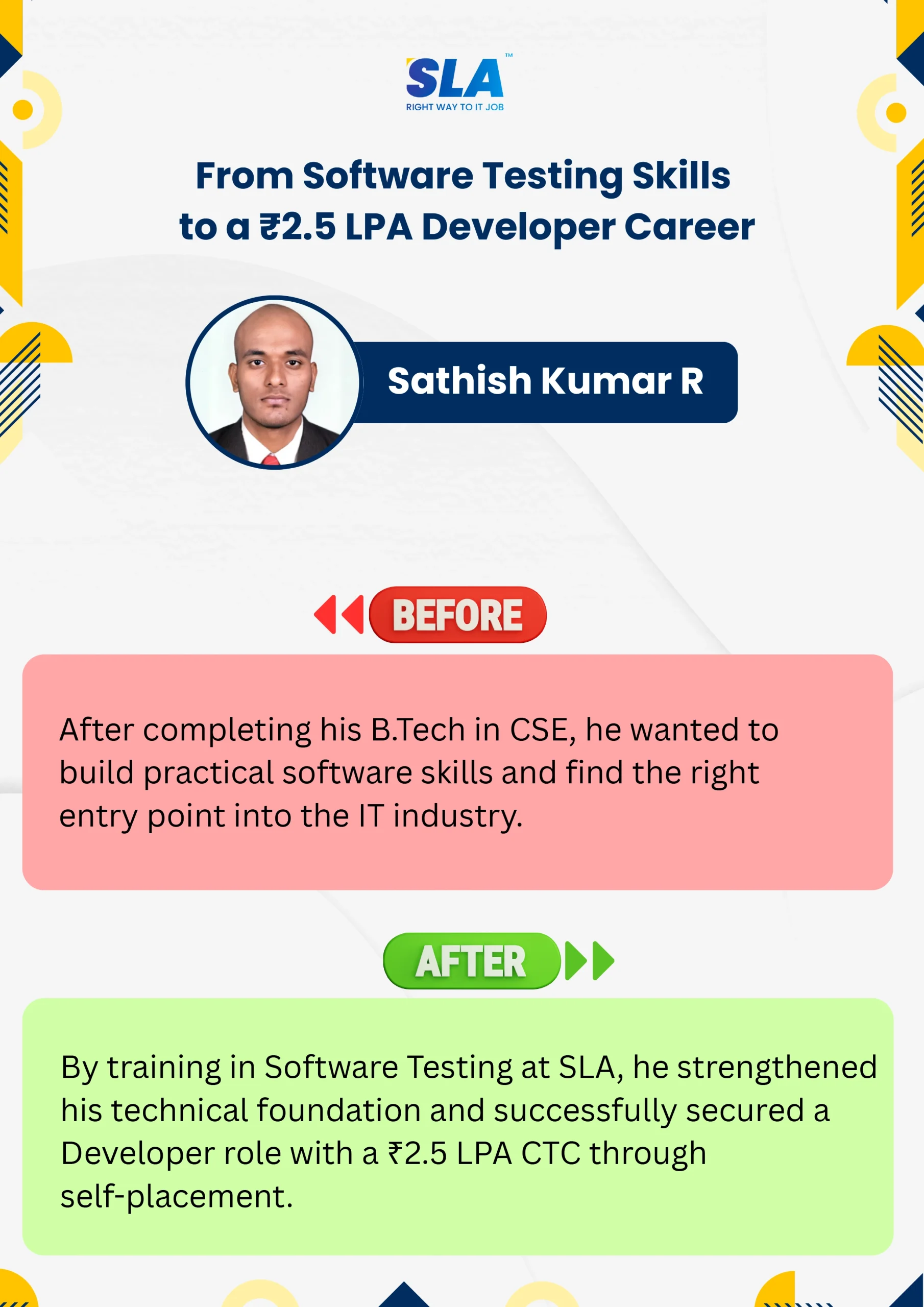
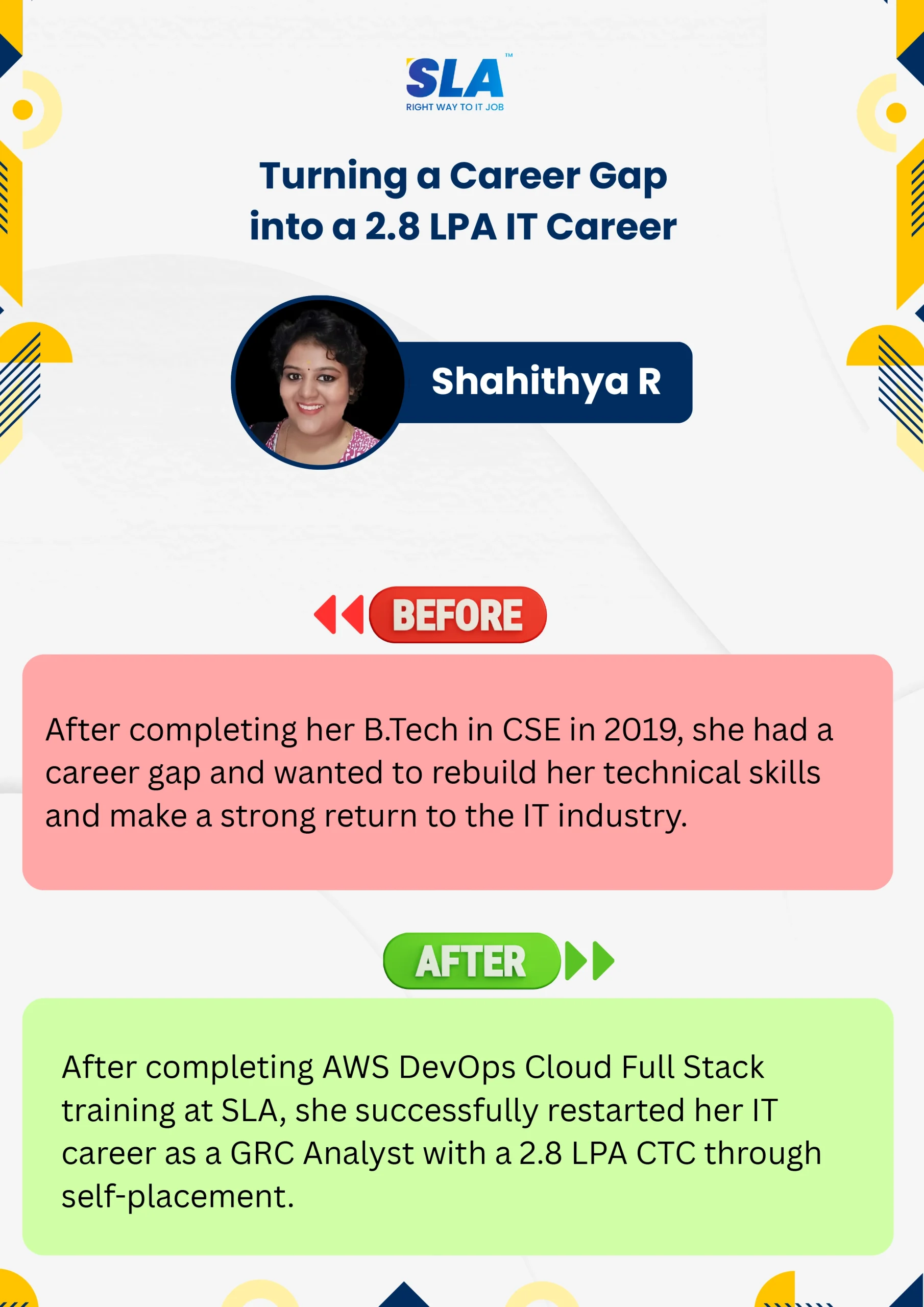
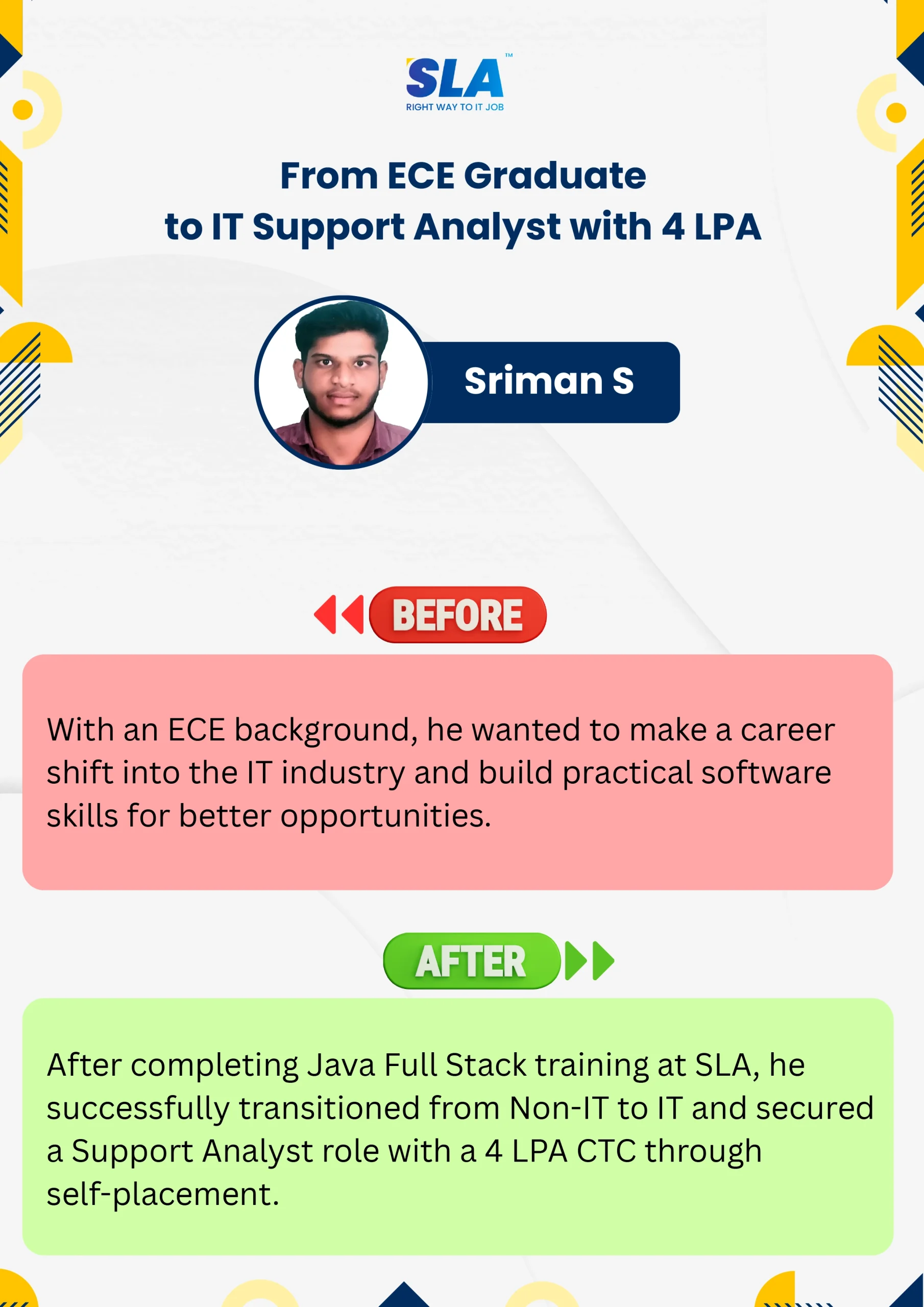
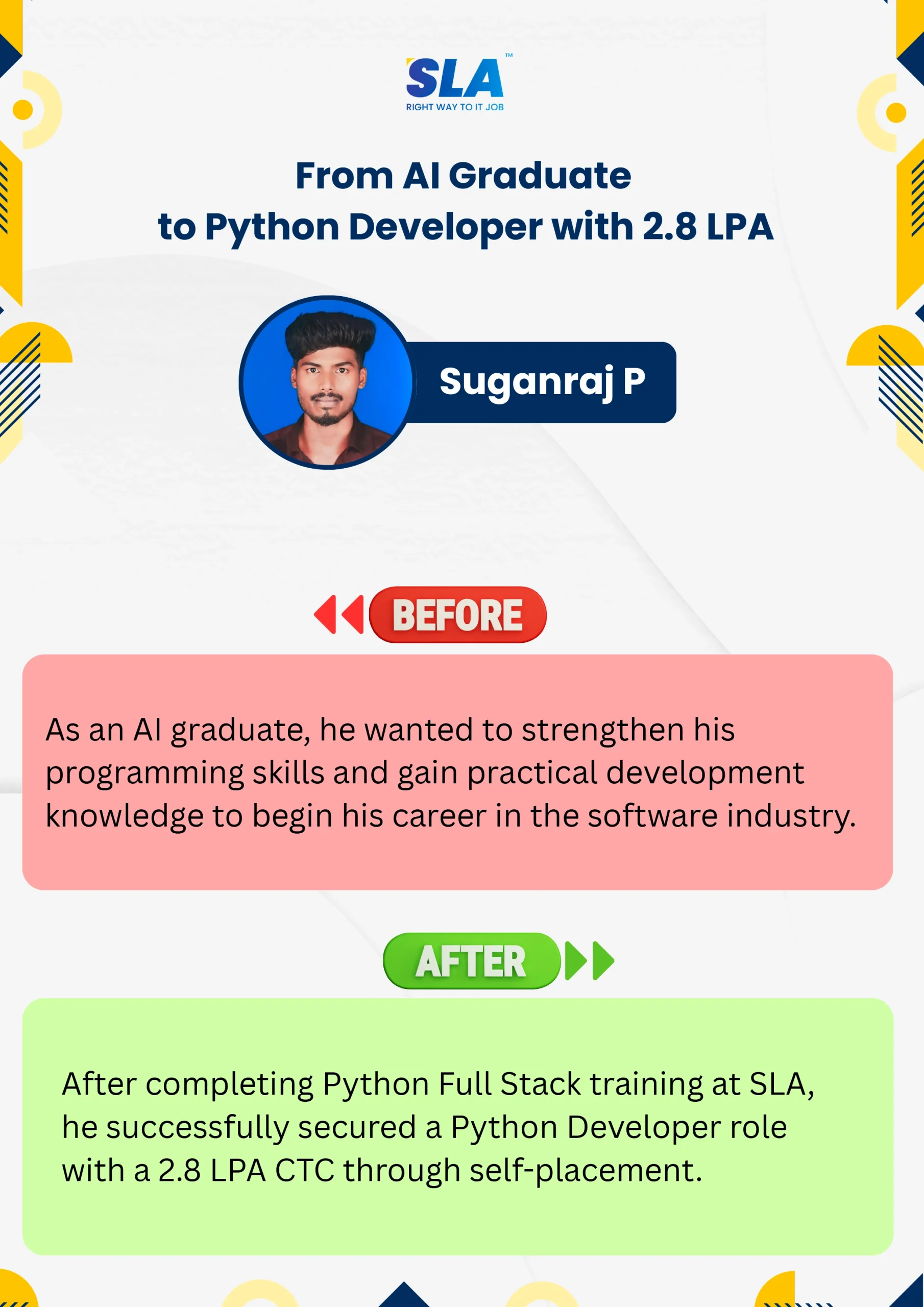
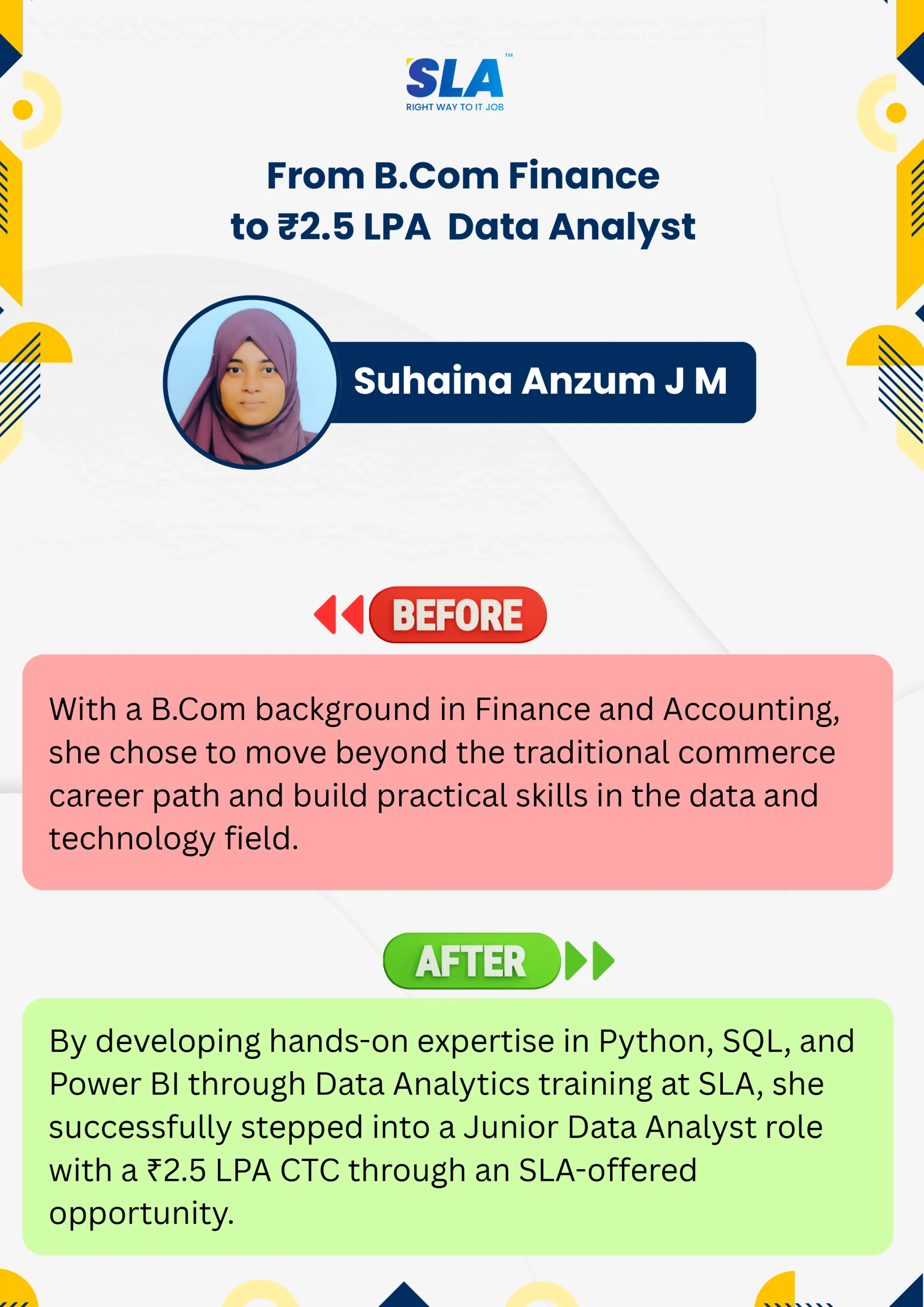
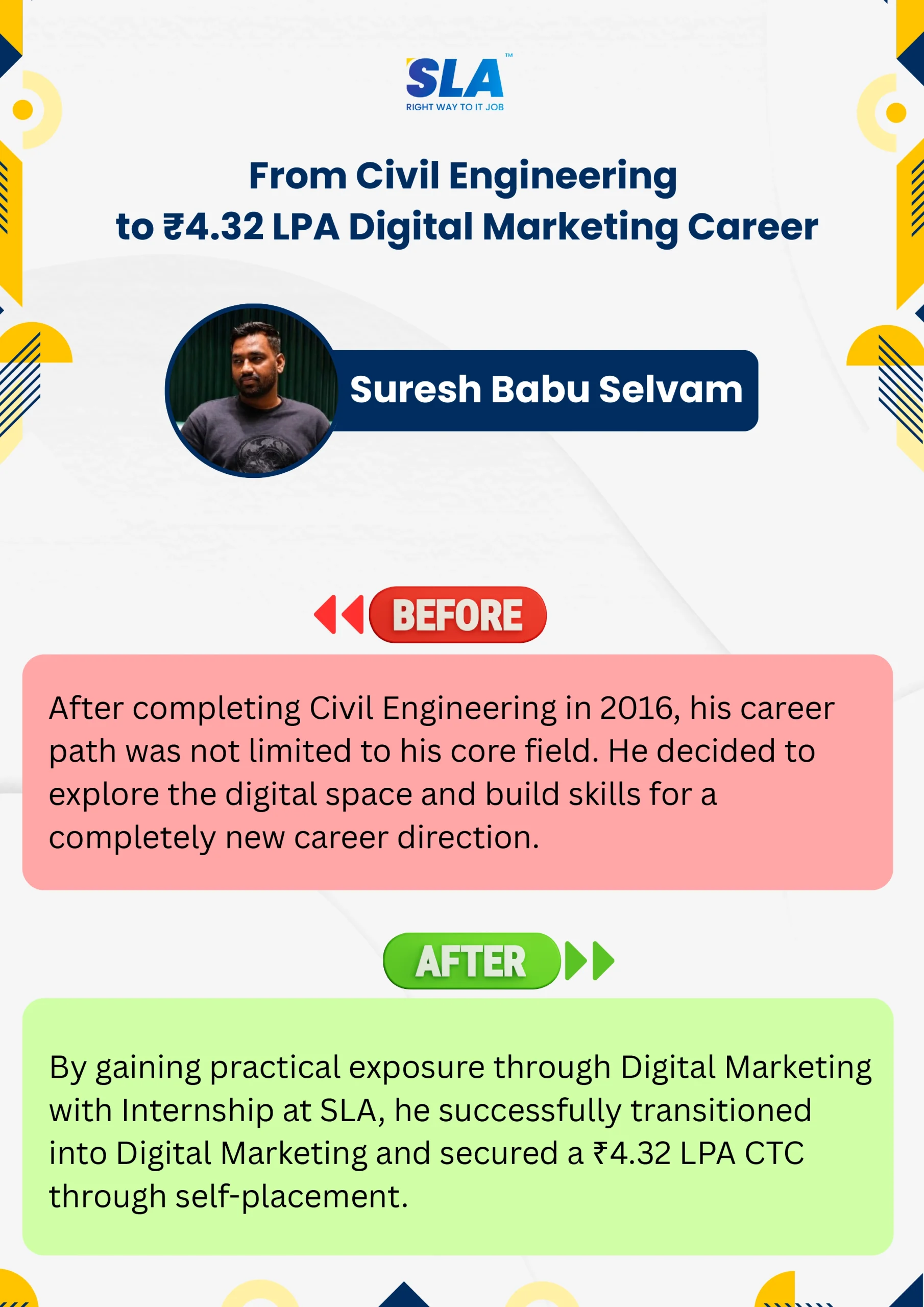
Video Testimonials
Start your learning journey at SLA and write your career story like our students who have shared their experiences here. Are you excited to explore?
See More