
Let's take the first step to becoming an expert in
Click Here to Get Started
100% Placement Assurance
Get Certified
Course Syllabus
Download SyllabusModule 1: HTML
- Introduction to HTML and its structure
- Common HTML tags: headings, paragraphs, lists, links, images
- Forms, tables, and multimedia elements
- Semantic HTML & HTML5 features like audio, video, and canvas
- Best practices for clean and accessible web pages
Module 2: CSS
- CSS fundamentals: selectors, properties, and values
- Styling text, backgrounds, borders, and spacing
- Layout techniques using Flexbox and Grid
- Animations, transitions, and pseudo-classes
- Responsive design principles for mobile and tablet devices
- Introduction to CSS variables and media queries
Module 3: JavaScript
- Basics of JavaScript: variables, data types, operators, and expressions
- Functions, loops, conditional statements, and event handling
- DOM manipulation and dynamic content updates
- ES6 features: arrow functions, template literals, destructuring
- Form validation, error handling, and debugging techniques
Module 4: Bootstrap
- Overview of Bootstrap and its advantages
- Grid system and creating responsive layouts
- Built-in components: buttons, navbars, cards, modals, and forms
- Utility classes for spacing, colors, typography, and alignment
- Themes, customization, and integrating with HTML/CSS
Module 5: Core Python
- Introduction to Python: installation, syntax, and basic programs
- Data types, variables, operators, and expressions
- Control structures: if-else, loops, and nested conditions
- Functions, modules, and packages
- File handling: reading, writing, and manipulating files
- Exception handling and error management
- Object-Oriented Programming (OOP) basics: classes and objects
Module 6: Advanced Python
- Deep dive into OOP: inheritance, polymorphism, encapsulation, and abstraction
- Python libraries: NumPy for numerical computing, Pandas for data manipulation, Matplotlib for visualization
- Regular expressions, decorators, generators, and context managers
- Working with APIs and JSON data
- Advanced file operations and data processing techniques
Module 7: Django
- Introduction to Django framework and MVC (MVT) architecture
- Project setup and folder structure
- Creating models, views, and templates (MVT)
- Forms, user authentication, and session management
- CRUD operations: Create, Read, Update, Delete
- Building RESTful APIs with Django REST framework+
- Deployment basics on cloud platforms
Module 8: MySQL
- Introduction to relational databases and MySQL
- Creating databases and tables with appropriate data types
- Performing CRUD operations: Insert, Select, Update, Delete
- Queries: filtering, sorting, and joining tables
- Indexing, constraints, and data integrity
- Integrating MySQL with Django for dynamic web applications
In conclusion, the Python Programming Syllabus at SLA Institute helps learners build strong coding skills from basics to advanced concepts. With practical training and real-time projects, it prepares students for careers in software development, full-stack development, and data-related roles, making them ready for today’s IT industry.
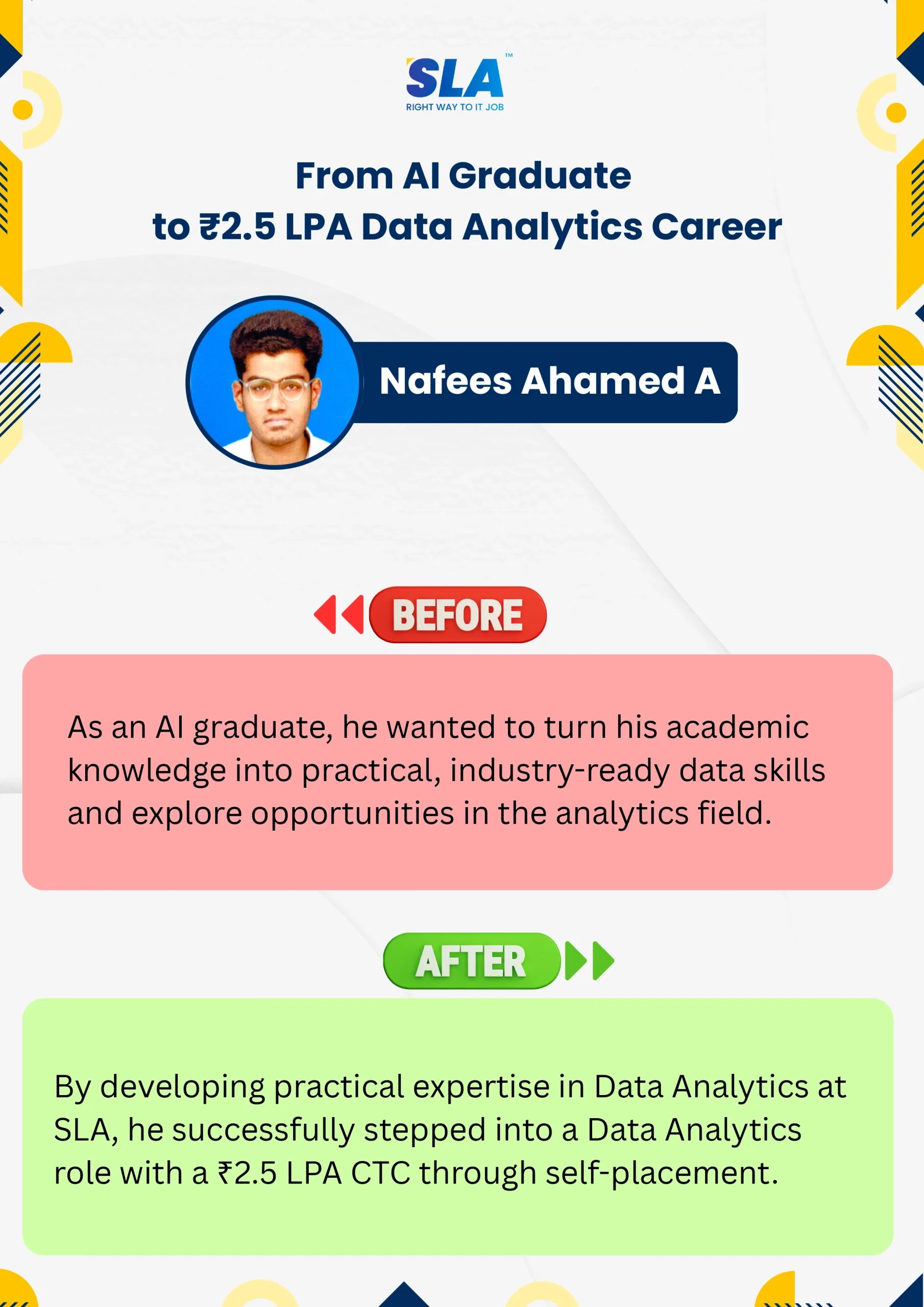
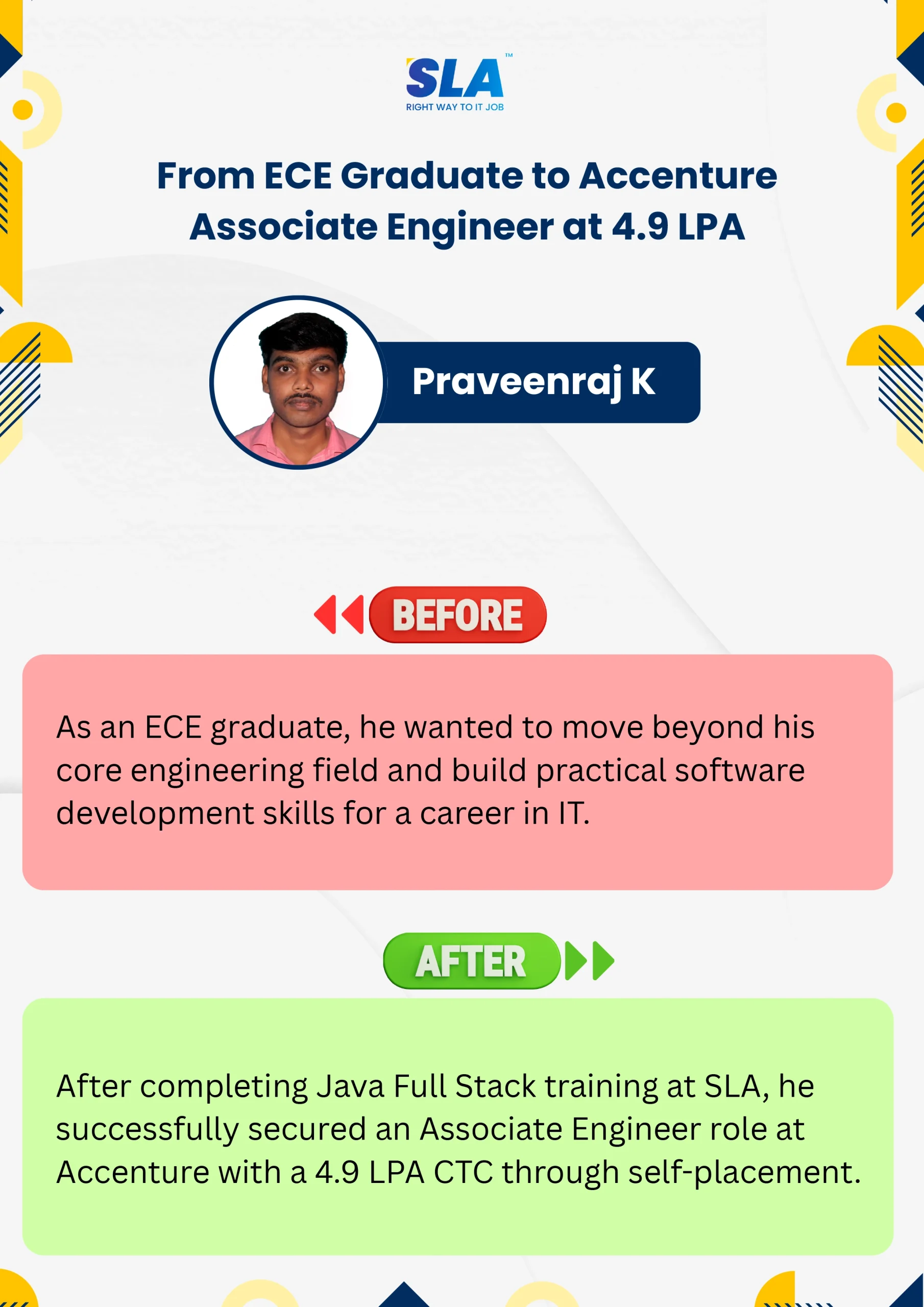
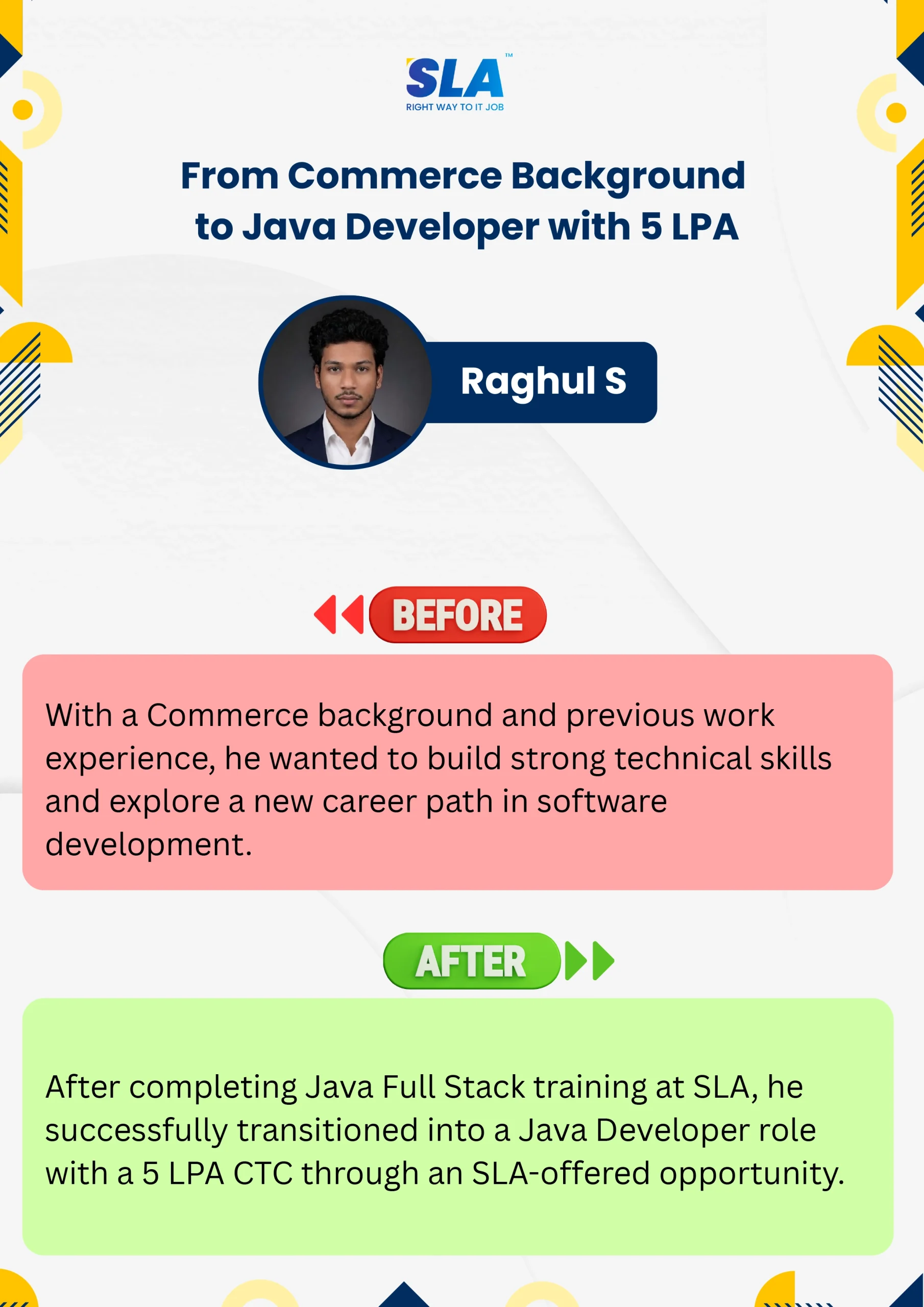
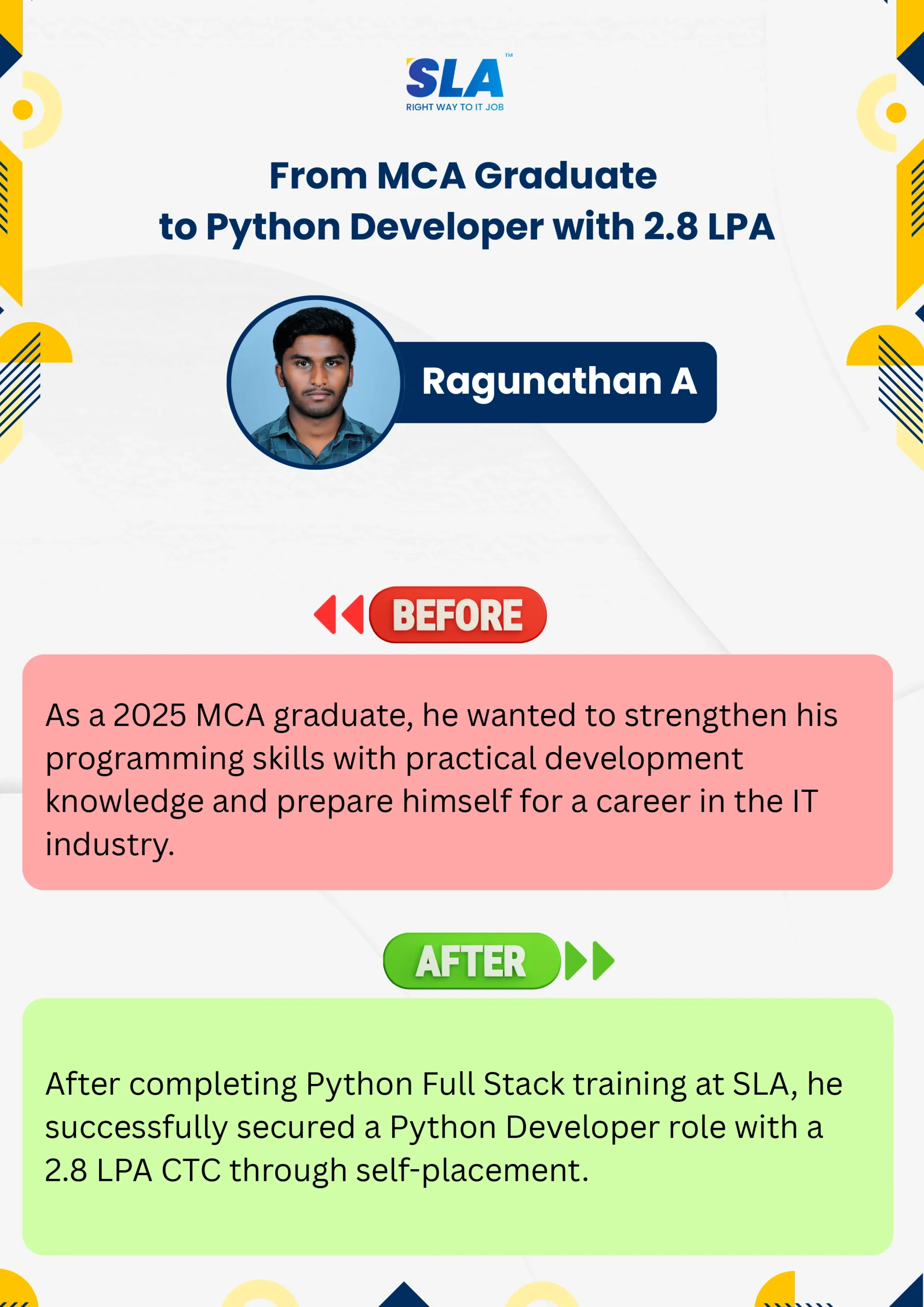
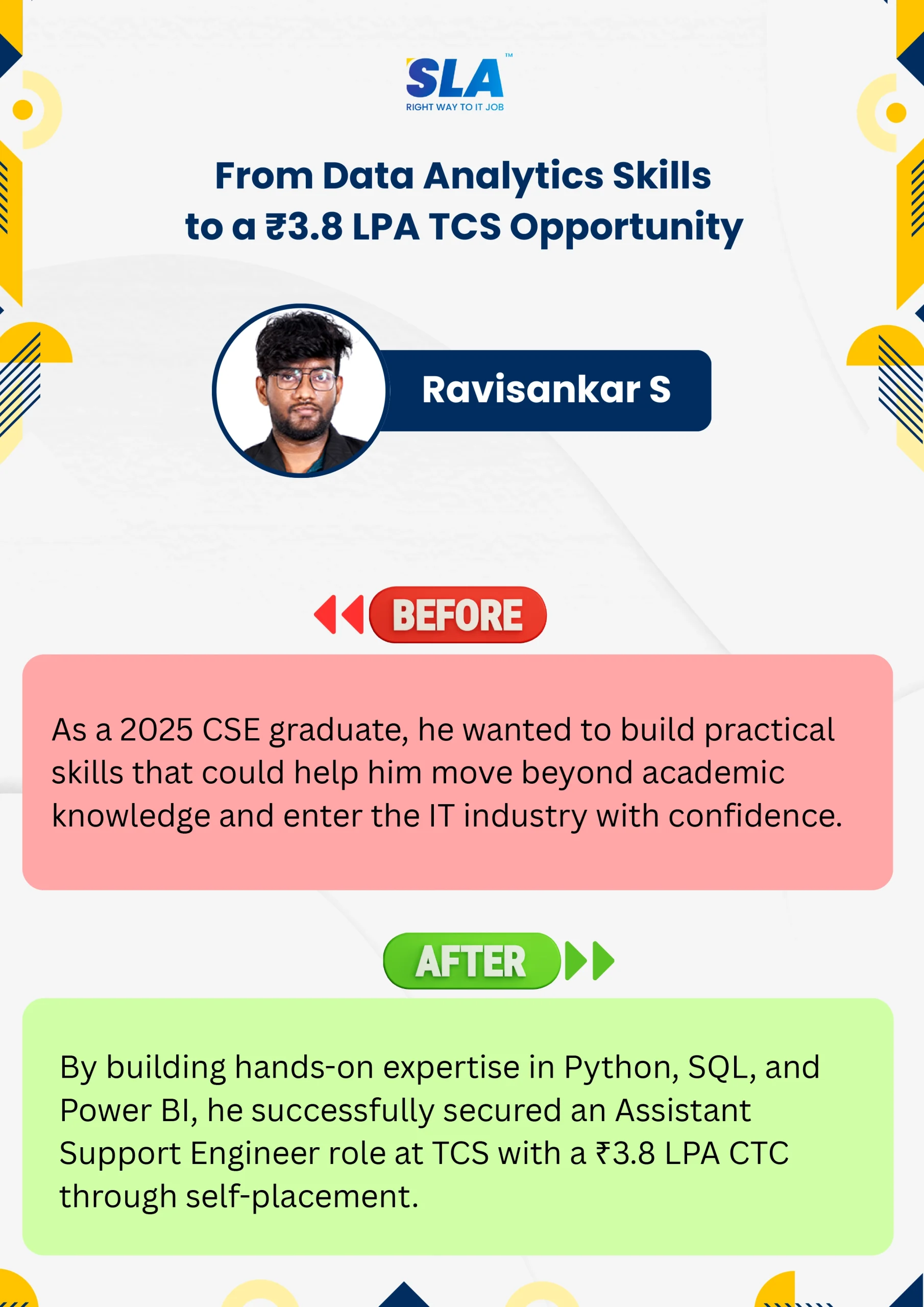
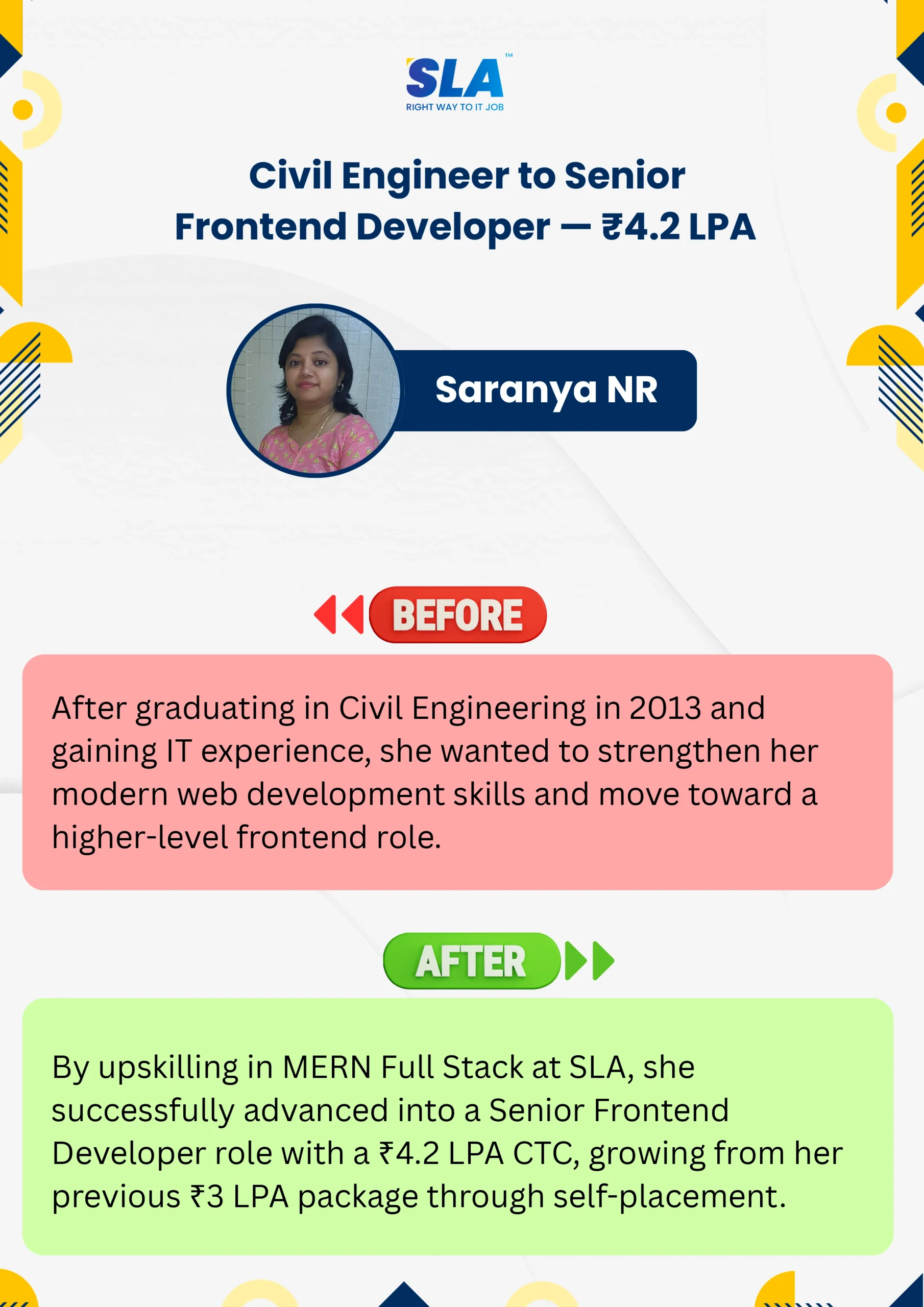
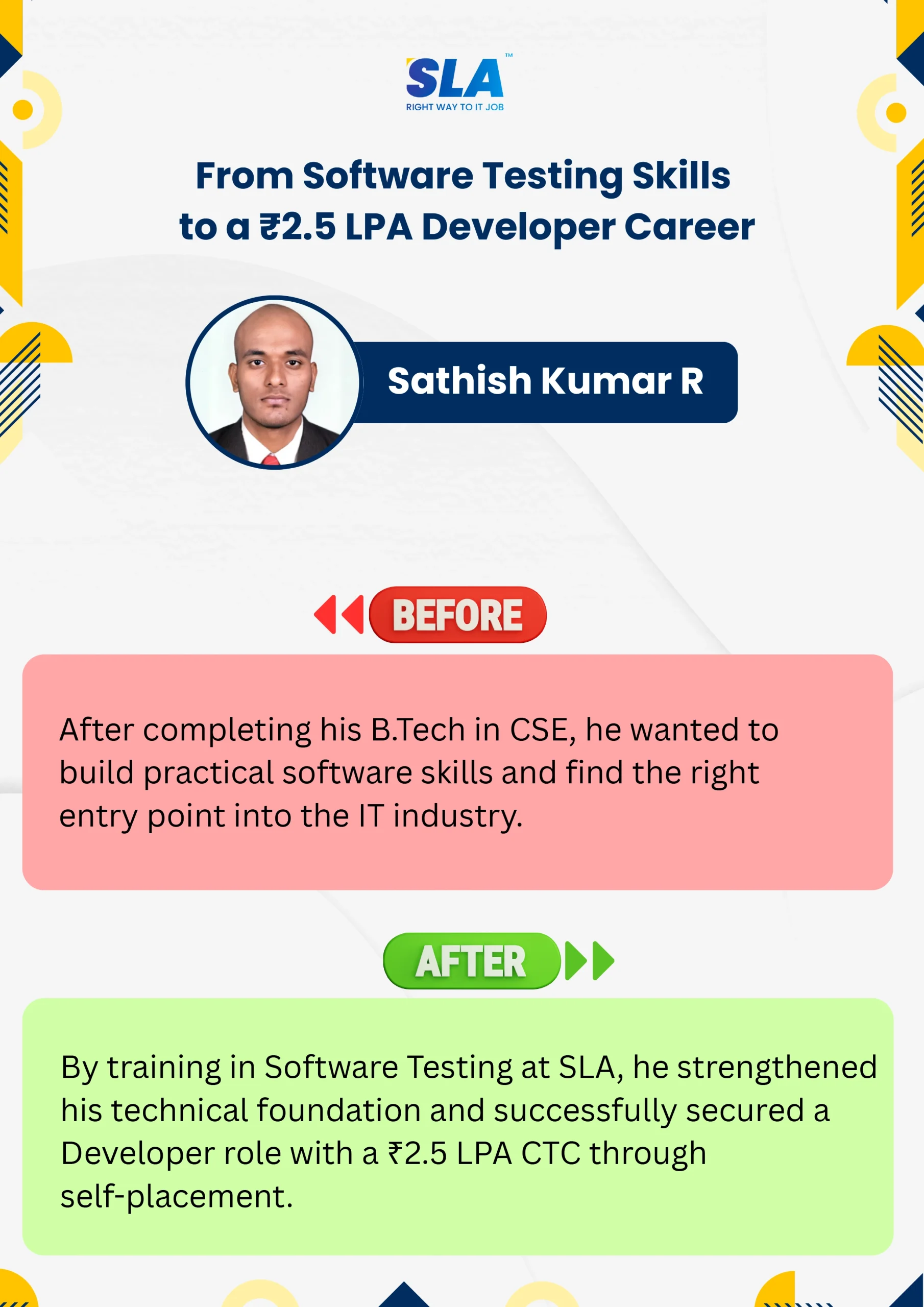
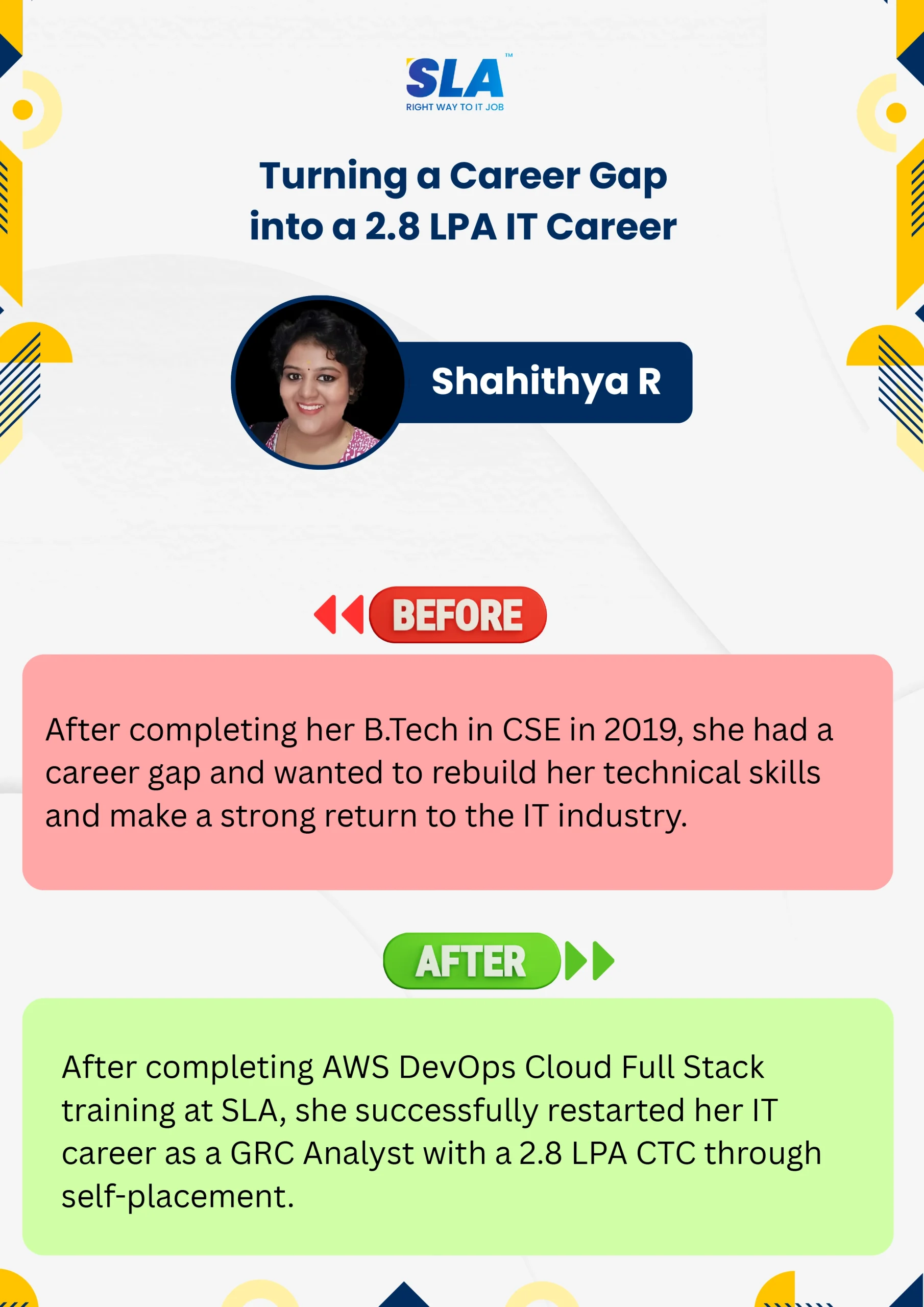
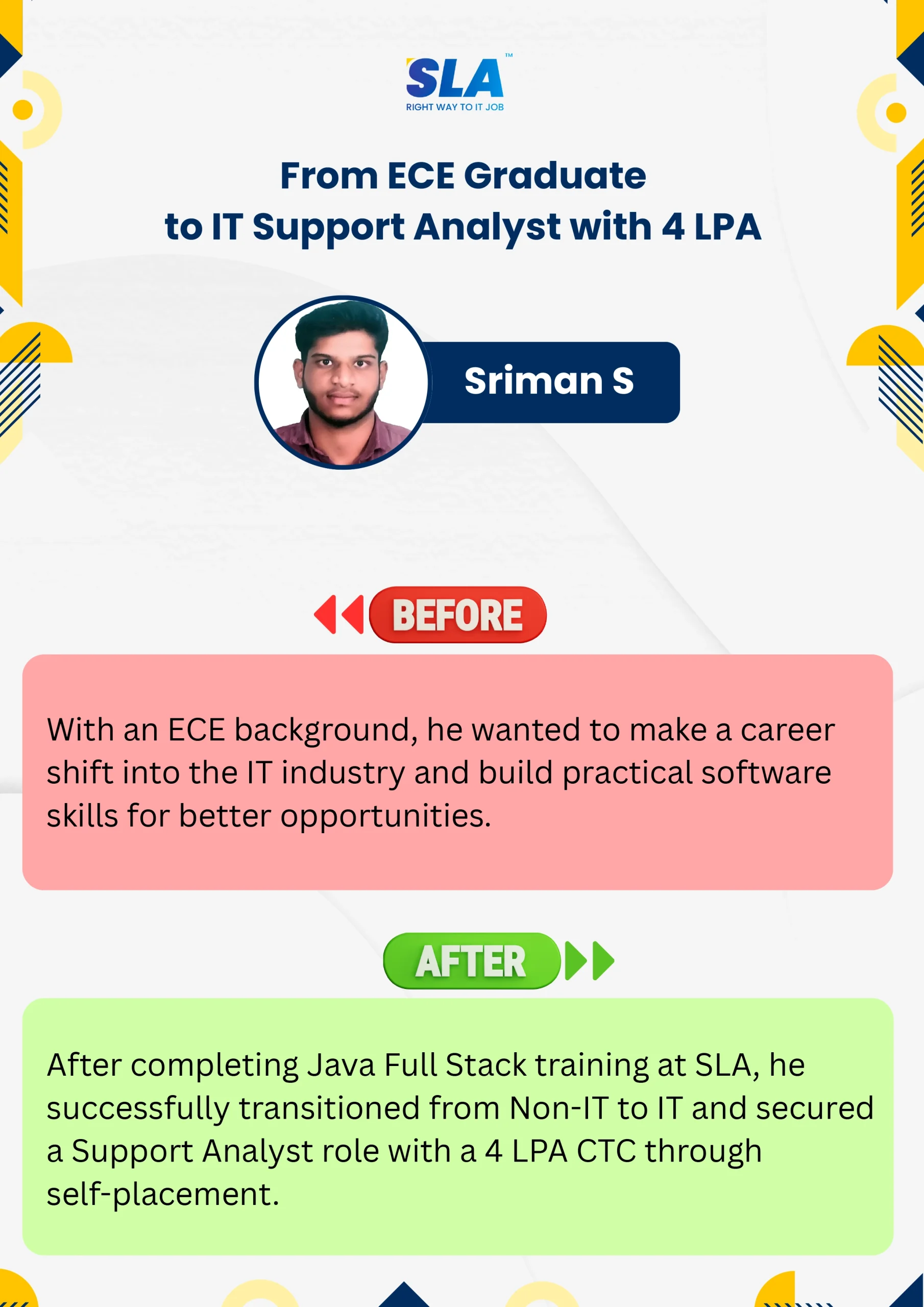
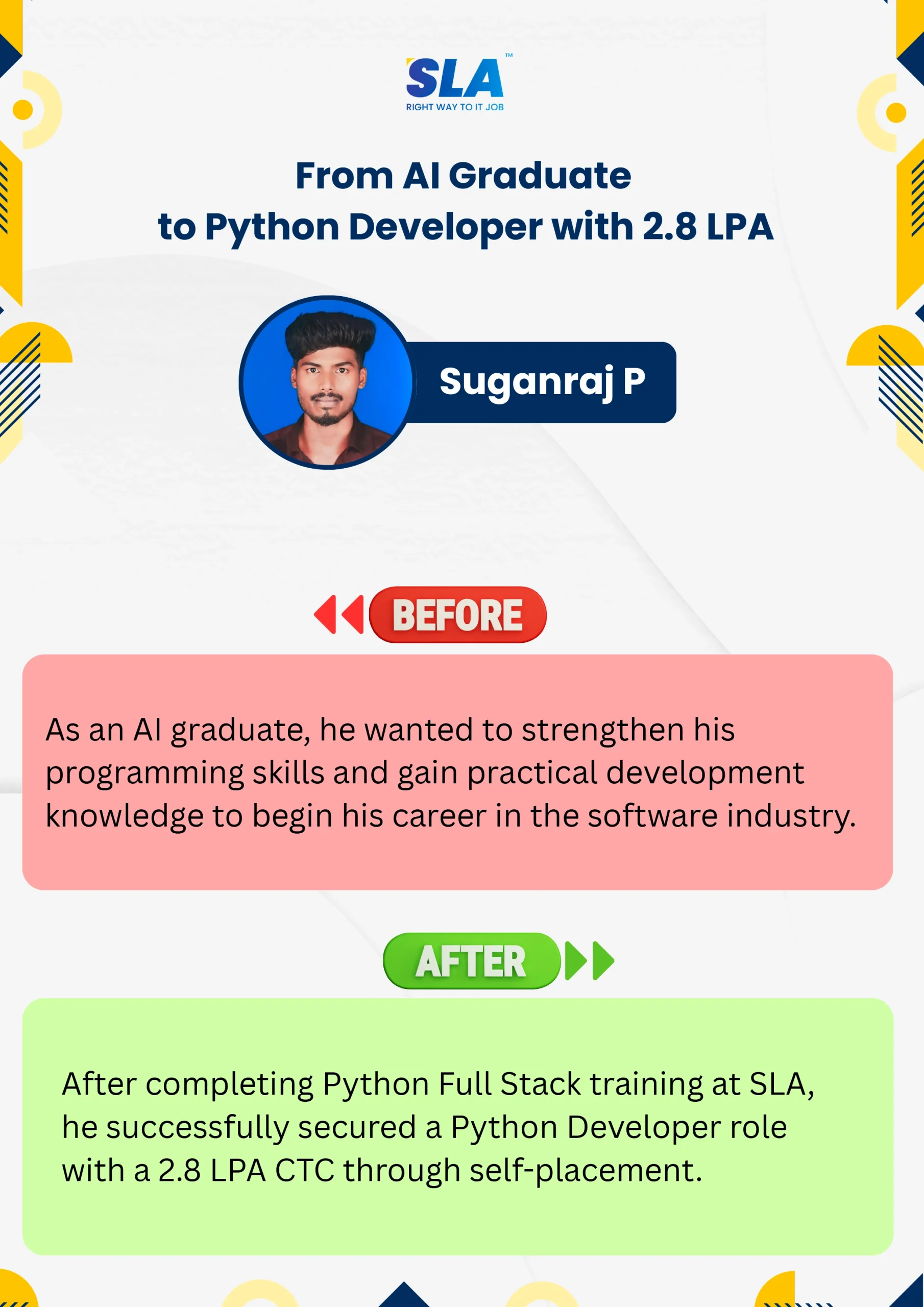
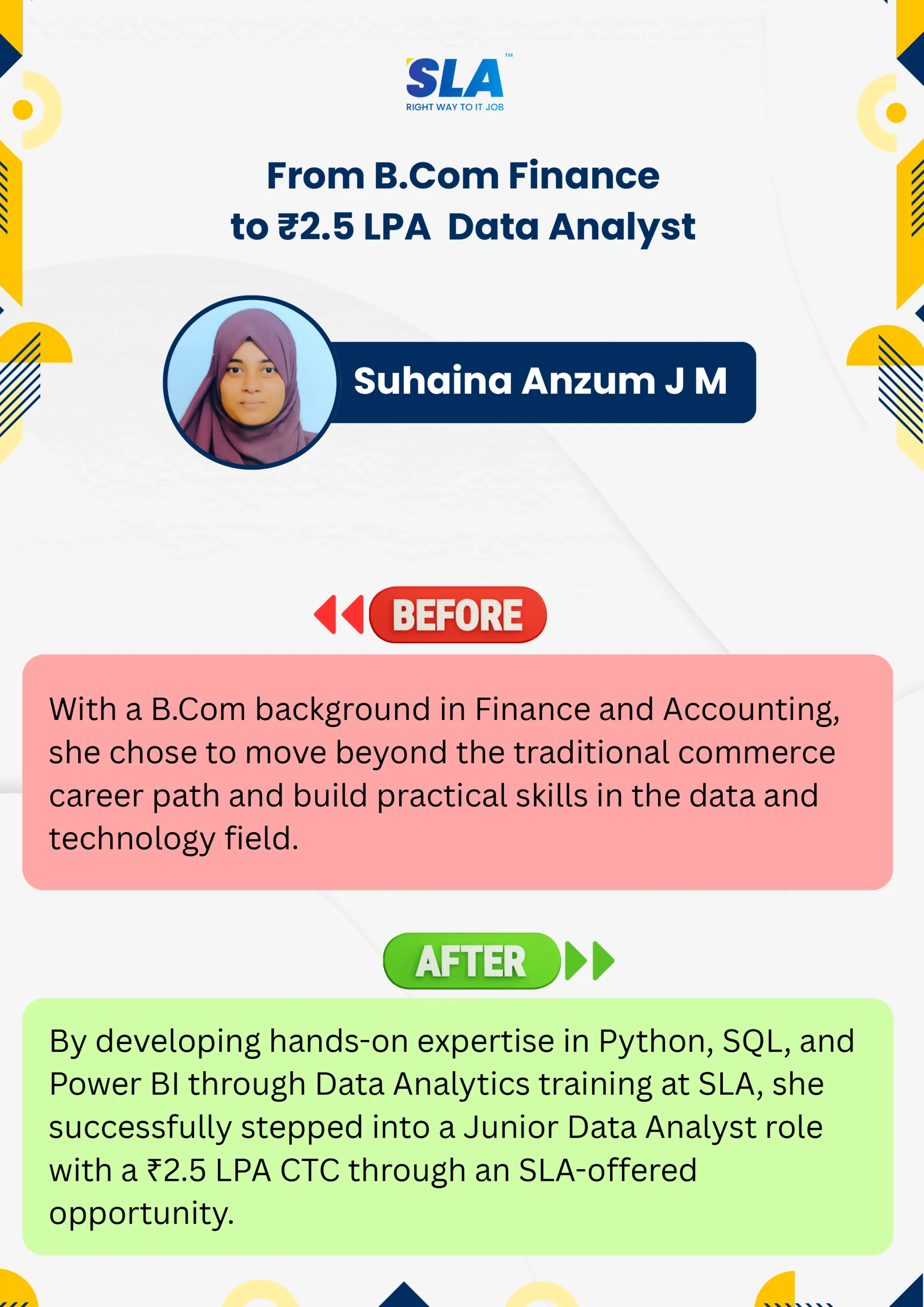
Video Testimonials
Start your learning journey at SLA and write your career story like our students who have shared their experiences here. Are you excited to explore?
See More