
RPA Course Syllabus

duration
2-3 Months

EMI
0% Interest

Mode
Live Online & Classroom Training
Enroll in SLA Institute’s RPA Course in Chennai to launch your career in robotic process automation. This course offers hands-on training, real-world projects, and expert guidance to help you master RPA fundamentals, automation workflows, and advanced RPA tools. Our RPA training with placement provides in-depth learning along with placement support, ensuring you achieve your career goals with confidence. Join us today and start your journey to becoming a proficient RPA professional!
GET YOUR JOB ELIGIBILITY REPORT

Let's take the first step to becoming an expert in
Click Here to Get Started
100% Placement Assurance
Get Certified
Course Syllabus
Download SyllabusIntroduction To RPA
- Issues with Persistence layers and Object-Relational Mapping (ORM)
- RPA Overview and Benefits
- RPA architecture overview
- POJO (Plain Old Java Object) Based Mapping
Getting Started With RPA Quickly
- Overview of the RPA distribution
- Configuring RPA
- RPA.cfg.xml file
- SessionFactory configuration
- Connection properties, Database dialect
- Configuration class, Session Interface
- “Hello World” Program for RPA
- Mapping a Class
- Persistent Entity Class, RPA Mapping
- File, Mapping the Entity Class
- Primary keys: Id property, Generated Id
- RPA Type System
- Working with sessions and Persistent Objects
- Logging – log4j Overview and configuration for RPA
Querying
- Inserting and Updating Entities
- HQL – RPA Query Language Overview
- The Query Interface
- Creating and working with queries
- Named Queries, Projection Queries, Aggregate Queries
The Persistence Lifecycle
- Transaction Overview and Transactions in RPA
- RPA Transaction API (in Managed and Non-managed Environments)
- The lifecycle of managed objects
- Persistent, transient, and detached objects
- The Persistence (Session) Context (Lifespan, Relation to Managed Objects,
Propagation) - Contextual Sessions
- Synchronization to the Database
- The Session as cache
Relationships
- Object Relationship Overview
- Mapping Collections of Value Objects
- Entity Relationships: 1-N, N-1, N-N, 1-1
- Mapping Entity Relationships
- Uni and Bi-directional Relationships
- The Relationship “inverse”
- Cascading Over Relationships
- Queries Across Relationships (Lazy and Eager)
Inheritance Mapping
- Entity Inheritance with RPA
- Table-per-class mapping
- Table per Subclass mapping
- Table per Concrete Class mapping
Additional Querying Capabilities
- Projection Queries, Aggregate queries
- Bulk updates and deletes
- Native SQL Queries
- Query Filters
The Criteria API
- Overview of the Criteria API
- Working Querying with the Criteria API
- Query by Example
RPA And Java Persistence / EJB 3
- Overview of Java Persistence / EJB 3
- Relationship between Java Persistence and RPA
- Overview of Annotations
- Mapping Entities with RPA Annotations
- The EntityManager, Persistence Context and Persistence Unit
- Working with Transactions – EntityTransaction, Managed, and Unmanaged Environments
- Inserts and Updates
- JPQL – Java Persistence Query Language
- Versioning
- Relationships
Advanced Topics
- Components and Multi-Table Mapping
- equals() and hashCode()
- Caching and Efficiency
- Design Considerations
In conclusion, the RPA Course Syllabus at SLA Institute helps people gain skills in automation and workflow optimization. They learn by doing, which helps them reduce mistakes, work efficiently, and make business processes smoother. This course gets learners for good jobs in RPA and automation in today’s growing IT industry, where RPA skills are really needed. The RPA Course Syllabus is very helpful for those who want to learn about automation and RPA. It helps learners get experience and prepares them for successful careers.
Video Testimonials
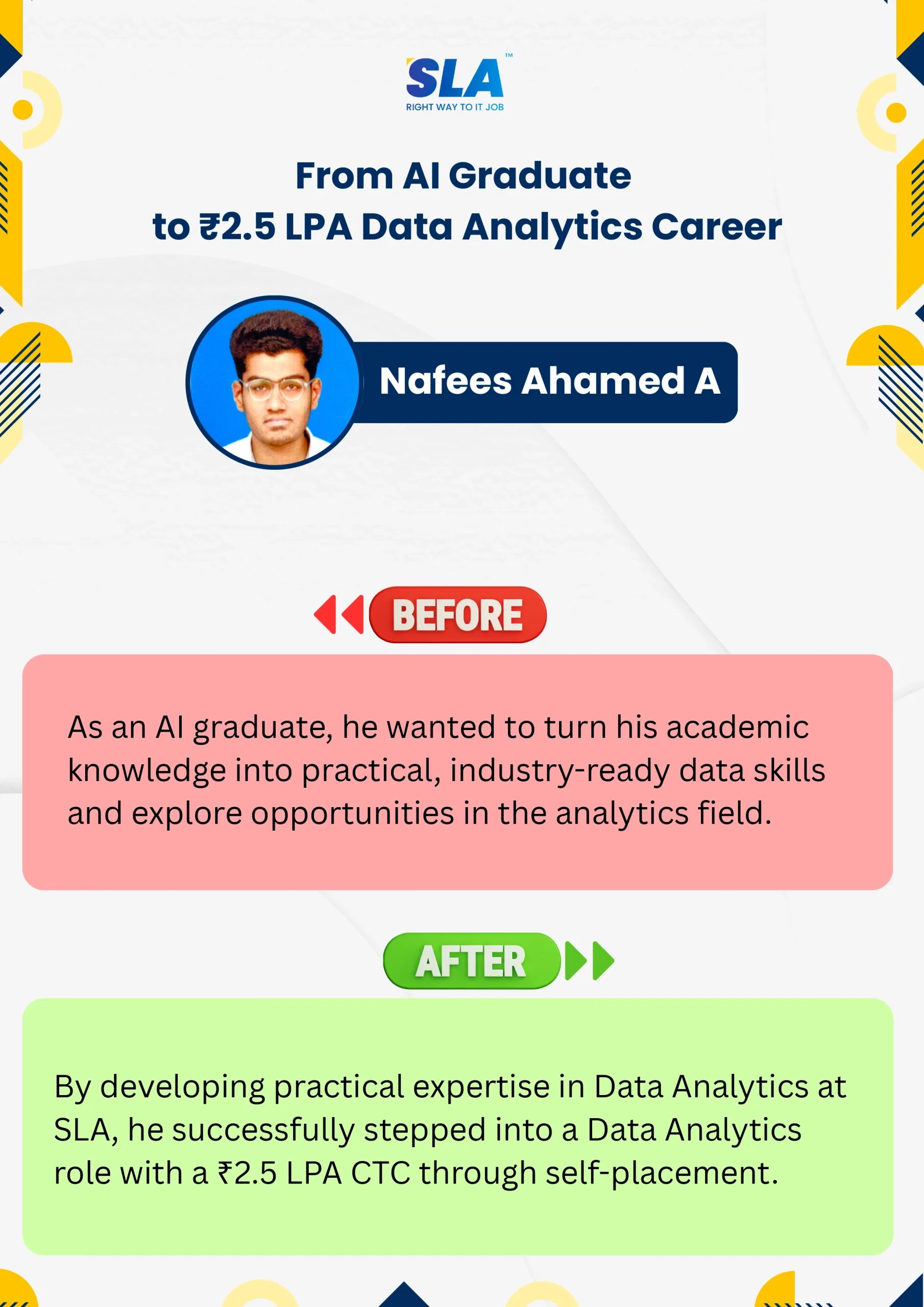
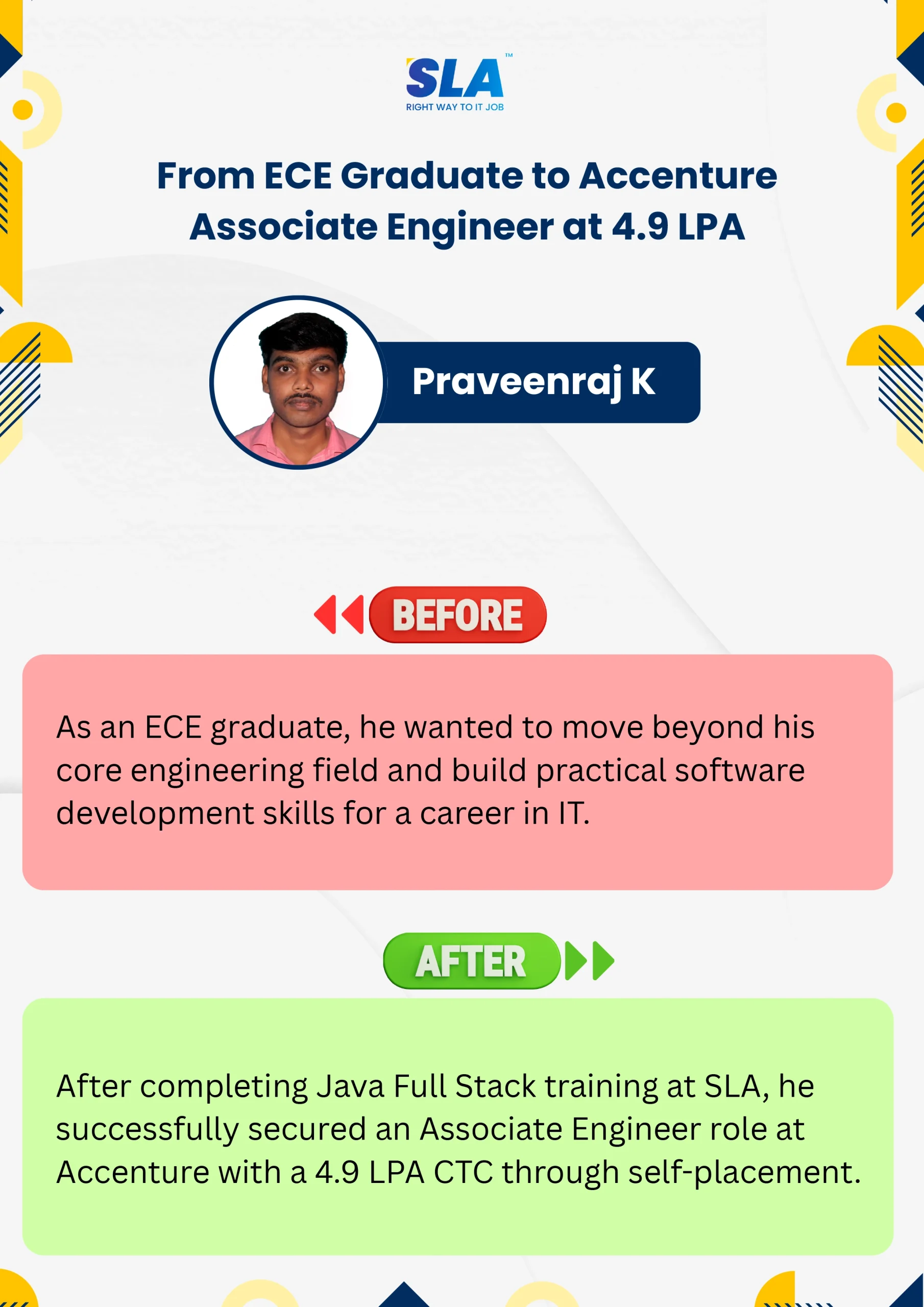
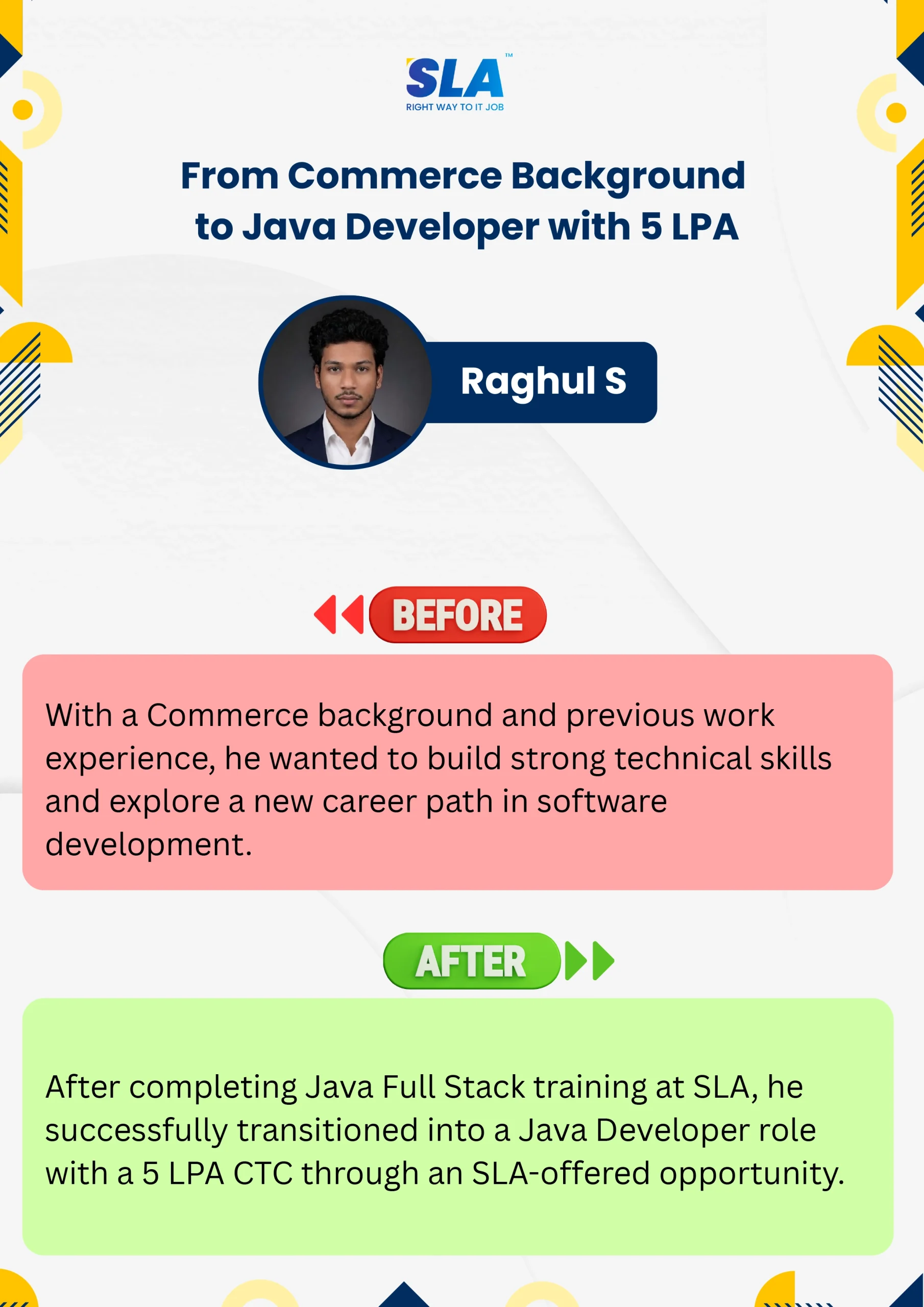
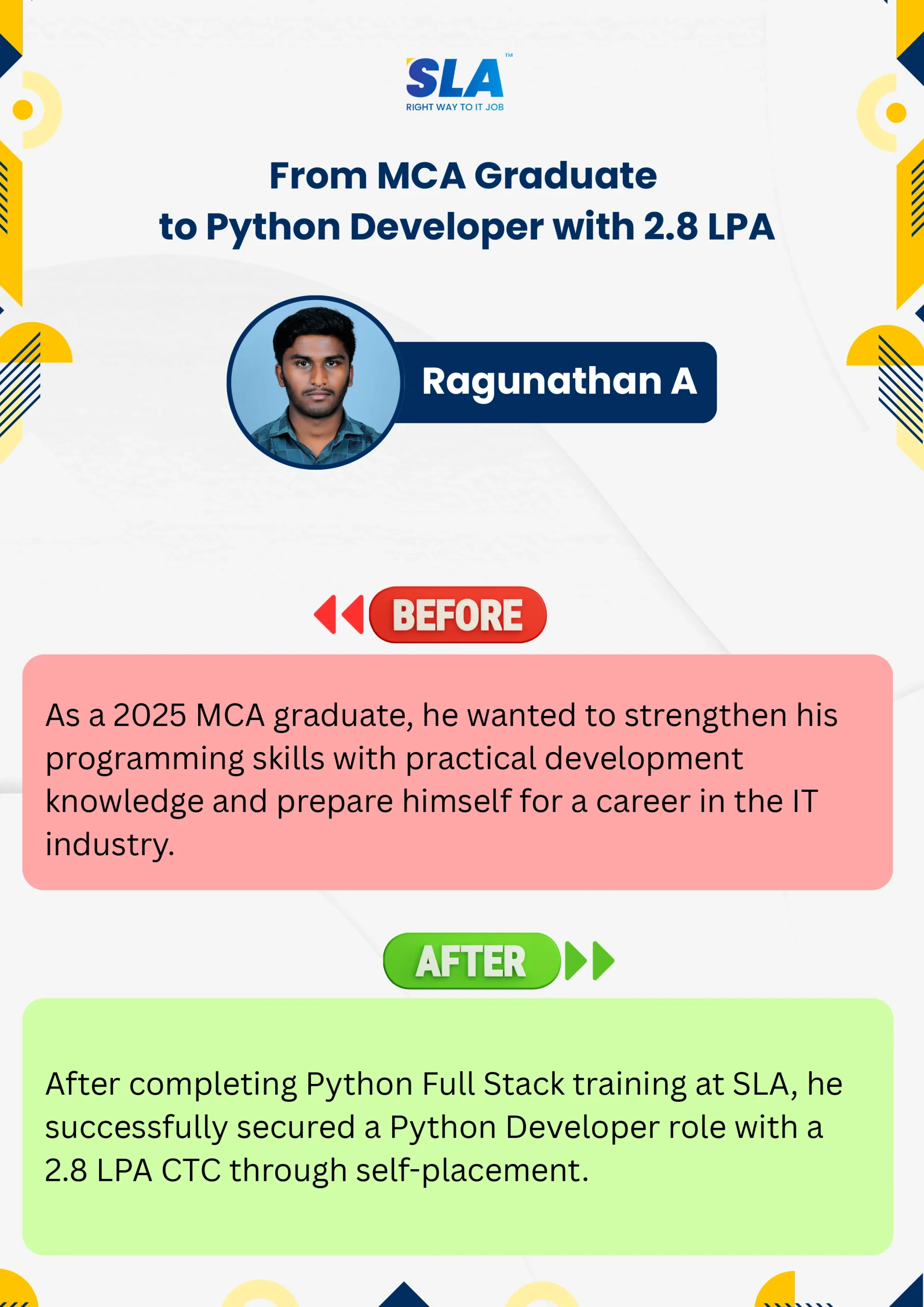
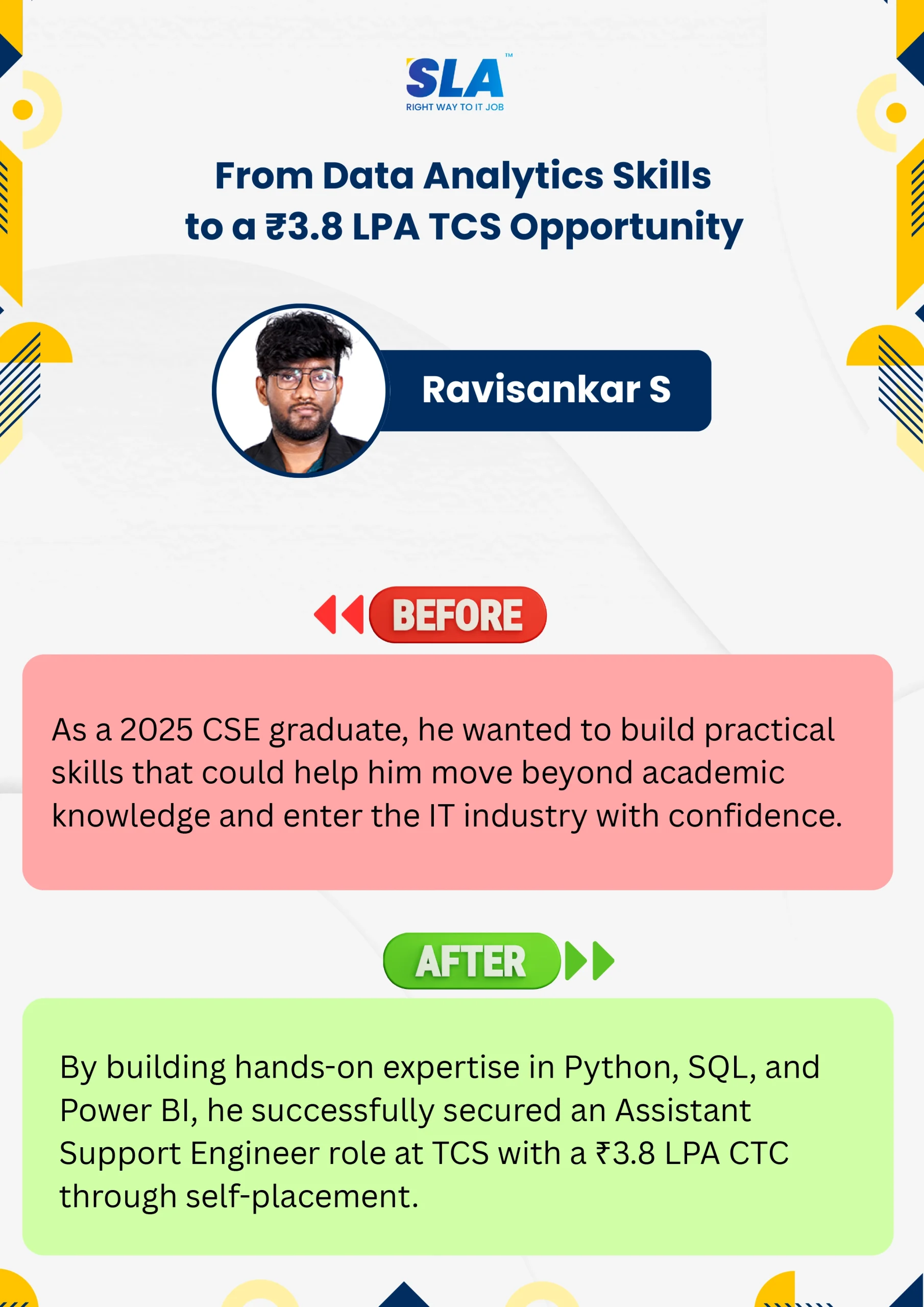
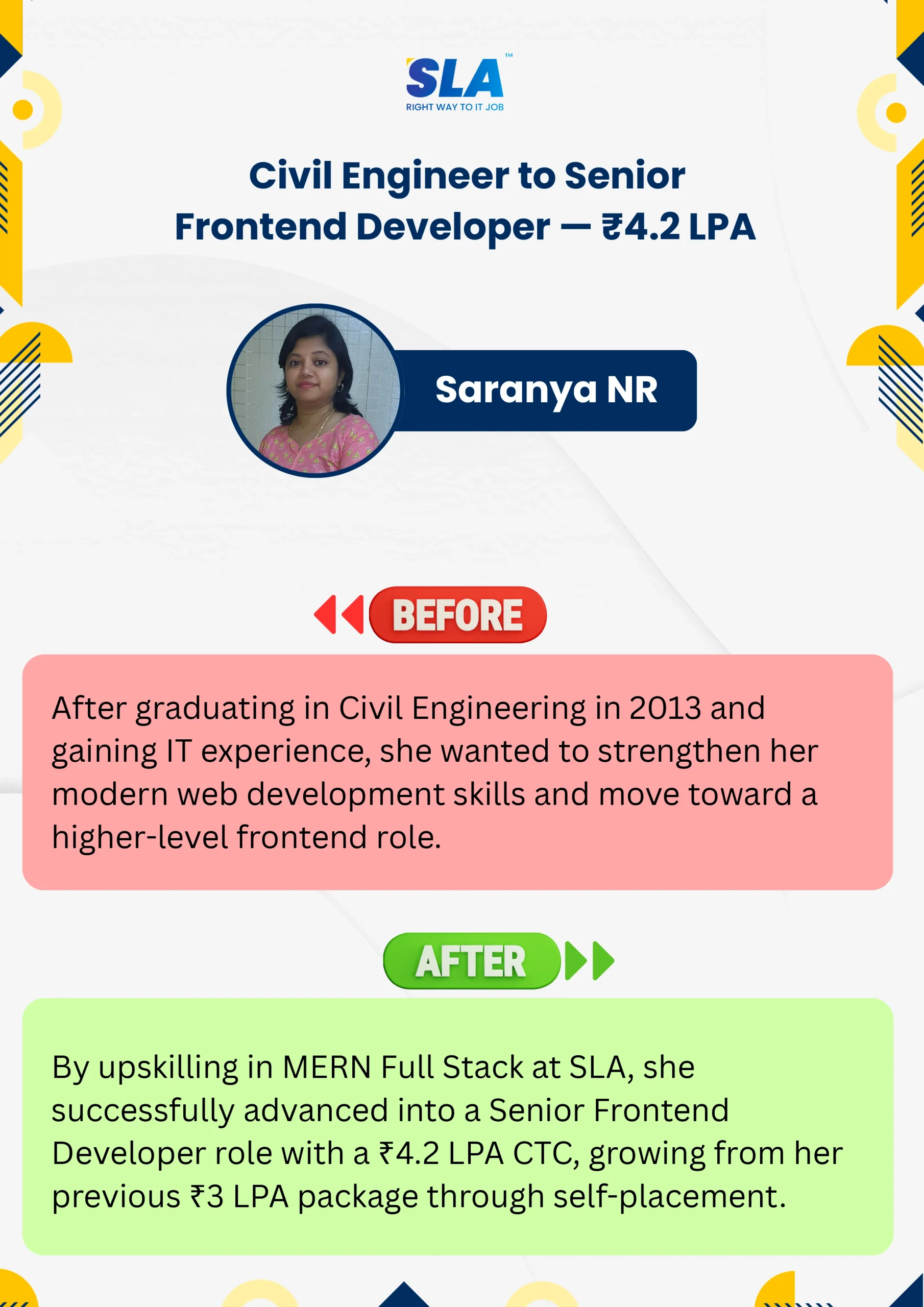
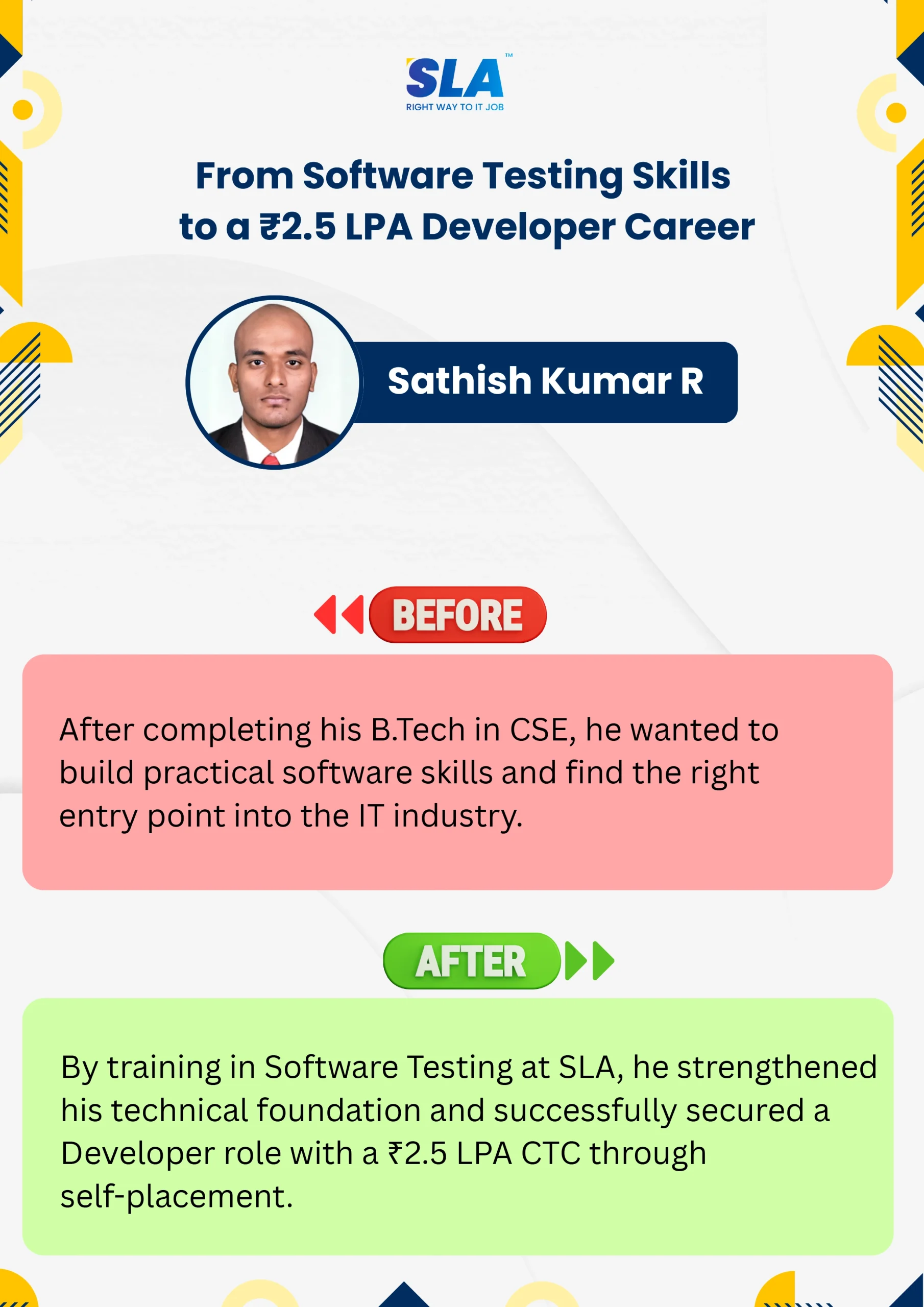
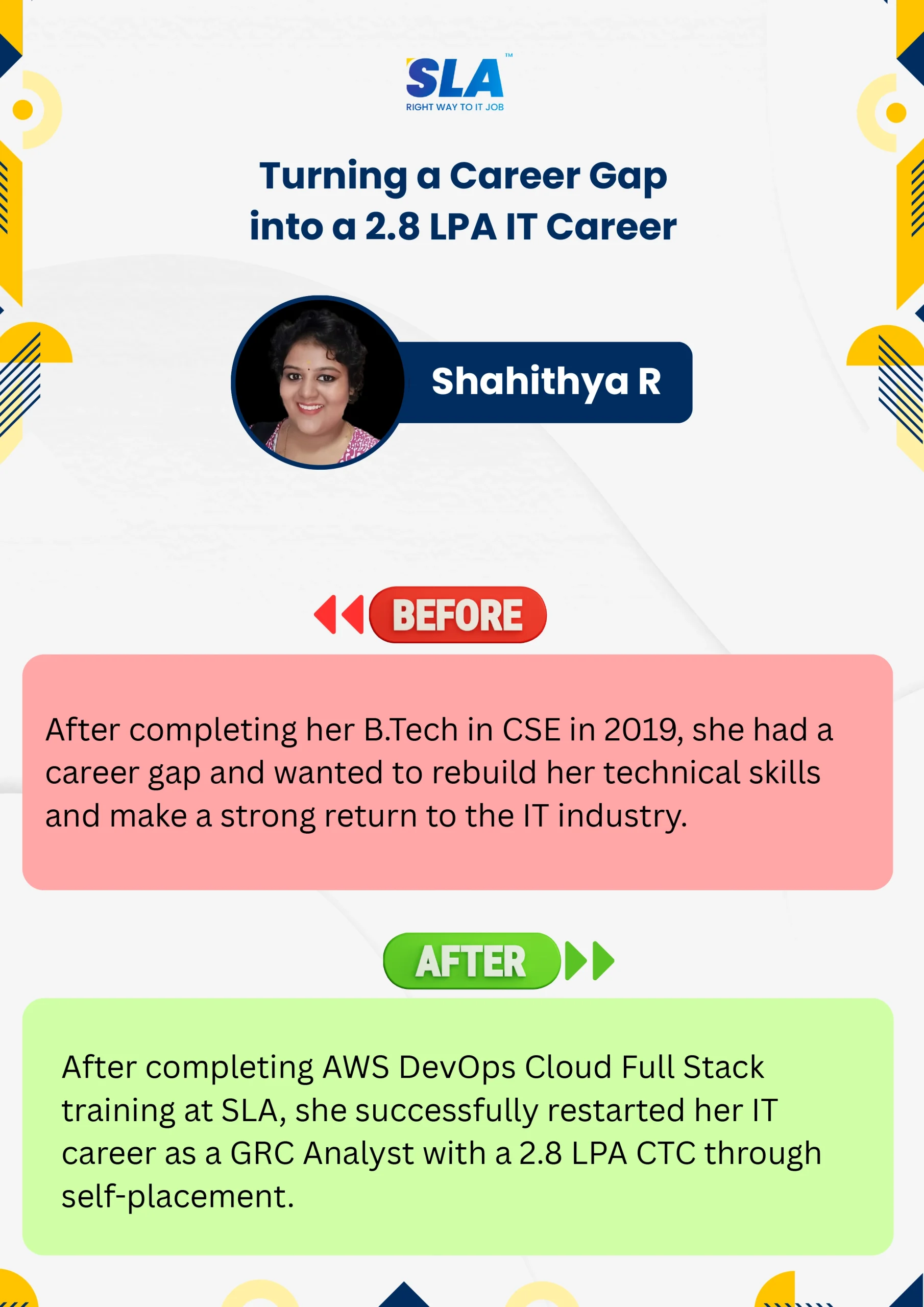
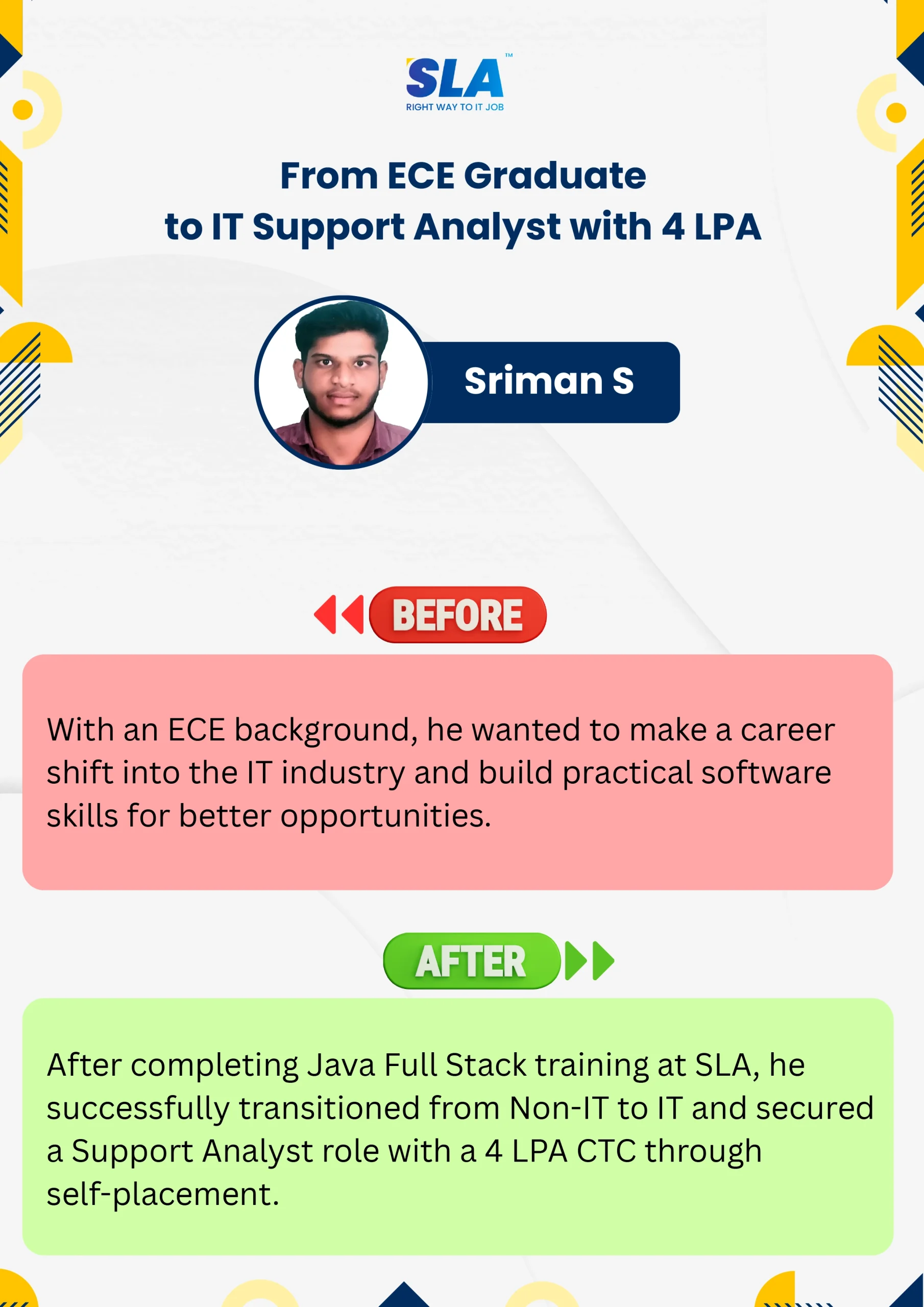
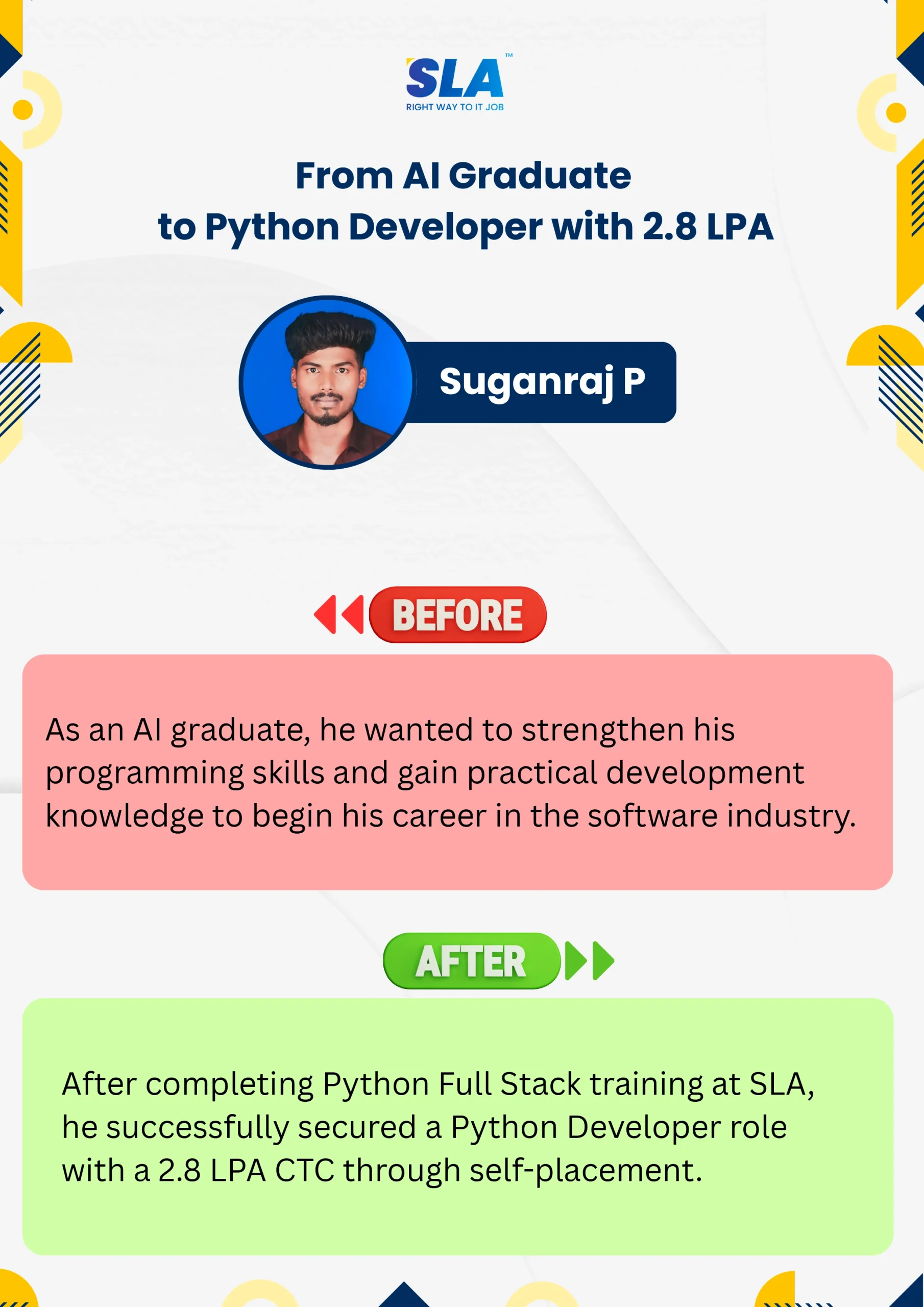
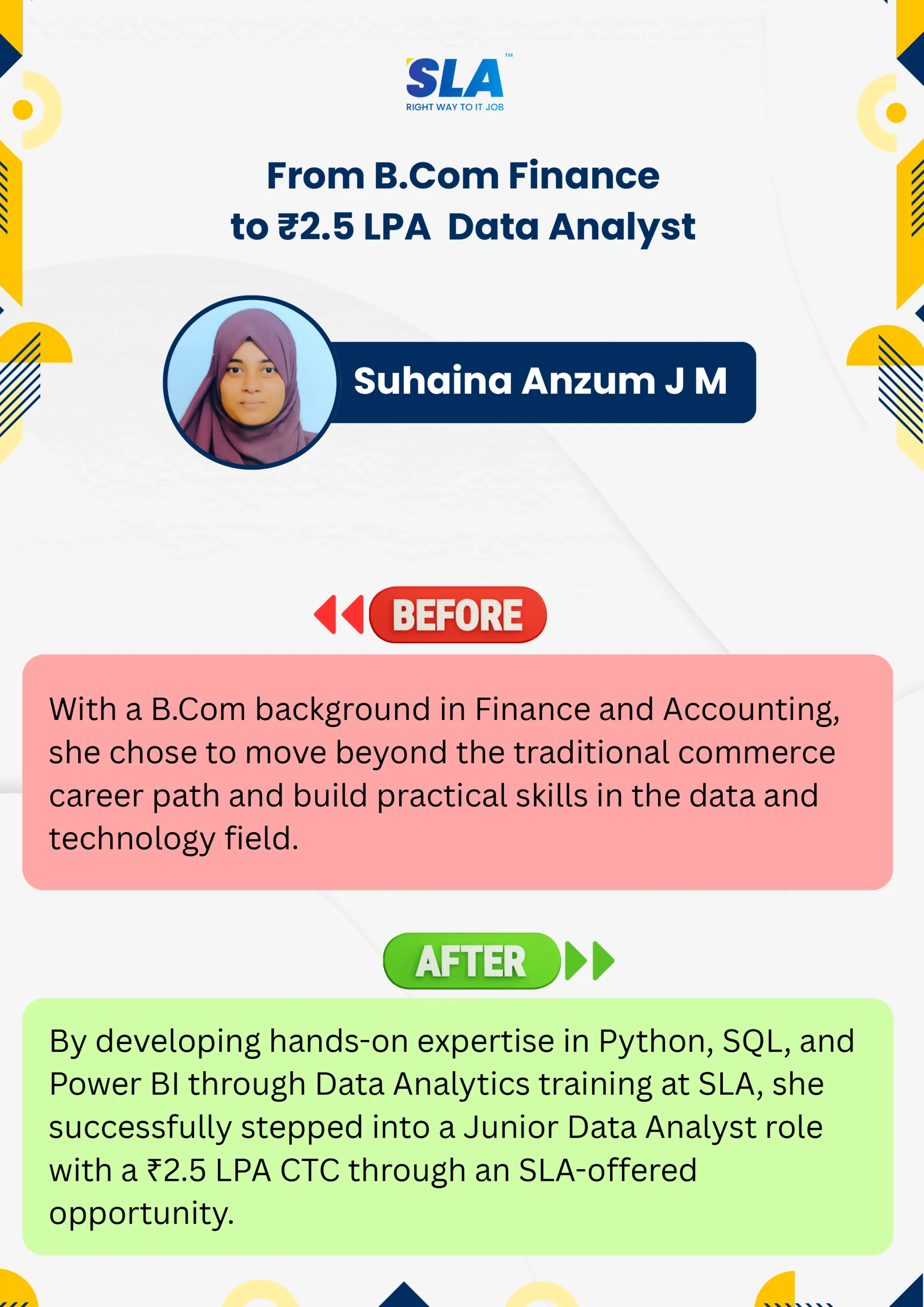
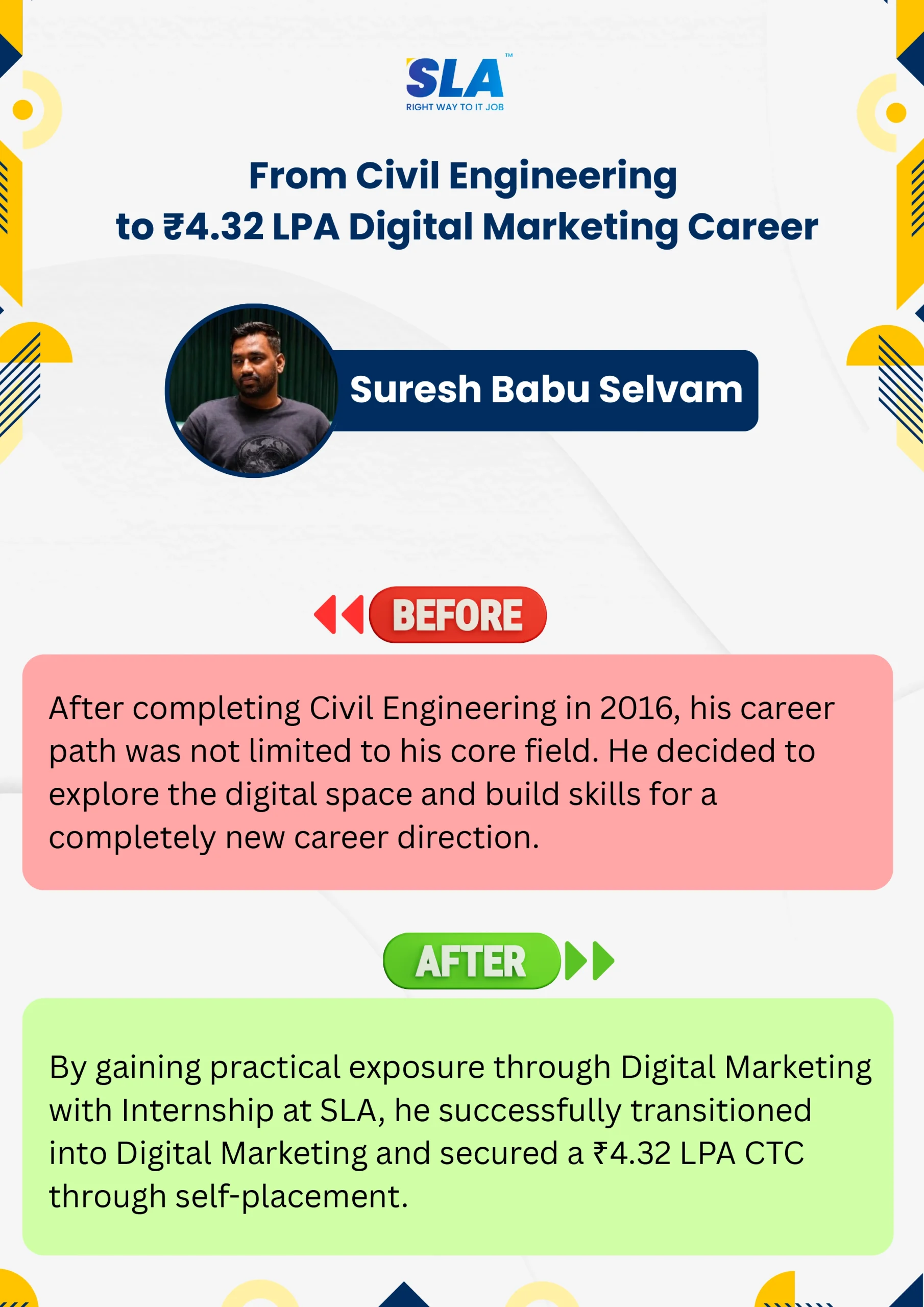
Start your learning journey at SLA and write your career story like our students who have shared their experiences here. Are you excited to explore?
See More