
R Programming Course Syllabus

duration
2-3 Months
EMI
0% Interest
Mode
Live Online / Offline
Join our R Programming Online Course to learn the basics of data analysis and statistical computing using R. You’ll begin with fundamental concepts and then progress to more advanced topics like data visualization and statistical modeling. Work on hands-on projects to improve your skills and boost your confidence. Our helpful instructors at SLA Institute will support you as you learn to use R with popular data analysis tools. With strong job placement assistance, we’ll help you start your career in data science. Enroll today to explore exciting opportunities in R programming and begin your path to success!
GET YOUR JOB ELIGIBILITY REPORT

Let's take the first step to becoming an expert in
Click Here to Get Started
100% Placement Assurance
Get Certified
Course Syllabus
Download SyllabusModule 1: Introduction to R Programming
- Overview of R and Its Applications
- Setting Up R and RStudio
- Understanding R Environment and Workspace
- Basic Syntax, Variables, and Data Types
- Writing and Executing R Scripts
Module 2: Data Structures and Operations
- Vectors, Lists, Matrices, and Data Frames
- Factors and Their Importance in Data Analysis
- Indexing, Subsetting, and Manipulating Data Structures
- Working with Dates and Times
Module 3: Data Importing and Exporting
- Reading and Writing CSV, Excel, and Text Files
- Connecting R to Databases (MySQL, PostgreSQL)
- Web Scraping and API Integration
- Handling Large Datasets Efficiently
Module 4: Data Manipulation and Transformation
- Data Cleaning Techniques (Handling Missing Values, Duplicates)
- String Manipulation and Regular Expressions
- Data Wrangling with dplyr and tidyr
- Reshaping and Aggregating Data
Module 5: Data Visualization in R
- Introduction to Base R Graphics and ggplot2
- Creating Bar Charts, Histograms, Box Plots, and Scatter Plots
- Customizing Graphs for Better Insights
- Interactive Visualizations with plotly and Shiny
Module 6: Statistical Analysis in R
- Descriptive and Inferential Statistics
- Probability Distributions and Hypothesis Testing
- ANOVA, Regression Analysis, and Correlation
- Statistical Modeling and Interpretation
Module 7: Machine Learning with R
- Introduction to Machine Learning and Its Applications
- Supervised Learning: Linear & Logistic Regression, Decision Trees
- Unsupervised Learning: K-Means Clustering, PCA
- Model Evaluation and Performance Metrics
Module 8: Time Series Analysis
- Understanding Time Series Data
- Forecasting Techniques (ARIMA, Exponential Smoothing)
- Seasonal Decomposition and Trend Analysis
Module 9: Text Mining and Natural Language Processing (NLP)
- Text Preprocessing Techniques
- Sentiment Analysis and Word Cloud Generation
- Topic Modeling with LDA
Module 10: Working with Big Data in R
- Introduction to Big Data Handling in R
- Integrating R with Hadoop and Spark
- Parallel Computing and Performance Optimization
Module 11: R for Web Applications and APIs
- Building Web Applications with Shiny
- Developing and Consuming REST APIs in R
- Deploying R Applications on Cloud Platforms
Module 12: Hands-on Projects and Case Studies
- Implementing Real-World Data Science Projects
- Best Practices in R Programming
- Resume Preparation and Interview Guidance
In conclusion, mastering R programming opens doors to diverse opportunities in data science, analytics, and research. This R Programming Course Syllabus is carefully designed to ensure learners gain practical knowledge in data manipulation, visualization, statistical modeling, and machine learning. With hands-on experience and industry-relevant projects, students will be well-prepared to apply R programming in real-world scenarios. If you’re looking to build a career in data science, enroll in our R Programming Course in Chennai and gain the skills needed to excel in this dynamic field. Take the next step toward a rewarding career with R programming!
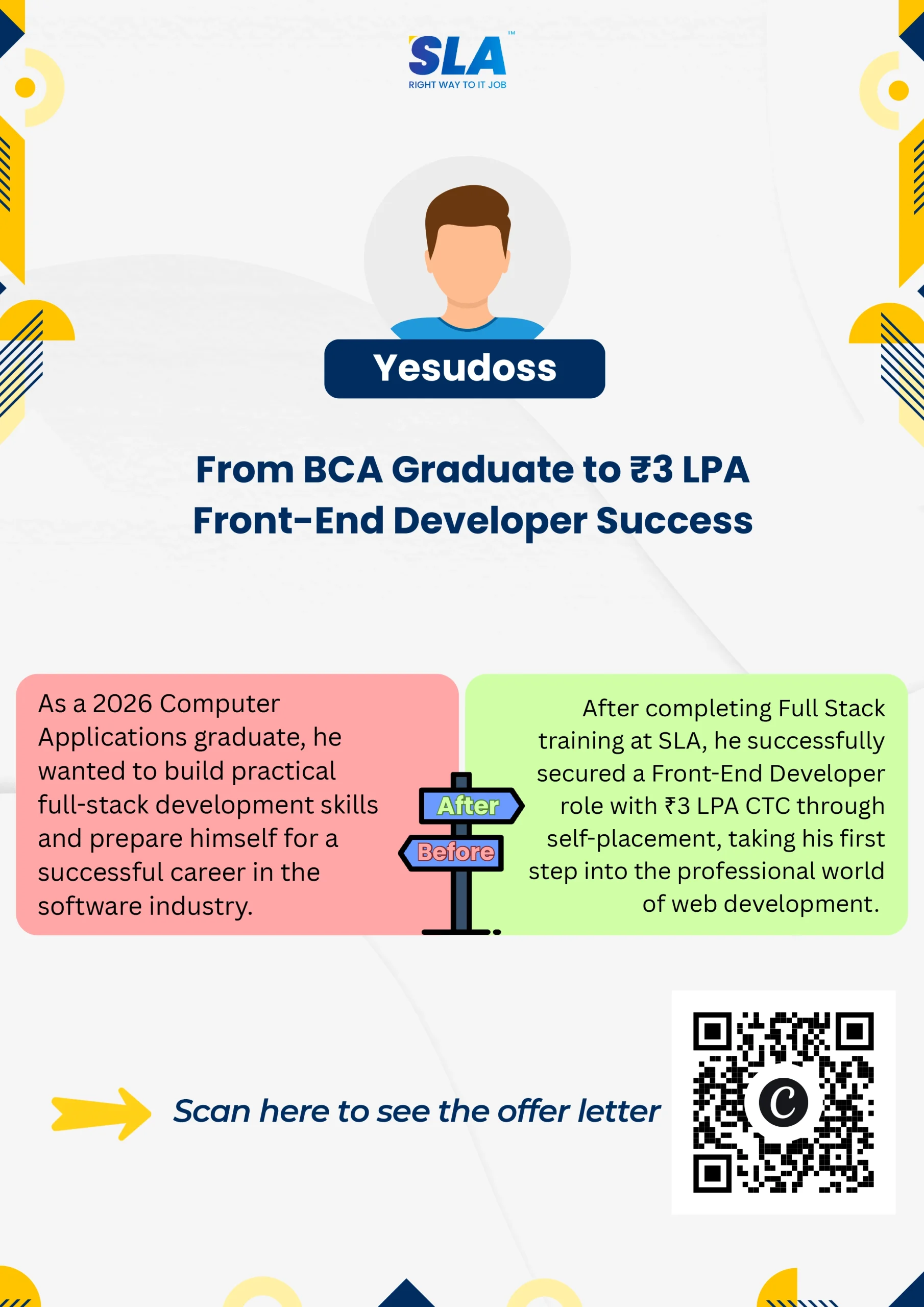
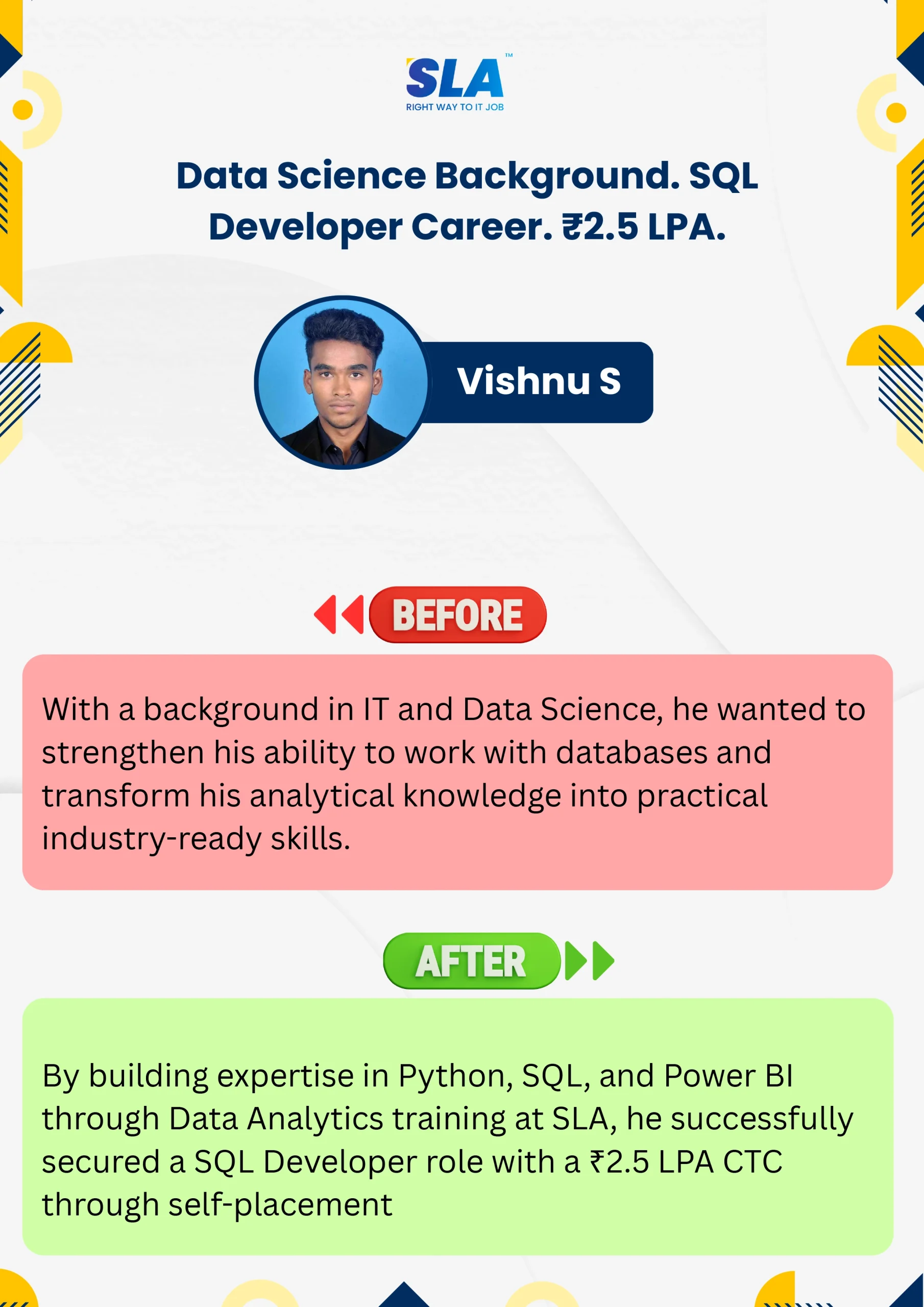
Video Testimonials
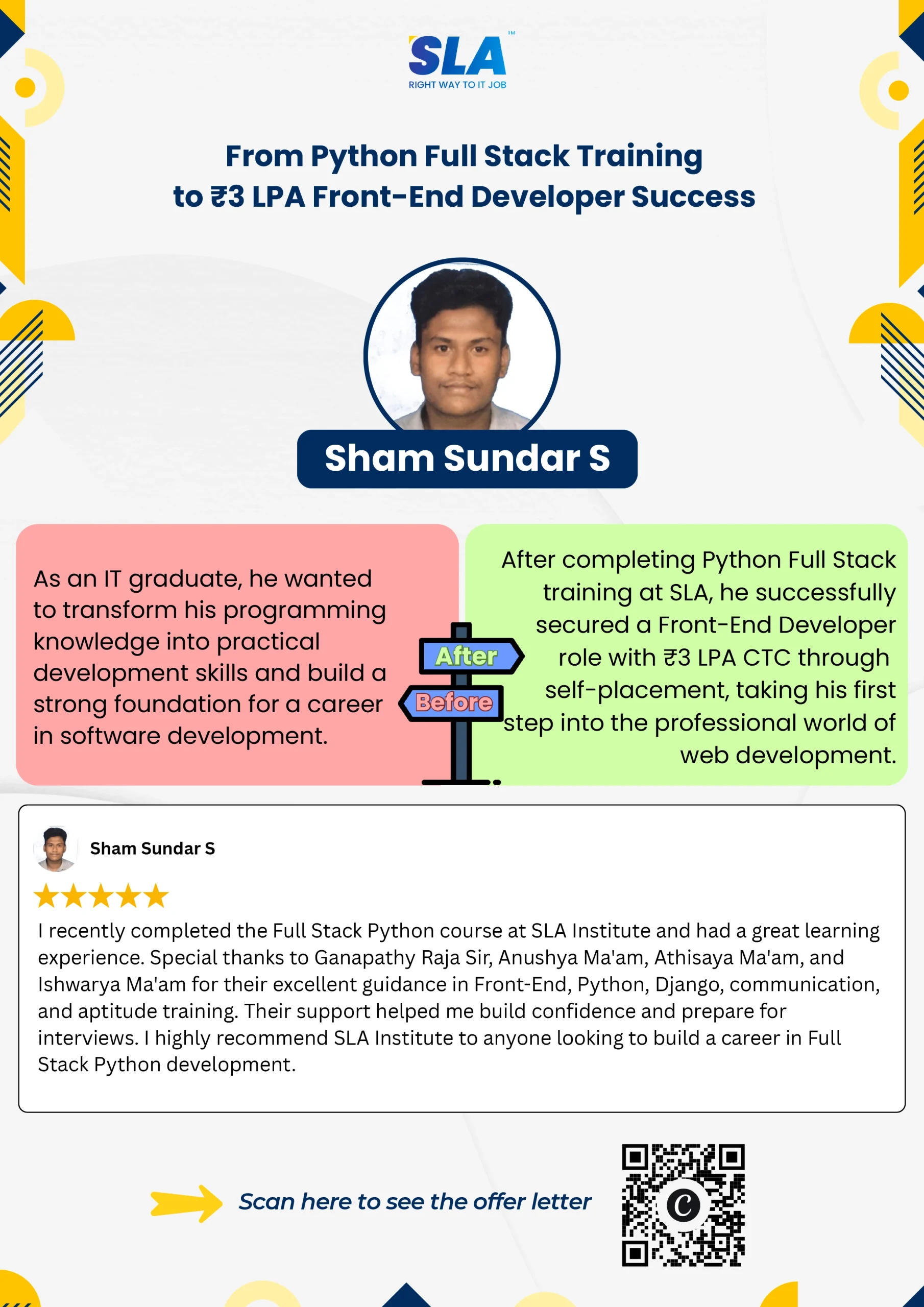
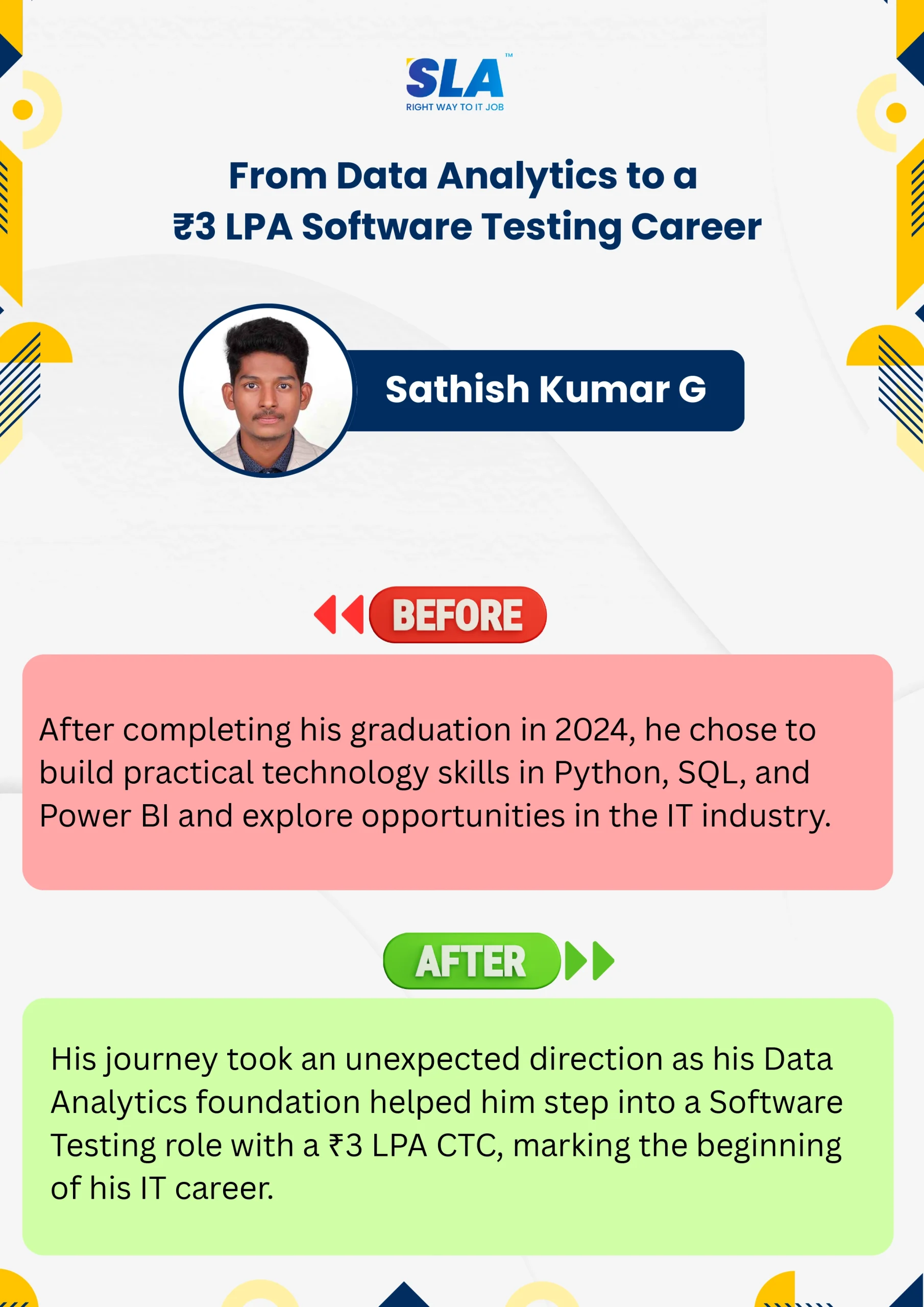
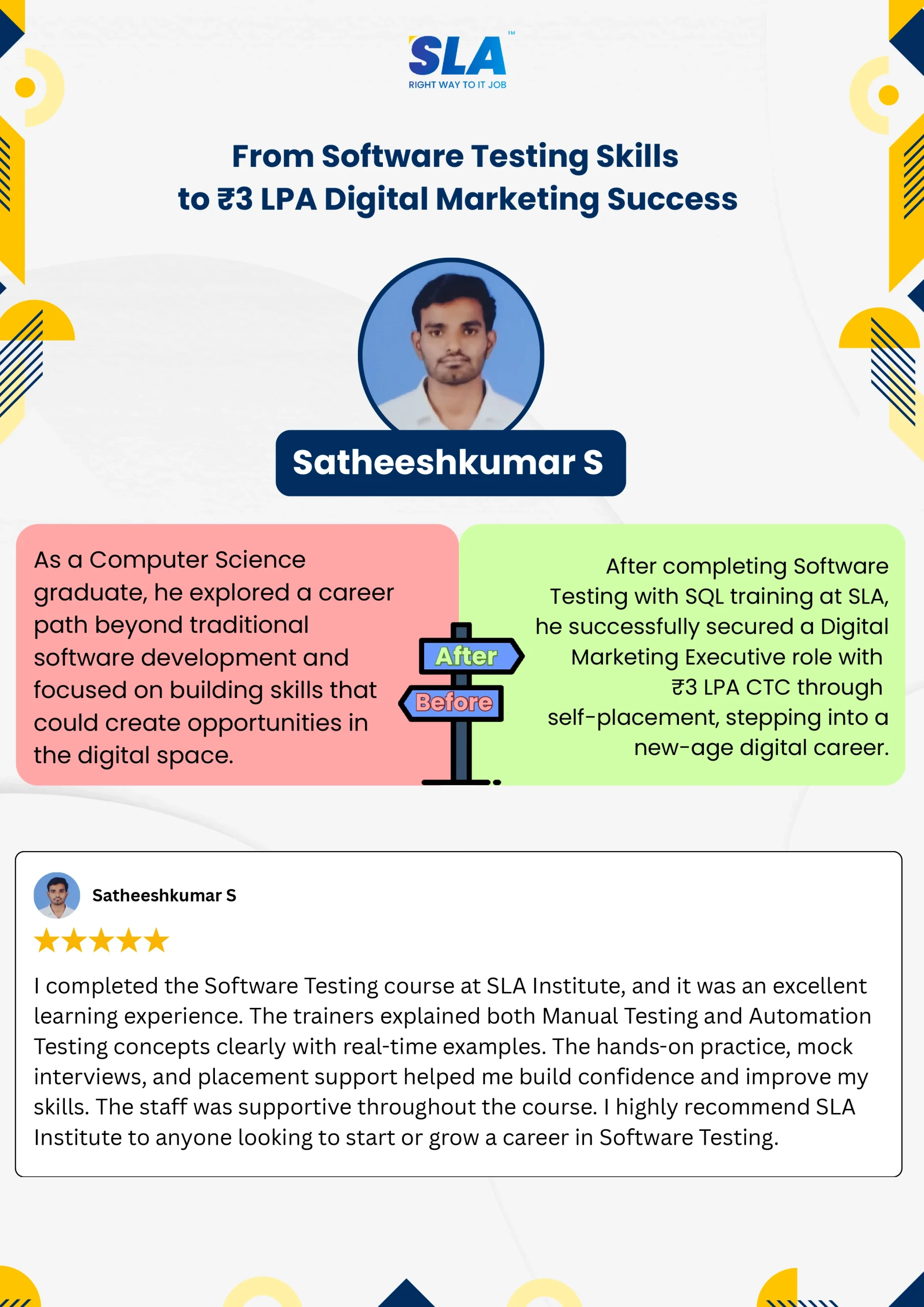
Start your learning journey at SLA and write your career story like our students who have shared their experiences here. Are you excited to explore?
See More