
Data Science Course With Placement Course Syllabus

duration
2-3 months

EMI
0% Interest

Mode
Live Online / Offline
Our Data Science Course with Placement syllabus is structured to cover everything from the fundamentals to advanced topics. You will learn Python, SQL, and statistics, then progress to machine learning, artificial intelligence, and big data tools. As part of our Data Science Certification Course, you’ll also gain hands-on experience through real-world projects. With our Data Scientist Course with Placement, the curriculum is designed to build both technical expertise and practical skills for a successful career.
0+
Students Trained
0%
Placement Rate
0+
Years Experience
0+
Hiring Partners
Why SLA
- Industry Professional Trainers
- Real-Time Live Projects
- 1000+ Hiring Partners
- 0% Interest EMI Options
- Lifelong Placement Support
- Globally Recognized Certifications
FLEXIBLE LEARNING MODES
Course Syllabus
Download SyllabusIntroduction
- Introduction to Data Analytics
- Introduction to Business Analytics
- Understanding Business Applications
- Data types and data Models
- Type of Business Analytics
- Evolution of Analytics
- Data Science Components
- Data Scientist Skillset
- Univariate Data Analysis
- Introduction to Sampling
Basic Operations in R Programming
- Introduction to R programming
- Types of Objects in R
- Naming standards in R
- Creating Objects in R
- Data Structure in R
- Matrix, Data Frame, String, Vectors
- Understanding Vectors & Data input in R
- Lists, Data Elements
- Creating Data Files using R
Data Handling in R Programming
- Basic Operations in R – Expressions, Constant Values, Arithmetic, Function Calls, Symbols
- Sub-setting Data
- Selecting (Keeping) Variables
- Excluding (Dropping) Variables
- Selecting Observations and Selection using Subset Function
- Merging Data
- Sorting Data
- Adding Rows
- Visualization using R
- Data Type Conversion
- Built-In Numeric Functions
- Built-In Character Functions
- User Built Functions
- Control Structures
- Loop Functions
Introduction to Statistics
- Basic Statistics
- Measure of central tendency
- Types of Distributions
- Anova
- F-Test
- Central Limit Theorem & applications
- Types of variables
- Relationships between variables
- Central Tendency
- Measures of Central Tendency
- Kurtosis
- Skewness
- Arithmetic Mean / Average
- Merits & Demerits of Arithmetic Mean
- Mode, Merits & Demerits of Mode
- Median, Merits & Demerits of Median
- Range
- Concept of Quantiles, Quartiles, percentile
- Standard Deviation
- Variance
- Calculate Variance
- Covariance
- Correlation
Introduction to Statistics – 2
- Hypothesis Testing
- Multiple Linear Regression
- Logistic Regression
- Market Basket Analysis
- Clustering (Hierarchical Clustering & K-means Clustering)
- Classification (Decision Trees)
- Time Series Analysis (Simple Moving Average, Exponential smoothing, ARIMA+)
Introduction to Probability
- Standard Normal Distribution
- Normal Distribution
- Geometric Distribution
- Poisson Distribution
- Binomial Distribution
- Parameters vs. Statistics
- Probability Mass Function
- Random Variable
- Conditional Probability and Independence
- Unions and Intersections
- Finding Probability of dataset
- Probability Terminology
- Probability Distributions
Data Visualization Techniques
- Bubble Chart
- Sparklines
- Waterfall chart
- Box Plot
- Line Charts
- Frequency Chart
- Bimodal & Multimodal Histograms
- Histograms
- Scatter Plot
- Pie Chart
- Bar Graph
- Line Graph
Introduction to Machine Learning
- Overview & Terminologies
- What is Machine Learning?
- Why Learn?
- When is Learning required?
- Data Mining
- Application Areas and Roles
- Types of Machine Learning
- Supervised Learning
- Unsupervised Learning
- Reinforcement learning
Machine Learning Concepts & Terminologies
Steps in developing a Machine Learning application
- Key tasks of Machine Learning
- Modelling Terminologies
- Learning a Class from Examples
- Probability and Inference
- PAC (Probably Approximately Correct) Learning
- Noise
- Noise and Model Complexity
- Triple Trade-Off
- Association Rules
- Association Measures
Regression Techniques
- Concept of Regression
- Best Fitting line
- Simple Linear Regression
- Building regression models using excel
- Coefficient of determination (R- Squared)
- Multiple Linear Regression
- Assumptions of Linear Regression
- Variable transformation
- Reading coefficients in MLR
- Multicollinearity
- VIF
- Methods of building Linear regression model in R
- Model validation techniques
- Cooks Distance
- Q-Q Plot
- Durbin- Watson Test
- Kolmogorov-Smirnof Test
- Homoskedasticity of error terms
- Logistic Regression
- Applications of logistic regression
- Concept of odds
- Concept of Odds Ratio
- Derivation of logistic regression equation
- Interpretation of logistic regression output
- Model building for logistic regression
- Model validations
- Confusion Matrix
- Concept of ROC/AOC Curve
- KS Test
Market Basket Analysis
- Applications of Market Basket Analysis
- What is association Rules
- Overview of Apriori algorithm
- Key terminologies in MBA
- Support
- Confidence
- Lift
- Model building for MBA
- Transforming sales data to suit MBA
- MBA Rule selection
- Ensemble modelling applications using MBA
Time Series Analysis (Forecasting)
- Model building using ARIMA, ARIMAX, SARIMAX
- Data De-trending & data differencing
- KPSS Test
- Dickey Fuller Test
- Concept of stationarity
- Model building using exponential smoothing
- Model building using simple moving average
- Time series analysis techniques
- Components of time series
- Prerequisites for time series analysis
- Concept of Time series data
- Applications of Forecasting
Decision Trees using R
- Understanding the Concept
- Internal decision nodes
- Terminal leaves.
- Tree induction: Construction of the tree
- Classification Trees
- Entropy
- Selecting Attribute
- Information Gain
- Partially learned tree
- Overfitting
- Causes for over fitting
- Overfitting Prevention (Pruning) Methods
- Reduced Error Pruning
- Decision trees – Advantages & Drawbacks
- Ensemble Models
K Means Clustering
- Parametric Methods Recap
- Clustering
- Direct Clustering Method
- Mixture densities
- Classes v/s Clusters
- Hierarchical Clustering
- Dendogram interpretation
- Non-Hierarchical Clustering
- K-Means
- Distance Metrics
- K-Means Algorithm
- K-Means Objective
- Color Quantization
- Vector Quantization
Tableau Analytics
- Tableau Introduction
- Data connection to Tableau
- Calculated fields, hierarchy, parameters, sets, groups in Tableau
- Various visualizations Techniques in Tableau
- Map based visualization using Tableau
- Reference Lines
- Adding Totals, sub totals, Captions
- Advanced Formatting Options
- Using Combined Field
- Show Filter & Use various filter options
- Data Sorting
- Create Combined Field
- Table Calculations
- Creating Tableau Dashboard
- Action Filters
- Creating Story using Tableau
Analytics using Tableau
- Clustering using Tableau
- Time series analysis using Tableau
- Simple Linear Regression using Tableau
R integration in Tableau
- Integrating R code with Tableau
- Creating statistical model with dynamic inputs
- Visualizing R output in Tableau
- Case Study 1- Real time project with Twitter Data Analytics
- Case Study 2- Real time project with Google Finance
- Case Study 3- Real time project with IMDB Website
Course FAQ
Download SyllabusCertifications
Take your career to new heights with Softlogic's software training certifications.
Improve your abilities to get access to rewarding possibilities
Improve your abilities to get access to rewarding possibilities

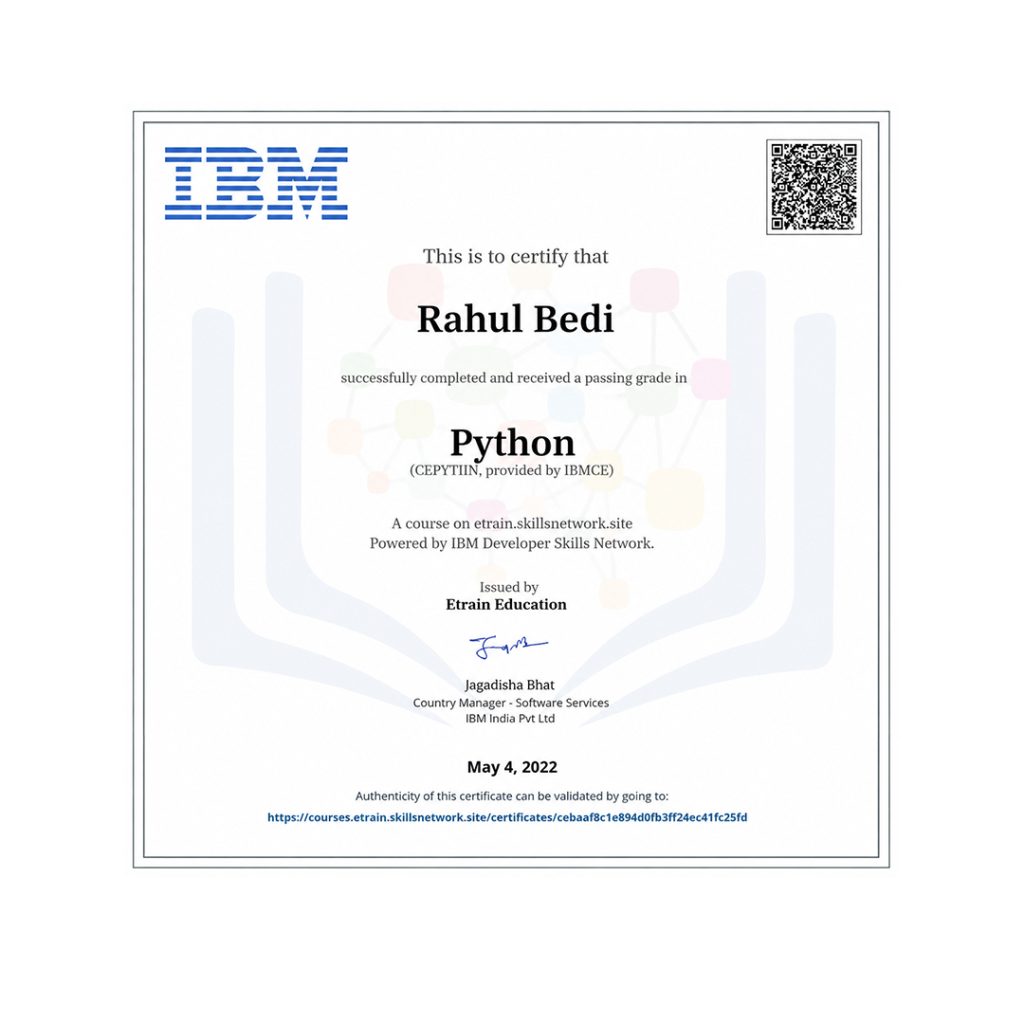
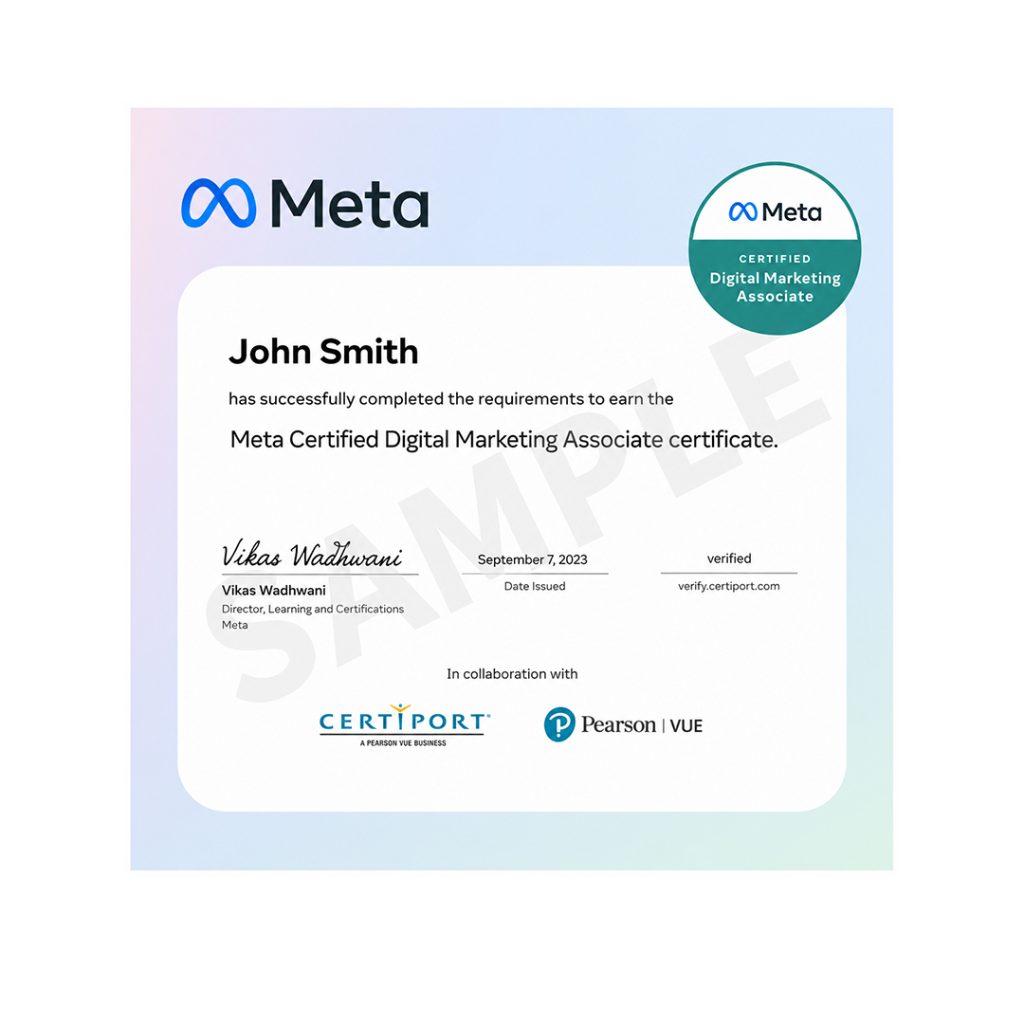
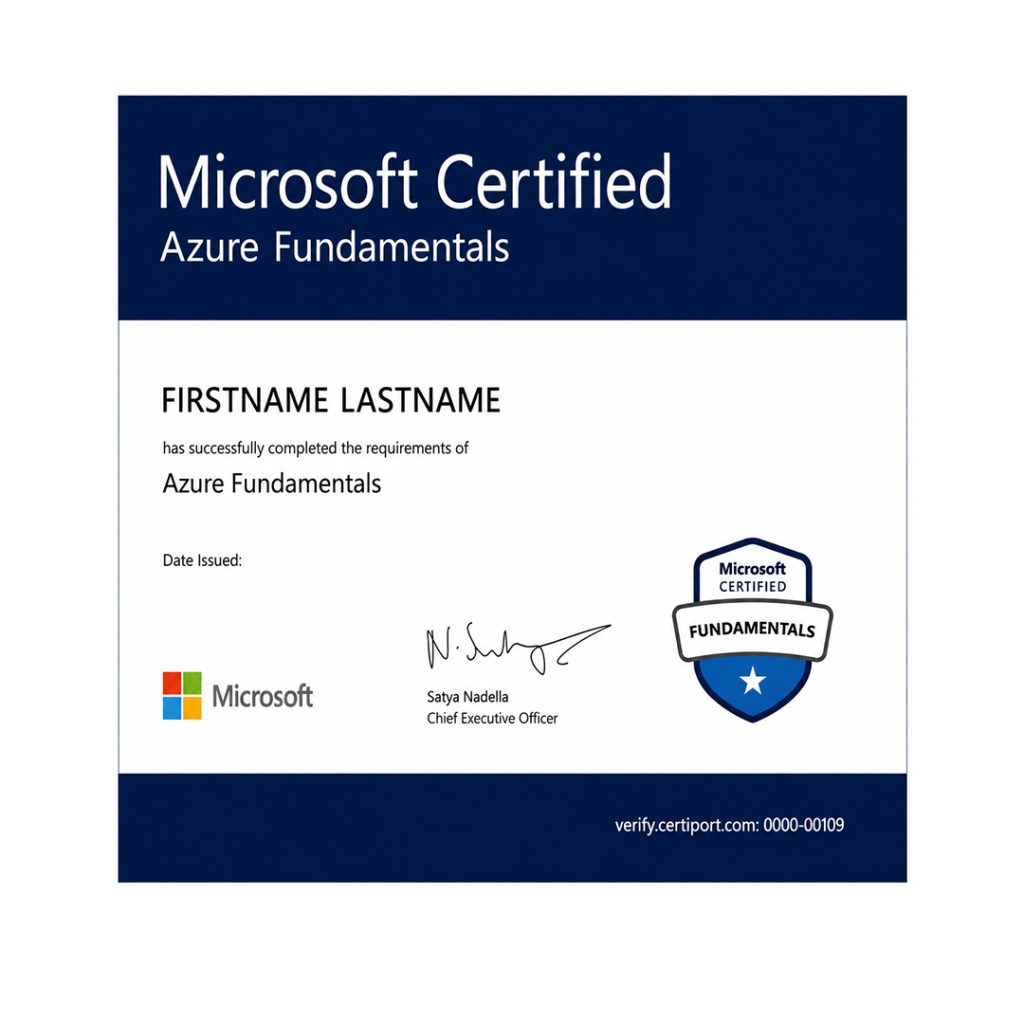
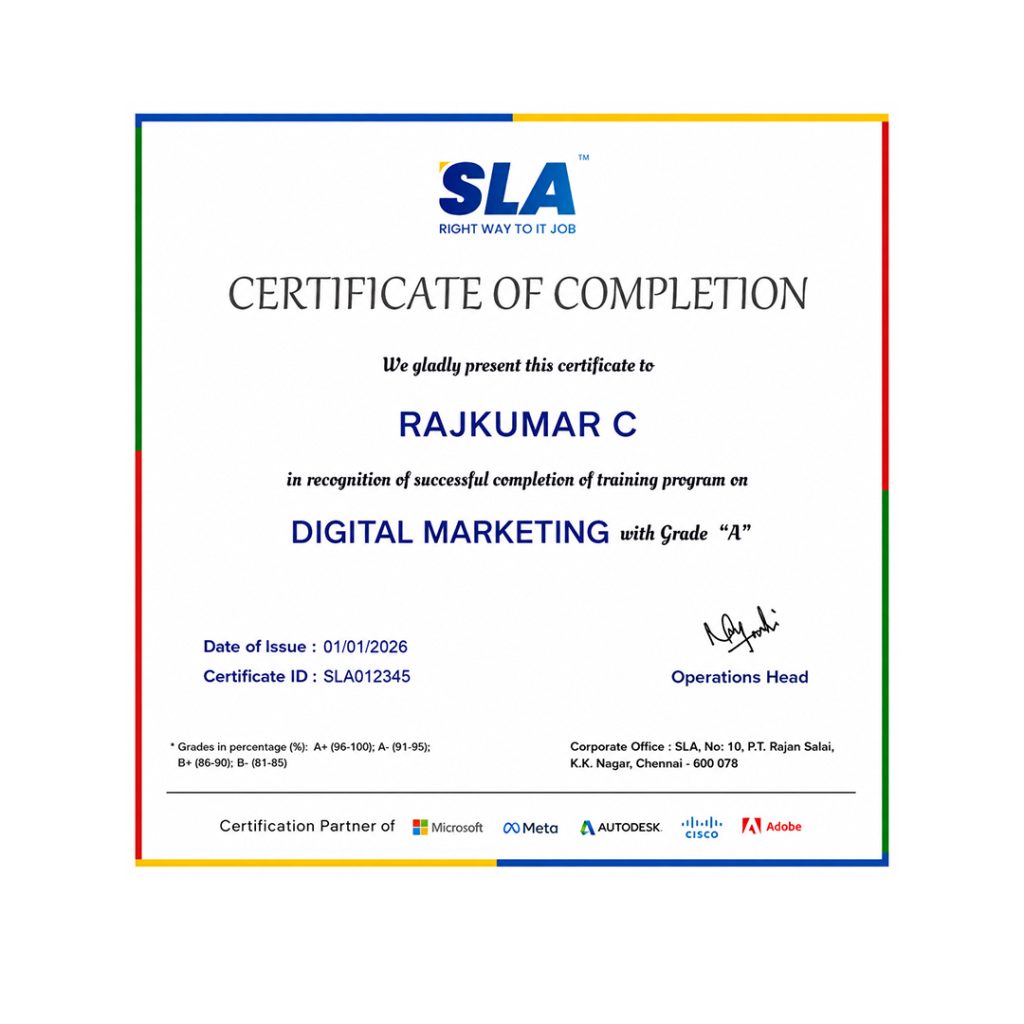
Earn Your Certificate of Completion
Validate your achievements with Softlogic's Certificate of Completion, verifying successful fulfillment of all essential components.
Take Your Career to the Next Level with Certifications
Get a certifications through our training programs to gain a competitive edge in the industry.
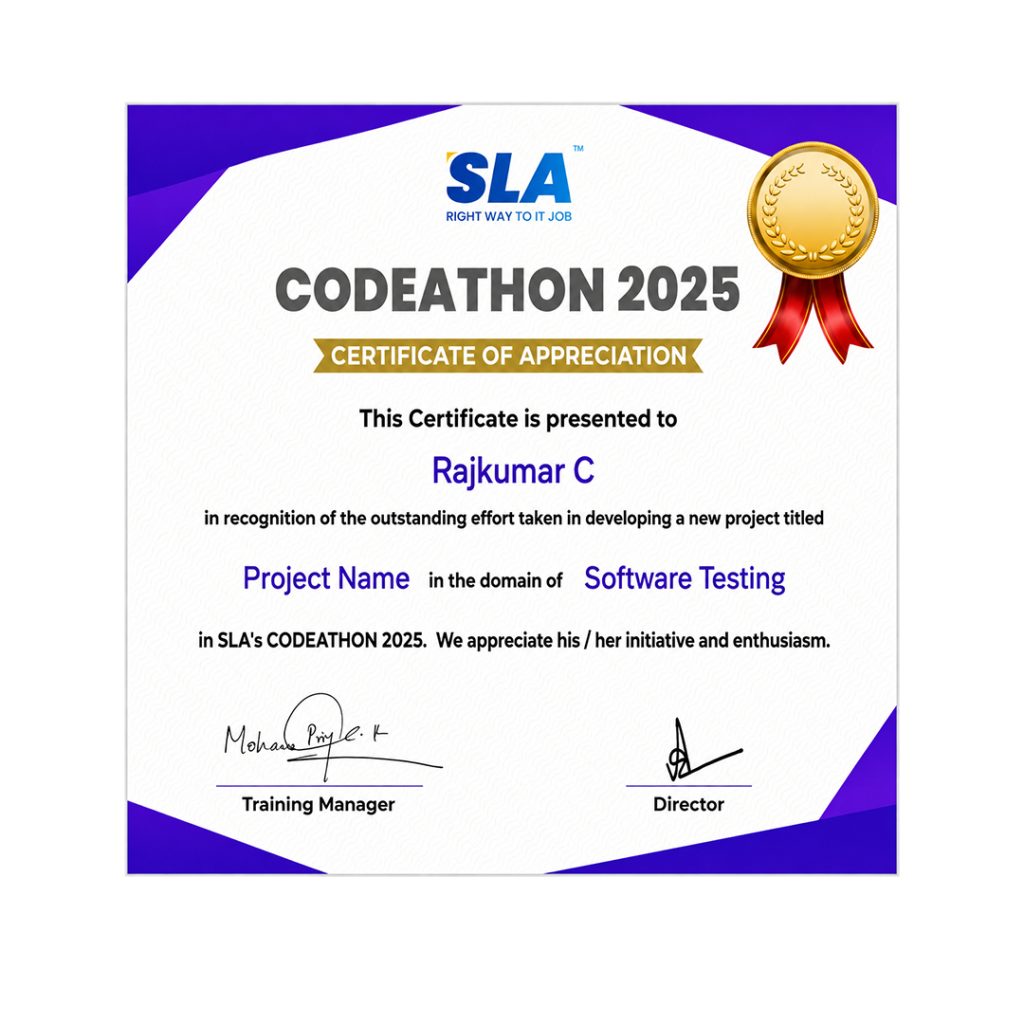
Stand Out from the Crowd with Codethon Certificate
Verify the authenticity of your real-time projects with Softlogic's Codethon certificate.

Upcoming Batches
Hands On Training
3-5 Real Time Projects
60-100 Practical Assignments
3+ Assessments / Mock Interviews
November 2026
Week days
(Mon-Fri)
Online/Offline
2 Hours Real Time Interactive Technical Training
1 Hour Aptitude
1 Hour Communication & Soft Skills
(Suitable for Fresh Jobseekers / Non IT to IT transition)
Course Fee
November 2026
Week ends
(Sat-Sun)
Online/Offline
4 Hours Real Time Interactive Technical Training
(Suitable for working IT Professionals)
Course Fee
Save up to 20% in your Course Fee on our Job Seeker Course Series
Learn More

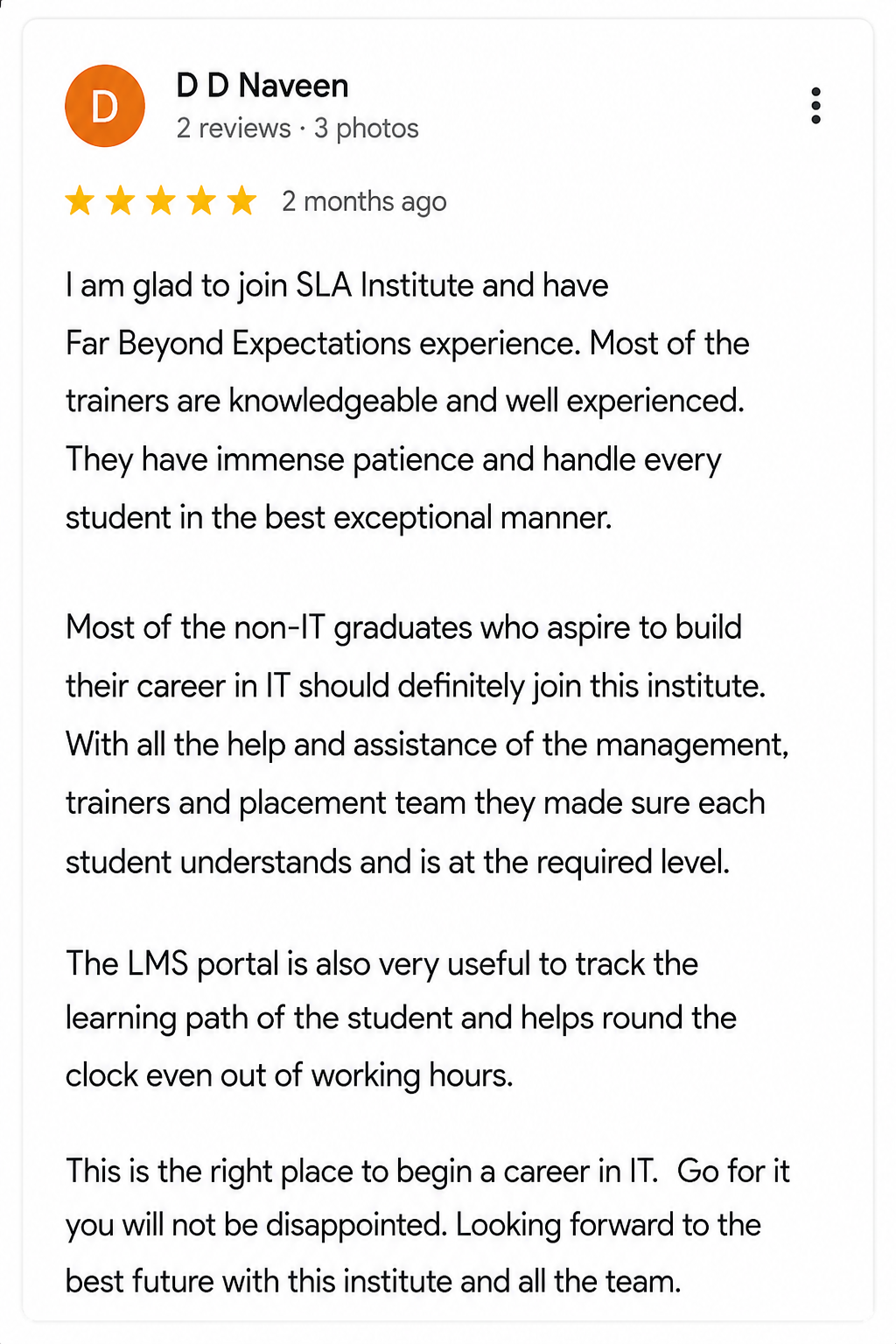
Check our Google Reviews
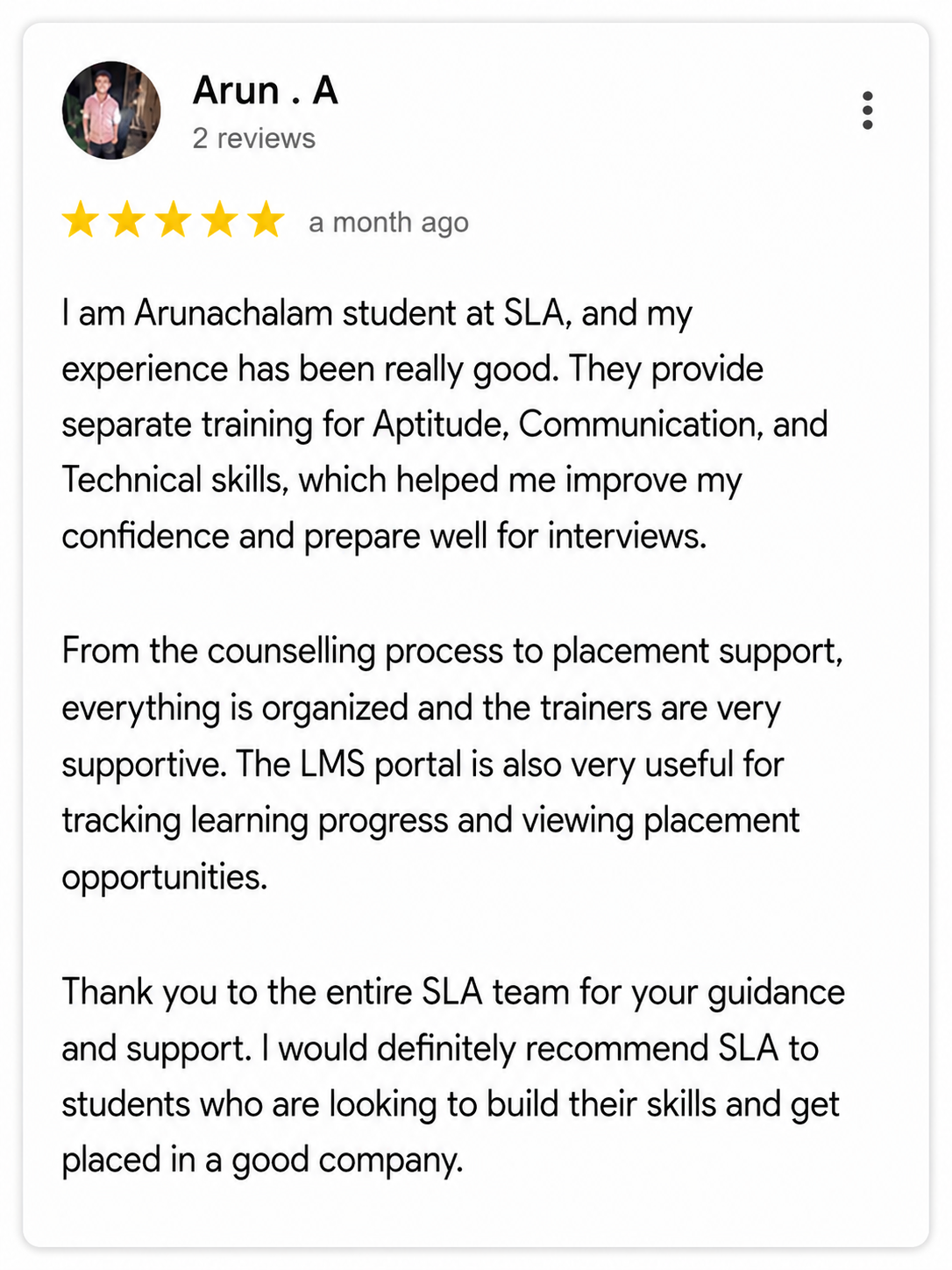
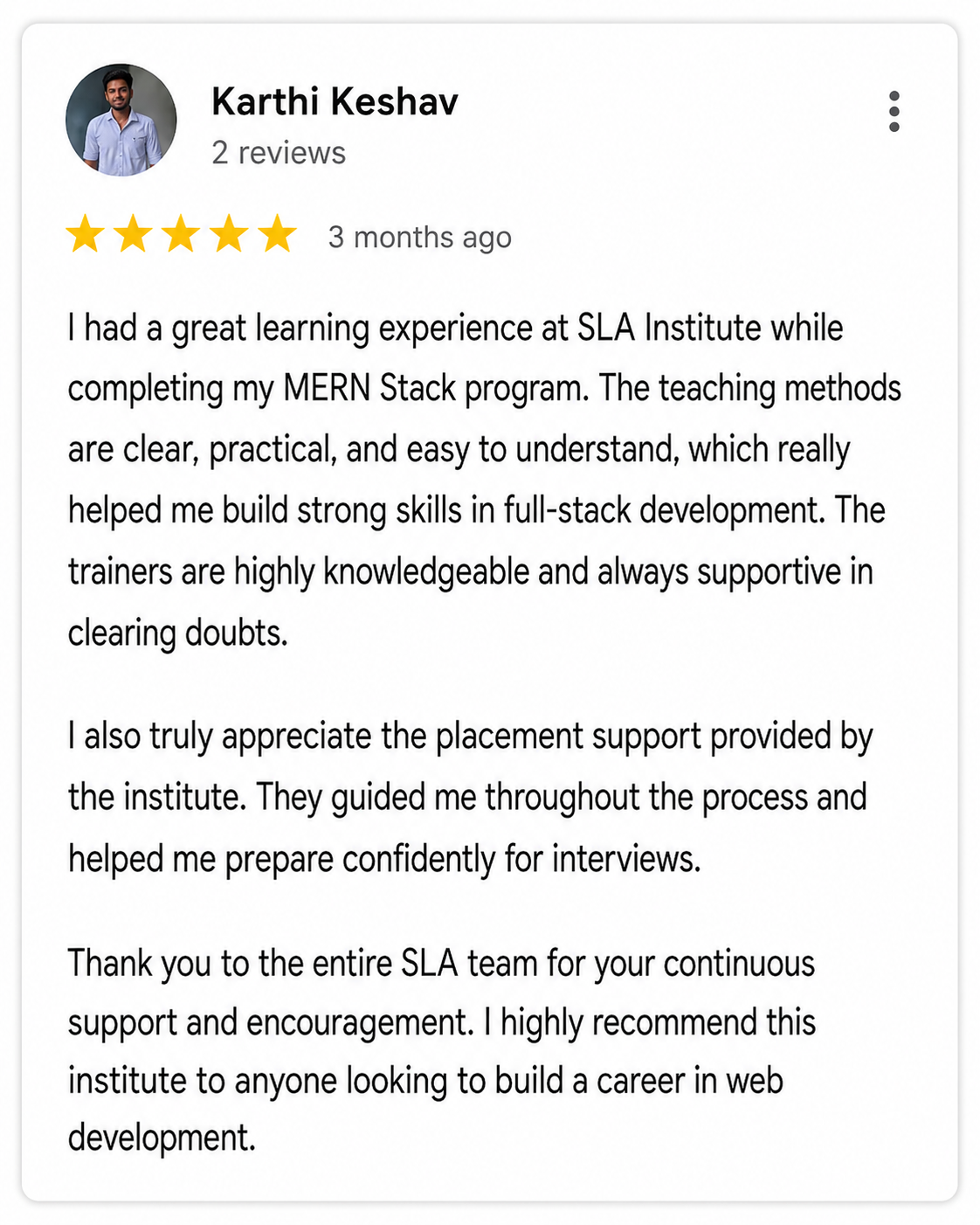
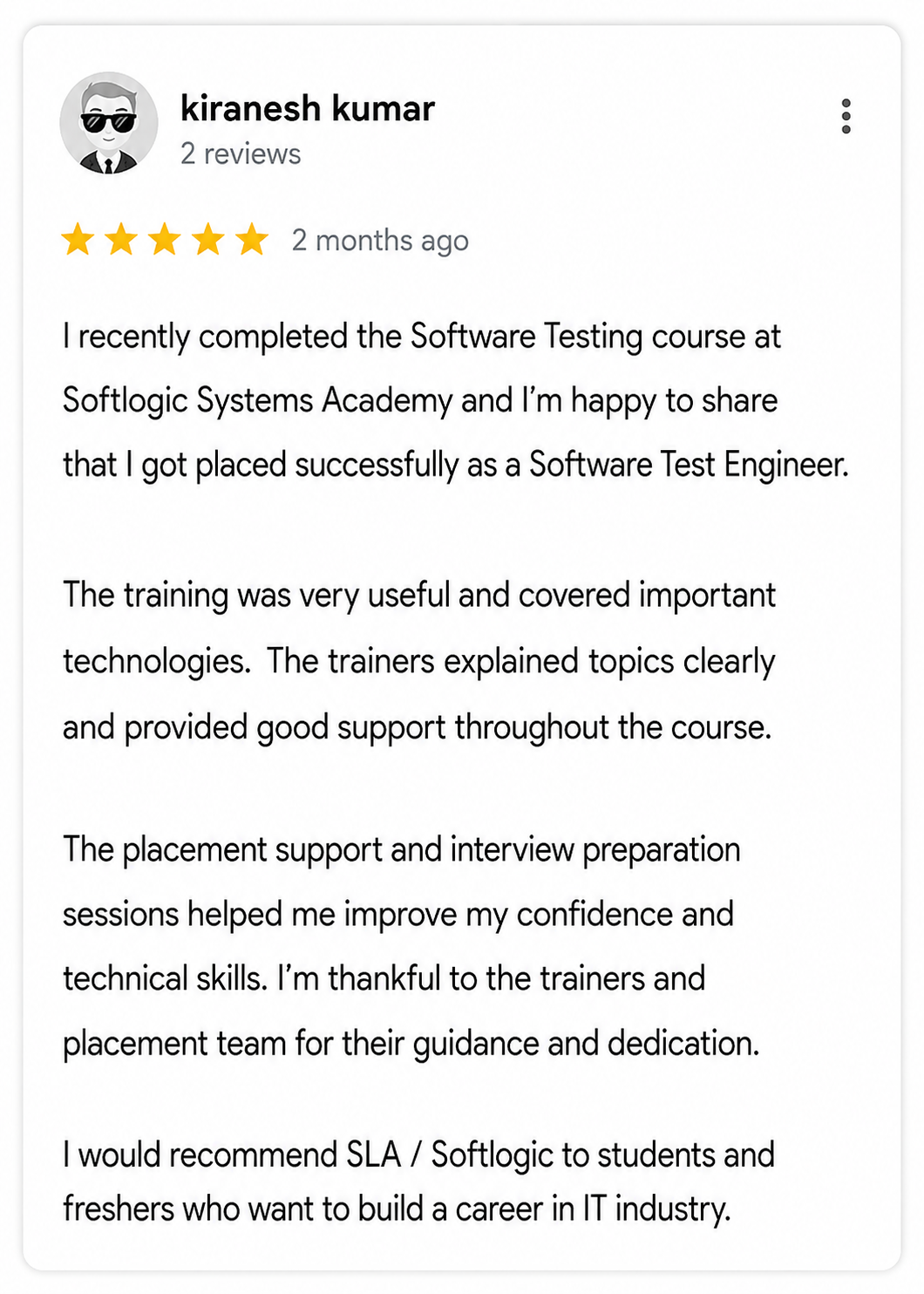
Arun A